









July 21 2026 - 3:00pm
Former British deputy prime minister Nick Clegg has claimed that the Left doesn’t understand the problems facing the country’s economy.
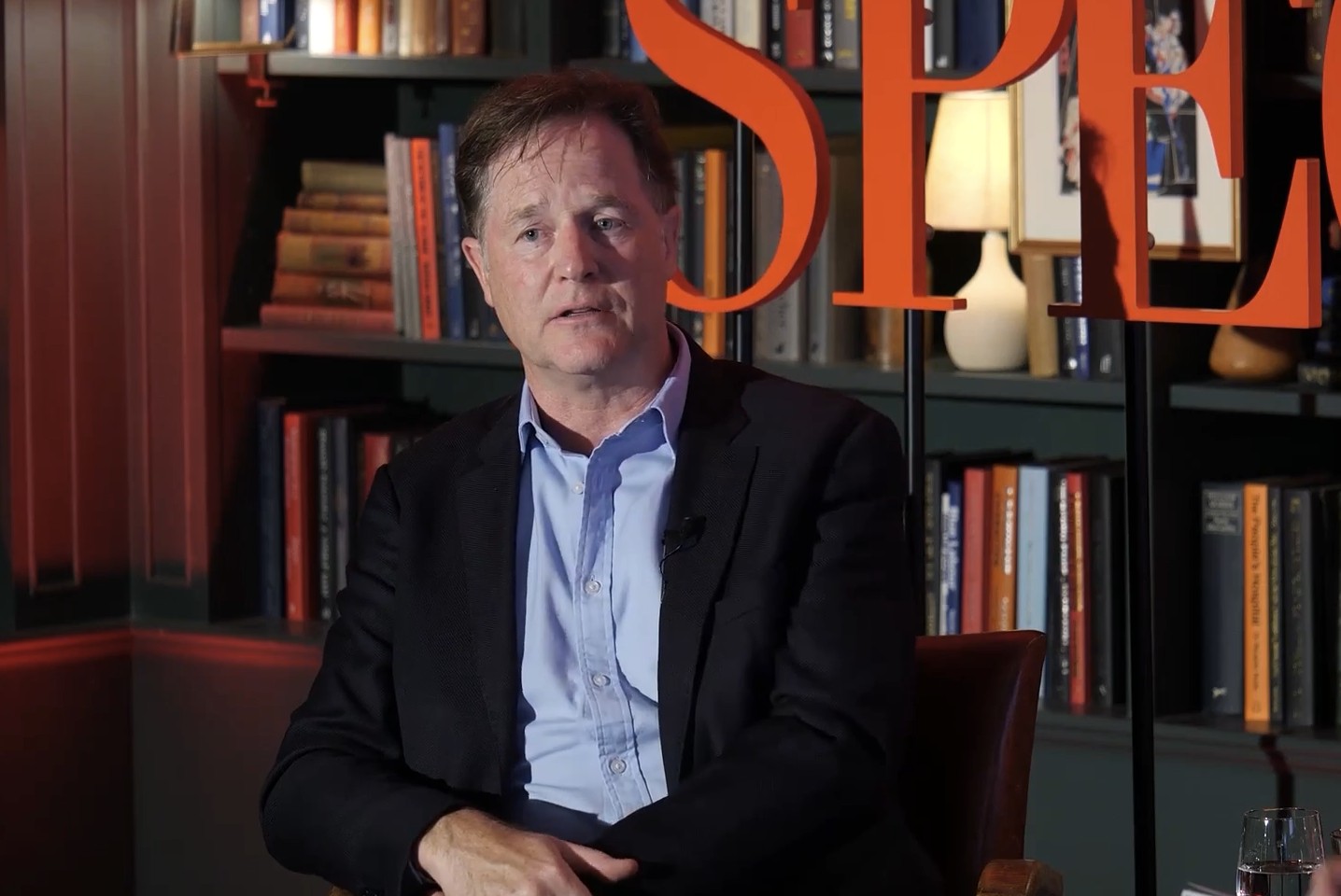
Speaking to Spectator political editor Tim Shipman at an event at the UnHerd Club yesterday, the former Liberal Democrat leader said he was “pessimistic” that the Left was “in a position intellectually at the moment to grapple with some of the things that have ailed the British economy for a long time”.
He extended his criticism to Labour politicians Keir Starmer, Rachel Reeves, Andy Burnham, and John Healey, arguing that they lacked “any sort of visceral understanding of how wealth is created”. Yesterday, Healey was appointed Chancellor in Burnham’s government, succeeding Reeves. Under Starmer, Healey served as Defense Secretary until June 2026, when he resigned over the Government’s Defense Investment Plan, which he argued did not go far enough in meeting Britain’s military needs. Last month, he said he viewed defense spending as “an engine” for economic growth.
In an interview with the Independent last week, Clegg challenged Burnham’s plans to achieve growth by increasing devolution, saying that there’s “no evidence” it would and that it could lead to “low growth rates”. Meanwhile, he concluded that Burnham was “the last chance” to deliver economic prosperity before populist politics “takes over”.
Clegg has also been critical of Starmer and Reeves in the past. In August, he told the Guardian that the pair had been “maddeningly cautious” in their approach to the British economy and that their policies had amounted to “endless half-measures”. In an interview with the Times later that month, he also stated that the Labour Party had “indulged in double standards about fiscal policy” since 2015 and that Starmer had “no margin of maneuver” on Government finances.
Clegg came into government as deputy prime minister when the Liberal Democrats and the Conservative Party formed a coalition following the 2010 general election. On entering office, he insisted that the Coalition’s priorities were based on reducing the fiscal deficit, while tackling climate change and social mobility. However, the government came to be defined by austerity measures and the Liberal Democrats, in particular, were attacked for raising university tuition fees despite pledging not to do so.
Later in his interview with the Spectator, Clegg discussed Britain’s future relationship with Europe. He said that the UK “is not going to rejoin the European Union any time soon”, but argued that any future return to the bloc could be “yoked” to Ukraine’s own path towards membership. He suggested the two countries could eventually be admitted together as part of a broader effort to rebuild Europe’s defense capabilities.