




(Credit: Alishia Abodunde/Getty)





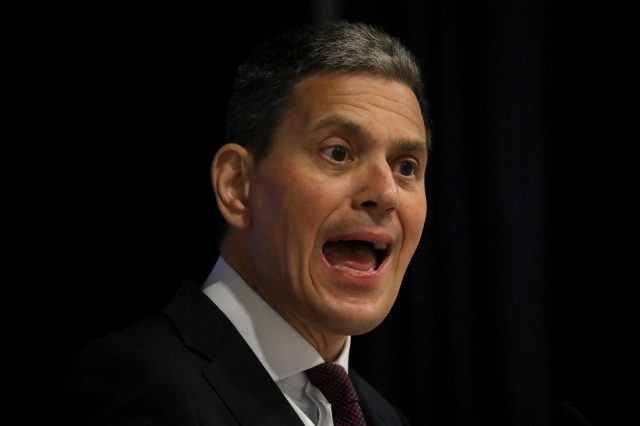
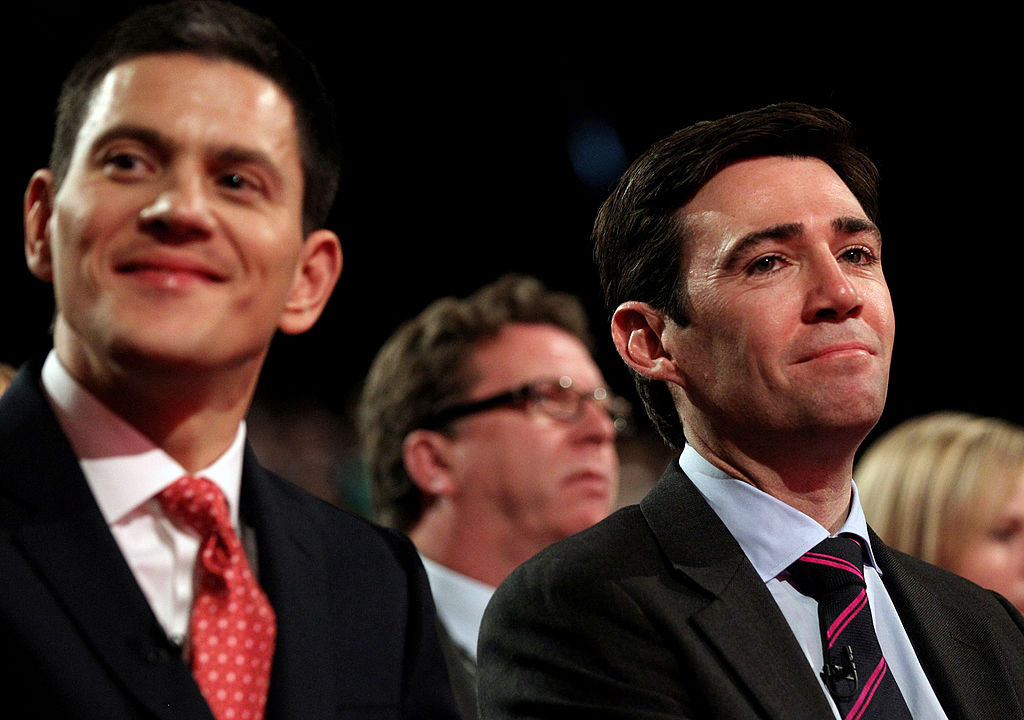
David Miliband is on maneuvers. Westminster’s lobby stenographers have been busy quoting “friends” on his readiness to serve in the Cabinet if offered a top job, backed up by a barrage of claims that Andy Burnham is lining him up for a return to frontline politics as foreign secretary. Reports suggest that such an appointment, bringing back a trusted political operator with contacts and experience, would free the incoming prime minister to focus on domestic issues.
The drumbeat grew louder last week, with breathless reports that the veteran New Labour figure, who has spent more than a decade in the United States running a refugee charity, was preparing to “break his silence” with a landmark speech. And then — surprise, surprise — this key acolyte of Tony Blair used the Rabbi Lord Jonathan Sacks memorial lecture at the London School of Economics to reveal that he was actually a Burnham fanboy. Titled, unironically, “Kings, Priests and Prophets: Power and its Missing Guardrails”, Miliband spoke of backing the former Manchester mayor’s devolution agenda, claiming this “big change” was “long overdue”. He argued that centralization of power in London had inflamed Britain’s dissatisfaction with democracy alongside issues such as inequality, technology and the failure of international institutions.
He was right to highlight these challenges facing our country. Barely one-in-five British citizens feel well represented by their government, while three in four are worried about the state of their democracy. Yet this is precisely why it would be absurd for Burnham to bring back this man. For there are few people who better symbolize the arrogance, elitism, political failures and shameless sense of entitlement of the political class than David Miliband.
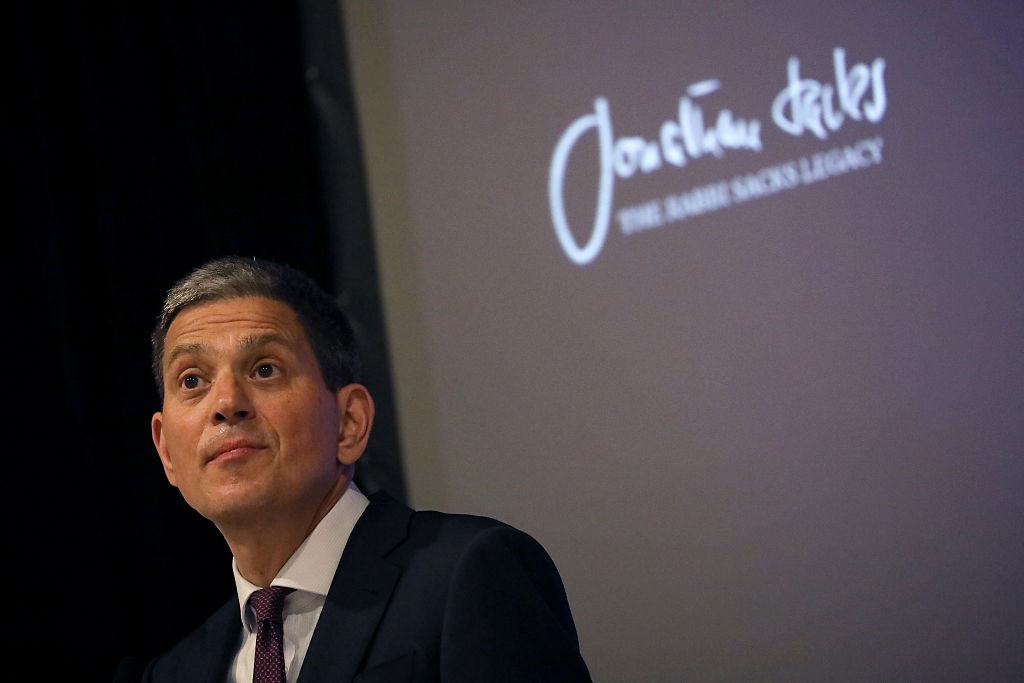
The boyish-looking Miliband is now 60, and seemingly desperate to come home after a disastrous 13-year stint at the helm of the International Rescue Committee (IRC). His tenure saw him rapidly expand the charity co-founded by Albert Einstein only to then drastically scale it back again, with spiraling deficits as several major donor nations of differing political complexions slashed aid spending. While a necessary realignment, given the serial failures of a bloated aid system that poured cash into conflict zones and the pockets of gruesome regimes, it triggered shock waves across the industry. There were staff cuts and predictable shroud-waving claims about disastrous consequences.
“There is a clear path through this period,” Miliband told IRC staff in a letter last year, as he announced job losses. “I am just so sorry at the price to be paid to get there.” Yet insiders told me how this charity’s bosses used the donor cuts to cover up their own ineptitude. They passed me documents two years ago showing the IRC faced a $50 million deficit due to fund-raising shortfalls, accounting mistakes and cost overruns, despite one bequest of $16.5 million. Miliband warned his top team they had found a “larger deficit than anticipated” and bemoaned there had been “no humanitarian emergency that has significantly buoyed our unrestricted incomes since the Russian invasion of Ukraine”.
Miliband had expanded his charity fast, which boosted his profile and won applause, but then the approach was laid bare by the aid cuts. As investor Warren Buffet famously said about financial crashes exposing poor strategies, “only when the tide goes out do you discover who’s been swimming naked”. These fiscal woes came amid festering internal concerns over management. So there was disquiet over the IRC’s muted initial response to Israel’s attack on Gaza, in contrast with its forceful reaction to Russia’s full-scale assault on Ukraine, which coincided with rumors that Miliband wanted Sir Keir Starmer to make him Britain’s ambassador to Washington. This job, of course, went instead to Peter Mandelson with disastrous consequences — although recent reports suggest Miliband still fancies this plum diplomatic posting.
Almost 1,700 staff signed a petition complaining over the “absence of prompt, resolute and non-discriminatory condemnation that we expected from our leadership”. There were claims of self-censoring statements, soft-pedaling on Israel and top-down interference, driving a wedge between the leadership and frontline staff. One top figure from the Middle East, looking upset, told a meeting she could not understand their “complicit stand”, saying the IRC was “failing” both itself and Palestinians under attack. “We have not gotten everything right, and for many, this has shaken your trust in the IRC,” admitted a senior executive.
Perhaps such unrest is inevitable in a global organization that at one point had 19,300 staff around the world. But Miliband was already ruffling feathers before he started cutting staff. He faced claims of bullying from minority staff who accused the leadership of reinforcing a “white supremacy culture”, although these were dismissed by a law firm that reviewed discrimination policies. Staff previously circulated a petition calling for top executives to be made more accountable. There were also complaints over their use of unpaid interns — ironic given their mighty salaries.
Underlying these concerns is a clear belief among some insiders that Miliband saw the post as a platform for his self-aggrandizement. “My strong sense is that the majority of people connected to the IRC will welcome David’s departure,” said one executive, who left recently. “His 13 years at the IRC increasingly appear to have been driven by his ambition to accumulate wealth and stay relevant and connected to global centers of power, just waiting for the moment when the return to real power was finally within his grasp.”
“For many current and former IRC staff, especially in the last five years, the organization has come to be associated with a toxic culture of compliance, mismanagement of funds and teams, and retaliation against anyone who challenged David and his COO [chief operating officer]. These concerns have been accompanied by publicly documented accusations of racism, iniquity and evolving values based on their interests as opposed to the IRC’s mission. There’s no doubt that change is both needed and long overdue.”
Such dissent — breaking into the media on several occasions — indicates at the very least deficient diplomatic and leadership skills, although it is hard for outsiders to determine the truth about internal rows at major organizations. Yet one thing is clear: David Miliband has done very well financially for himself while running his charity, even as he tours the world condemning aid cuts and pleading for more cash for impoverished refugees.
It is instructive here to take a closer look at the astonishing sums involved. When Miliband took over as president and chief executive of the IRC in 2013, he succeeded George Rupp, a former head of Columbia University, whose package was $466,209 a year — an impressive sum for a charity chief, even by US standards. Yet in his first year, this former Labour Cabinet minister who once railed against fat cats saw this bumped up to $600,000. His pay package more than doubled over subsequent years: according to the most recent financial filings, from 2023, he was handed $1,246,992 — including a $150,000 bonus and a $55,000 housing allowance. This is “one of the highest in the humanitarian sector”, noted The New Humanitarian drily as it reported on the leadership board’s decision to take a temporary 20% salary cut while laying off thousands of their staff. He has also been promoted by booking agencies as a “wonderful” conference speaker, with fees starting at £25,000.
No wonder staff have told me that it is “demoralizing” to be led by someone earning “a millionaire’s salary” at a time when they face intense humanitarian and financial pressures. His IRC spokespeople, of course, insist that he gets fair reward for his labors set by the charity’s compensation committee. To his critics, however, it is seen as obscene to pocket such sums from a heavily taxpayer-funded charity dedicated to helping the poor and dispossessed.
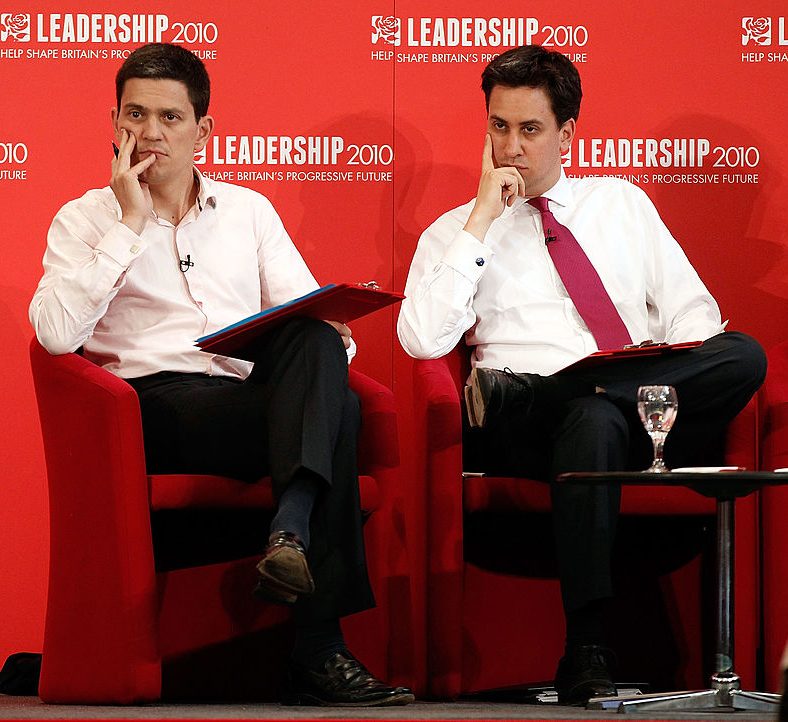
Miliband has been charitable to his friends, though. According to tax filings, the second highest-paid IRC executive is Madlin Sheerman, the senior vice-president who pocketed $550,151 in 2023. She just happens to be Miliband’s former special adviser who ran his botched 2010 leadership campaign. His former speechwriter, Laura Kyrke-Smith, was appointed head of the IRC’s British arm, collecting a six-figure salary, before becoming a Labour MP in the 2024 election. His Westminster researcher, Ollie Money, ended up as IRC’s global communications director before joining The Economist group two years ago. Even Lord Doyle — Starmer’s communications chief who sparked a furor over his ties to a sex offender after being given a peerage — spent some time in Miliband’s well-paid team, as did Miliband’s former speechwriter Ravi Gurumurthy, who now runs Nesta.
Burnham says politics in Britain is broken. He is right. Yet putting Miliband back in the Foreign Office is hardly going to fix it — and not just because of his self-enrichment and cronyism while running a respected charity. After all, his track record on international affairs is appalling. He was a firm supporter of the disastrous Iraq War, a misguided conflict that did much to demolish public faith in Westminster. Although Miliband later expressed regret for the neo-colonial misadventure, he told the Chilcot Inquiry how he believed this conflict — which sparked chaos in the region and spurred the rise of Islamic State — had strengthened Britain’s reputation in the Middle East. This was a ridiculous claim to make of a war that so tainted our nation’s reputation, even for one of Blair’s most dedicated cheerleaders.
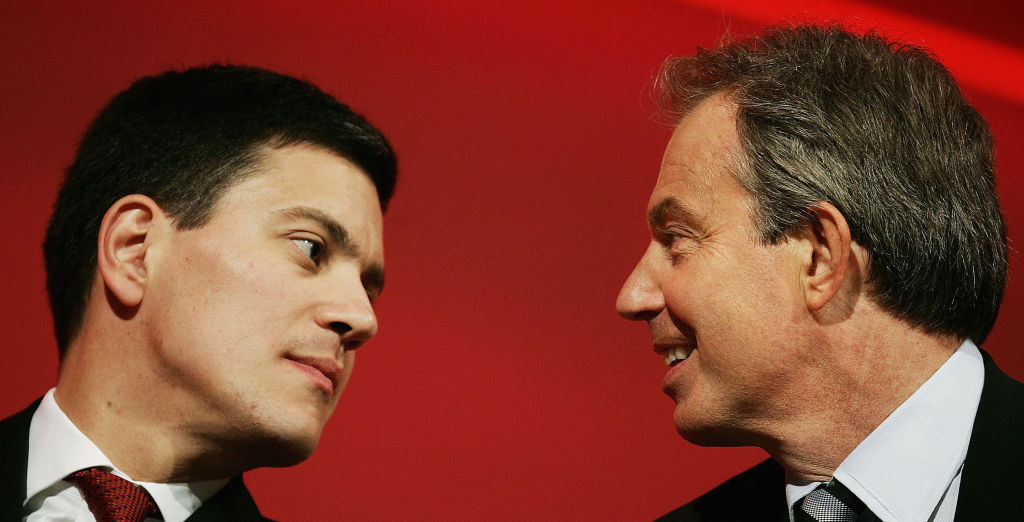
That conflict was useful to Vladimir Putin, who used it to justify his full-scale invasion of Ukraine. It also undermined Western arguments about the importance of backing a democracy’s defense against unwarranted foreign attack. And, at a time when the Kremlin is on the attack, unleashing covert attacks on the West in league with an alliance of autocratic allies, we should not forget that Miliband was the supine foreign secretary when Putin launched his first European land grab in 2008, sending Russian tanks into Georgia to stymie the growth of its democracy and frustrate its desire to join Nato.
The Kremlin stirred up separatist tensions, made baseless claims of genocide, then sparked a short war that ended with Russian forces 30 miles from the capital Tbilisi and two chunks of the country breaking away as self-declared republics. Here was Putin’s template for later events in Ukraine, a clear warning for the West that smart historians will see as leading directly to the atrocities 14 years later in Bucha, Izyum and Mariupol. Miliband condemned the Georgia invasion as “entirely unjustified”, yet for all his tough talk, he did nothing. Not even a single sanction. “Isolating Russia would be counterproductive because its international economic integration is the best discipline on its politics,” he trilled. “Our approach must be hard-headed engagement.” So how did that realpolitik work out?
Traveling the world, delivering grandstanding speeches, making new contacts and opining in interviews — you would think he would be great at diplomacy. But, according to journalist Tim Shipman, he’s one of the rudest men in politics. “I was reminded of the comment by a Labour adviser that if David Miliband was at a party talking to Barack Obama and Nelson Mandela,” he wrote in the Spectator, “he would still be looking over their shoulders to see if there was anyone more important to talk to.” Similarly today, as he seeks to escape from his IRC travails, it is like he is looking over shoulders for a more important opportunity.
Miliband often pontificates on his theory that we live in an “age of impunity”, which he defines as “the exercise of power without accountability…the mind-set that laws and norms are for suckers”. If Burnham delivers his desired post of foreign secretary, Miliband will have proved this point with painful precision.
Ian Birrell is an award-winning foreign reporter and columnist. He is also the founder, with Damon Albarn, of Africa Express.
 ianbirrell