





Andy Burnham has raised 'the prospect of a Britain in which wealth will be rooted in actual production' (Getty)





Keir Starmer’s tearful resignation, followed swiftly by Andy Burnham’s hasty coronation, is an acknowledgment that, two years on from winning a record majority, something has gone very badly wrong for Labour. Many commentators have pinned the blame on the figure of Starmer himself, as if Labour’s problems were merely problems of presentation, and a new frontman — a new vibe — will be enough to turn things around.
This is a grave error, and Burnham’s Manchesterism speech on Monday — his first major intervention as Prime Minister presumptive — acknowledged as much. Alongside his eyecatching plan for a Northern wing of Number 10, he lambasted the UK’s public sector for “chasing cut-price deals around the world” as opposed to helping our own “British-based suppliers”, and promised to make taxpayers’ money work “harder for them”. This was a theme Burnham aired repeatedly during the byelection campaign in Makerfield. He cited Britain’s “wasted decades” of neoliberalism and the need to end “forty years of failed economic policy”, raising the prospect of a Britain in which wealth will be rooted in actual production, far more evenly distributed across its regions, and democratically controlled.
The significance of his argument is that it points towards a different economic future from the Blair-era comforts that Starmer and Rachel Reeves have been selling us: essentially, spend more, tax fairly, regulate better. This assumes that Britain’s problem is essentially one of distribution and inefficiency, and could be corrected by a more competent management of the existing settlement.
This was always inadequate, and it is encouraging to see Burnham embrace the concept of Manchesterism, as laid out in The Productive State, by Mathew Lawrence and Alex Williams, one of the most serious economic frameworks to emerge from the Labour center-Left in many years. Nevertheless, Manchesterism, even in its most developed form, does not go far enough. It remains primarily a program for rebuilding the foundations of the economy through better public provision. But Britain’s crisis runs deeper, and Burnham needs to go much further if he is to arrest Britain’s decline and build an economy that rewards rather than punishes its citizens.
What Manchesterism gets right — and where it stops
Manchesterism starts from the observation that the neoliberal model for public services has failed on its own terms. The classic approach of the Tony Blair era was to invite private companies to bid for contracts to run public services, on the theory that competition would drive down costs, via the “cut-price” deals Burnham cited. What it produced instead was a helpless state, stripped of the capacity to do things itself, at the mercy of private companies far more skilled at exploiting contract law than any harassed local authority. The fundamentals of British life — care, energy, housing, transport, health — have become commodified, run by companies more interested in extracting wealth from the public realm than actually helping people lead productive and dignified lives. The tendency is visible all over the economy: in private equity firms making billions from dysfunctional care homes; in train operating companies extracting profits from lucrative franchises while services deteriorated; in “health services” companies milking NHS hospitals as infection rates rise.
The Manchesterism alternative is public corporations borrowing against their own revenue streams at the UK government’s borrowing rate, investing in infrastructure, and running services in the public interest. The Bee Network — Greater Manchester’s integrated bus system, which Burnham brought back under public control — works. Thames Water, by contrast, is a monument to scandalous dysfunction that follows when essential infrastructure is placed under financialized private ownership.
But while bringing the foundations of daily life under public control is welcome, it will only go so far. The only way to rebuild the engines of wealth creation and ensure that productivity gains translate into broadly-shared prosperity is to restore working-class power through secure, well-paid, productive jobs. GB Energy, if properly capitalized, could begin to change the terms on which Britain generates power. But it can only do so if Britain has the domestic manufacturing base to build the turbines, cables, and grid infrastructure required. There’s no point in trading a reliance on imported gas for a reliance on imported “clean” technology.
Instead, we must recognize that Britain’s political dysfunction is really a reflection of our failure to answer two fundamental questions: namely, who owns and operates the foundations of the economy? And in whose interests? Today, the economy serves shareholders, management consultants, financiers and property owners. The real challenge is to create an economy that instead serves workers, and rewards the creation of real wealth. In other words, Britain’s crisis goes deeper than Manchesterism — and the debate must be conducted at the level of rigor and ambition appropriate to the moment.

The productive crisis
Britain’s fundamental economic problem is structural and specific. Labor productivity has been essentially flat since the financial crisis of 2007-9. British workers produce less output per hour worked than their counterparts in Germany, France, or the United States — and the gap has been widening. Net national savings have been in negative territory for nearly two decades, and we have meanwhile been consuming our accumulated capital stock — letting factories rust, railways decay, and infrastructure crumble — rather than investing to expand it. Our trade deficit in goods has also been persistent since the mid-1980s. We have become a nation of consumers, and we are consuming on credit.
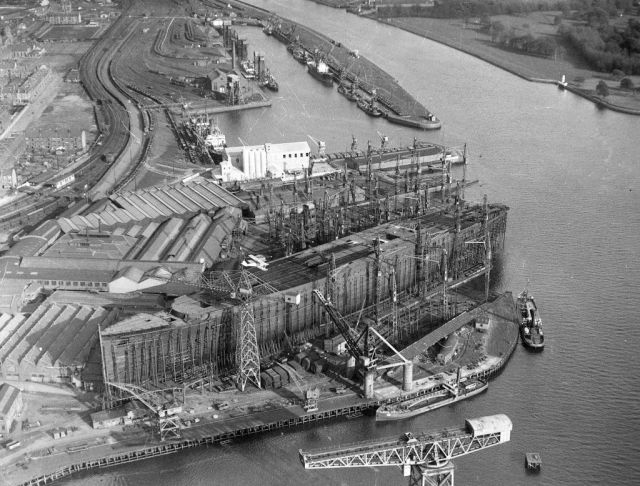
The scale of the destruction that created this situation is still not adequately appreciated. In 1979, manufacturing accounted for close to 30% of British GDP. Today, that figure is 8-9%, with employment in the sector falling from 6.8 million to 2.6 million workers. The well-paid, unionized factory jobs that sustained communities across the North, the Midlands, Wales and Scotland have meanwhile been replaced by insecure, non-unionized work in call centers and distribution warehouses. These are the communities that have voted for change at successive elections — including Brexit —and have been repeatedly disappointed. In the regions that bore the brunt of the destruction, economic inactivity among working-age people now runs at between 24 and 28%.
The financial sector that subsequently grew did not magically compensate for this destruction. Rather, it profited from it. In 1979, Margaret Thatcher’s new government implemented one of its signature policies in removing controls on the international flows of capital. This enabled the City of London to speculate with the wealth that had been generated by British production in international financial markets. When steelworks in Sheffield or shipyards on the Clyde or car plants in the West Midlands closed, the banks and asset managers were not passive bystanders. They recycled the capital — putting it into property speculation, consumer credit, and financial engineering.
One notorious instance occurred in 1991. Hanson Trust quietly acquired a stake in ICI, then Britain’s largest manufacturing company, in what was widely seen as the opening move in a hostile takeover. Hanson had no interest in building Britain’s chemical industry. Instead it hoped to unlock shareholder value through the break-up of one of Britain’s great industrial companies. Although the takeover never materialized, the episode accelerated a profound shift in ICI’s strategy. Within two years it had demerged its pharmaceuticals business as Zeneca and embarked on a prolonged restructuring driven increasingly by shareholder value rather than long-term industrial development. Hanson exited after making a substantial profit, having contributed precisely nothing to Britain’s productive capacity. This, in microcosm, has been Britain’s industrial policy over the past 40 years.
But this hasn’t just been bad for British industry. Financialized capitalism has also had consequences for equality. The richest 10% of the population now receives 35% of Britain’s income in yearly bonuses, dividends, capital gains, and rents. The richest 1% holds more than 20% of the total wealth, while the poorer half of the country holds around 5%. Real wages in 2023 were barely higher than they were in 2007. A third of children now live in poverty — more than half of them from working households.
This escalating inequality is not only the result of an unfair distribution of the proceeds of growth. An economy built on Serco contracts, Deliveroo riders and Cavendish Square hedge funds does not present us primarily with a distribution problem — which is why the old Blairite formula of spending more, taxing fairly and regulating better isn’t going to do much to improve it. This is, instead, an economy that has stopped growing in ways that reach most people. Stressed workers scrabble for gig work between insecure care-home shifts while those who own the businesses extract ever more wealth. This is because the productive base that once made broadly shared growth possible was deliberately dismantled.

So Britain cannot create prosperity, reduce inequality, or regain genuine sovereignty without rebuilding its productive base. Manufacturing is where labor productivity rises most systematically through mechanization, automation, technical change, and information technology. It is where workers’ power has historically been strongest, allowing productivity gains to translate into wage increases rather than shareholder returns. And it creates deeper growth around it too, since manufacturing doesn’t just create jobs in factories — it also supports jobs in the businesses that supply materials, transport goods, and sell finished products.
Moreover, services, including finance, which have become the mainstay of the British economy, will never correct the persistent trade deficit in goods. The alternative to reindustrializing Britain is not the economy of highly-paid knowledge workers that we were once promised. It is a low-tech, low-paid service economy in which finance continues to dominate and inequality persists. In other words, the Britain we live in now.
The skills catastrophe
Integral to Britain’s productive failure is an acute crisis of labor skills. The destruction of manufacturing did not simply eliminate jobs but extinguished the knowledge that lives within workforces, apprenticeship networks, and technical colleges — as well as the relationships between firms and the people who build and maintain things. The steel towns of South Yorkshire, the shipbuilding communities of the Tyne and Clyde, the sheet-metal and toolmaking traditions of the Black Country had distinct identities built on skill, pride in craft, and knowledge passed down over generations.
Once this knowledge is gone, it does not return automatically when investment arrives. British manufacturers regularly report the absence of welders and metal fabricators, toolmakers, electrical and instrumentation technicians, mechatronics and robotics engineers, and CNC programmers. These are the foundational competencies of any modern industrial economy — and without them, reindustrialization is far harder even when the will and the finance exist. The technical education system that might address this gap is fragmented and poorly funded. England is particularly weak on post-16 higher technical training — the kind of provision that Germany delivers through dual vocational apprenticeships and the Berufsschulen system. Worse, mainstream commentators have consistently failed to grasp the depth of the problem because they treat skills as a training policy question rather than a structural consequence of forty years of productive decline.
The coming wave of artificial intelligence displacement makes the urgency greater still. Without a deliberate and funded redeployment and retraining of workers, tied to real posts in expanding industrial sectors, Britain will face a hollowing out of its services workforce. We need a national labor plan, offering long-term training programs, mid-career conversions, and apprenticeships of a kind Britain has not had for decades.
The bond market as political test
One argument commonly ranged against public corporations is the idea that they will spook the bond markets. The specter of Liz Truss’s disastrous mini-budget of September 2022 is never far from such discussions. But the bond market panic Truss unleashed was a response to unfunded sovereign borrowing without specified supply-side returns. This was effectively a subsidy for the wealthy, not targeted public investment in productive assets.
By contrast, public corporation financing is usually acceptable to bond markets — as long as it is credibly structured and borrows against its own revenue streams. The Netherlands finances public corporation liabilities equivalent to nearly 80% of GDP without sovereign disruption, though, to be sure, the institutional framework is different from Britain’s.
Burnham has taken a position on this issue, even stating that “Britain is in hock to the bond markets” — though he has also sometimes tied himself in knots trying to reassure financial markets that an ambitious program would not alarm them. The Dutch example shows it need not be the dire problem it is often made out to be.
But a Labour government that begins to implement a truly ambitious industrial policy can expect a different order of response from the City of London — which will inevitably generate pressure on gilt yields, pressure on sterling, and pressure on the political class to abandon ambition. That pressure will not be a market verdict, however — but, rather, a political intervention by concentrated financial interests whose position would be threatened by the program.
In other words, the barriers to taming the bond markets are political, not technical. A government that issues debt in its own currency and is prepared to use its central bank cannot be forced into default by bond market pressure. Central bank independence is a shibboleth of the neoliberal era — a constraint entrenched by Gordon Brown’s decision in 1997 to grant the Bank of England operational independence. However, its time has now passed. The Bank of England is a public institution, and part of its mission must be to deploy its control over the nation’s credit to rebuild the nation’s productive base. Since the crisis of 2007-9, the Bank has created vast amounts of money to bail out failing banks and manage stagnation. There has always been money for that. The Bank should be at least as forthright in rebuilding Britain’s productive capacity.
An ambitious Labour government should be able to rely on the Bank to continue holding its gilt stock rather than unloading it at loss-making prices, as it is currently doing at vast cost to public finances. The Bank ought to reinvest maturities and keep interest rates low and stable while Britain rebuilds its productive capacity. A break from the Bank’s current posture is a break from New Labour’s foundational economic settlement and should be named as such.
But even a cooperative Bank of England would be insufficient without a wave of public investment in key infrastructure capable of “crowding in” private investment. It would further require a well-capitalized Public Investment Bank with preferential access to the Bank of England. It would thus raise immediately the issue of some degree of capital controls, in order to ensure that money generated in Britain stays in Britain rather than being spirited away to accounts in Switzerland or the Cayman Islands the moment a government pursues policies that threaten the returns of mobile capital.
Capital controls are neither exotic nor radical. This was standard policy in Britain from 1945 to 1979, the period of the country’s strongest growth performance in recent decades. They are currently used by China, India, and many other successful industrializers. Even the IMF has acknowledged their legitimacy under conditions of financial instability. Their purpose is not to cut Britain off from the world but to change the incentives for fast-moving speculative capital, preventing it from disrupting the productive sector and limiting the power of finance over elected governments.
A Labour leadership candidate who cannot articulate a credible strategy to prevent capital flight, including the readiness to use targeted capital controls as and when they are necessary, has not yet answered the fundamental question about surviving contact with the City of London.

The policy space Brexit created
Beyond finance, a serious industrial strategy will also take advantage of the policy space that Brexit created and that no government since 2016 has exploited in the ten years since the vote. This failure makes Labour’s continuing internal paralysis over the question of rejoining the single market all the more damaging. Britain is now free to align trade policy with domestic investment and employment in ways that EU single market membership foreclosed.
An industrial strategy that hopes to deliver results will need time for productive capacity to take root. In the meantime, the risk is that new capacity will be killed through cheaper imports from countries with lower wages, laxer standards, state-sponsored overcapacity and so on. This is how capitalism works, and there is no point pretending otherwise.
Nevertheless, there are several tools available: WTO anti-dumping measures and safeguards; a Carbon Border Adjustment Mechanism that could equalize the carbon price of imports in steel, aluminum, cement and other foundational sectors from 2027; procurement rules requiring domestic content and supply chain traceability. If necessary, tariff-rate quotas, national security designations, and domestic content conditions can be attached to public subsidies and grid connections. Donald Trump has made managed trade a normalized reality in the world market — and there is no going back to the free-trade consensus of the previous, now defunct, era. Britain should use the space available to it and stop wasting time.
Organized labour as key mechanism
There is one further dimension of this debate which has been less visible so far, but is crucial to whether Britain can come up with a genuine alternative to an extractive economy— trade unions. Organized labour is not simply a constituency to be won over but a key mechanism for restoring Britain’s wealth-creating capacity. Union representation on the boards of public corporations is the lever through which public ownership serves the interests of workers and the public. Union power in Britain is how regional rebalancing becomes real rather than rhetorical. The skills crisis cannot be addressed without organized labour either — for workers tend to understand the needs of their own industries better than those outside them. The reconstruction of apprenticeship frameworks, the rebuilding of technical education, the link between training investment and union density that coordinated market economies have consistently demonstrated — all of this requires workers’ collective power, organizational capacity and crucially, their practical knowledge.

The tests of seriousness
Andy Burnham could run on Manchesterism and offer a better-managed version of the current settlement. That would be an improvement — but it would not be the breakthrough that Britain truly needs. The country desperately needs policies that address its deep productive crisis. If a radical Labour government is to go down that path, four specific commitments will be the test of its seriousness, as we show in detail in our forthcoming book.
First, a target to raise manufacturing’s share of GDP to an achievable and sustainable level that could act as a base for further increases. This should be backed by a costed investment program that includes public equity stakes, a properly capitalized Public Investment Bank, and union board representation as a condition of public finance.
Second, graduated and targeted capital controls to protect democratic economic decisions from speculative financial attack.
Third, trade regulation that uses the policy space Brexit created and no government since 2016 has seriously exploited.
Fourth, a national labor plan for rebuilding skills and training, with long training programs, mid-career conversions, and apprenticeships with high completion rates, as the vital human foundation without which an expanding industrial base cannot exist.
Britain has had nearly five decades of neoliberal failure, punctuated by the periodic realization that its decline is worse than previously acknowledged. The debate that Manchesterism has opened is the right one, and the left should deepen it. The central challenge remains Britain’s crisis of production, from which its crisis of provision ultimately flows. The four commitments we have outlined are the minimum conditions for a genuine break. Anything less is a better-managed version of what we already have — and we know that it does not work.
Costas Lapavitsas, Larry Elliott, and Doug Nicholls are the authors of Reindustrialise Britain: A Strategy for Wealth Creation (Polity Press), forthcoming, September 2026.