









June 21 2026 - 1:00pm
Few arguments for female-only spaces are as compelling as the need to protect women in prison. Female prisoners are among the most vulnerable people in society; many have survived sexual abuse, domestic violence, exploitation, and trauma long before entering custody. It is baffling that it has become controversial to suggest that locking these women up with male criminals puts them at risk.
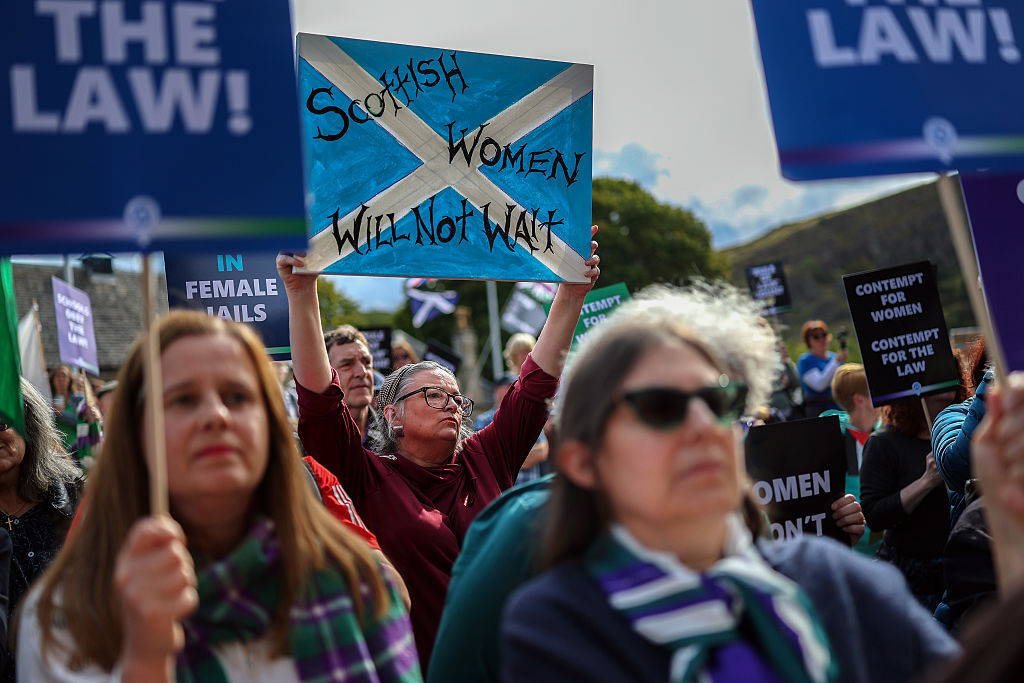
We should therefore be encouraged by Friday’s judgment in Scotland, where Lady Ross ruled that prison guidance permitting male prisoners who identify as women to be accommodated in the female estate is unlawful. The normative effect of this latest victory in the courts is significant. If we can see the inhumanity of putting men in such close quarters with vulnerable women, perhaps it will become clearer why it is similarly unsuitable to allow them in hospital wards, changing rooms and rape crisis centers.
Supporters of the policy have argued that prisoners should be assessed individually rather than housed according to sex. The difficulty with this approach is that risk is often impossible to predict. Currently, the decision on whether a trans-identified man is admitted to a female jail is based on an assessment of whether he has ever posed a risk to women. And yet we know from the evidence that sexual offenses are massively overrepresented in this specific cohort of males. Figures from 2024 show that, of the 245 trans-identified males in prison, 151, or 62%, had been convicted of a sexual offense. This is a far higher rate than that for the overall male prison population (around 17%). There was nothing exceptional about 2024 — a similar rate (56%) was reported for 2023.
Sandra*, an addict who has been in and out of prison over the past few years for theft-related crimes, was locked up in HMP Bronzefield in Surrey with a trans-identified male. He was very large and broad-shouldered, she tells me, and sported a long wig. He would rub his crotch during mealtimes, while staring at the women. “I reported him,” Sandra says, “and two other women also told the officers that they felt uncomfortable. We were warned that we’d be on charges of being ‘transphobic’ if we didn’t pipe down, and we would have privileges removed.”
The women’s overwhelming fear was that they wouldn’t be protected by the officers if anything were to happen. And when it did — Sandra was sexually assaulted in the showers — she was disbelieved. She has since taken out a legal case against the prison service, and awaits a response.
Some judges are sympathetic to the dangers. Amy* was also sexually assaulted in prison and subsequently took out a legal case. In a 2021 judgment, Lord Justice Holroyde accepted that Amy had raised real concerns, and that “a substantial proportion of women prisoners have been the victims of sexual abuse and/or domestic violence.” He acknowledged that many women would “suffer fear and acute anxiety if required to share prison accommodation and facilities with transgender women with male genitalia and convictions for sexual and violent offenses against women”.
But Holroyde also said that focusing on previous sexual convictions was a “misuse of the statistics, which… are so low in number, and so lacking in detail, that they are an unsafe basis for general conclusions”. With this, the concerns raised by prisoners such as Amy are dismissed.
In response to the judgment, Susan Smith of For Women Scotland expressed her hope that this would be the last time women have to go to court to defend rights we thought we had already secured. I doubt it will be. But the victory is still groundbreaking. Most people will never set foot inside a prison; few will ever have a loved one behind bars. It means that female prisoners are easy to ignore. But even the most marginalized are entitled to basic dignity and safety. Lady Ross’s judgment will carry resonance far beyond the cells, reaffirming the principle that women everywhere have the right to be kept safe.
*Names have been changed.
Julie Bindel is an investigative journalist, author, and feminist campaigner. Her latest book is Lesbians: Where are we now? She also writes on Substack.
 bindelj