









May 30 2026 - 8:00am
Much of Keir Starmer’s premiership has been an attempt to get the New Labour band back together. Infamously, he asked Peter Mandelson to take on the role of Britain’s ambassador to the United States, hoping that the Prince of Darkness’s reputation for political cunning would make him a snake-charmer in Washington DC. Instead, the appointment blew up in Starmer’s face and almost brought down his government.
Still, the PM persisted. Earlier this month, desperate to distract from his party’s battering in the local and devolved elections, he invited former Labour grandees Gordon Brown and Harriet Harman into No. 10 Downing Street for a photoshoot and the dishing out of titles. Yet neither has so far proved the buttress for Starmer’s leadership that he hoped.
The latest old name to join the line-up is Alan Milburn, former chief secretary to the Treasury and health secretary under Tony Blair. While less well-known, his contribution — a report into young people not in employment, education or training (Neets) — promises to be more substantive. If, that is, the Government actually responds to the risk of a “lost generation” of young Britons.
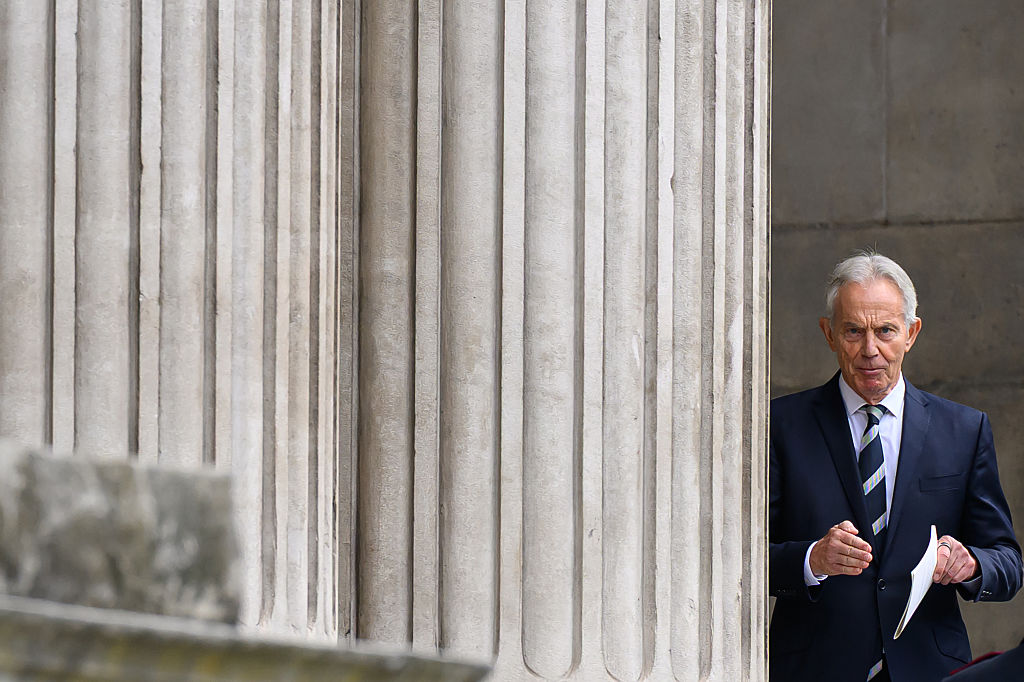
Missing from the official reunion is one Tony Blair, who, unhappily for Starmer, is the only New Labour figure still capable of making the political weather. All it took this week was for Blair to write a blog on where Starmer and Labour have gone wrong and every tongue in Westminster was wagging. They haven’t stopped yet.
Blair accused the party he once led of being in its “comfort zone” on the “soft left”. For example, while Labour members widely support Ed Miliband’s work to achieve Net Zero, Blair’s essay called for cheaper energy and more exploitation of the North Sea. This, he said, is the “radical but sensible” politics the country needs. As the actual architect of New Labour — and the only Labour leader to win multiple elections without being defeated by the voters — one might have thought Blair would be listened to inside his party. Not a bit of it.
While welcoming the contribution of Blair’s former cabinet ministers, Starmer took to Substack on Thursday to call Blair himself “wrong”. Aspiring leaders Wes Streeting (described by Blair as “a huge political talent”) and Andy Burnham (“an outstanding member of my government”) publicly rebuked the three-term PM, too — no doubt to appeal to the Labour members, cocooned in the party’s comfort zone, who will help choose the next leader.
With ineffective figures brought inside the tent, and the biggest beast of all sounding off outside it, it’s hard to conclude that Starmer is managing his party’s grandees well. A more confident prime minister might try to sideline the ghosts of politics past altogether. In 1979, Margaret Thatcher rebuffed the suggestion that Ted Heath would become foreign secretary and offered him an ambassadorship instead. Heath saw it for what it was — an attempt to get him out of the country and the Commons — and declined. She then managed him deftly on the backbenches.
Blair similarly managed without recalling his predecessors. Though John Major was the first to send former Labour leader Neil Kinnock off to Brussels as a European Union commissioner, Blair was in no rush to bring him back. Kinnock spent all but the last years of Blair’s premiership out of the country.
Both Thatcher and Blair had enough confidence to believe they could chart their parties’ new course without excessively looking astern. What’s more, they had a clear plan of what they wanted to achieve — and how it was distinct from what had come before — to effectively handle any critiques from their forebears.
No such confidence or plan is evident today. Starmer instead finds himself calling upon a selected roster of New Labour figures to try and strengthen his government. Even in the best of circumstances, it’s a strategy that’s unlikely to work. As he struggles to manage Blair, and turns a deaf ear to his predecessor’s analysis of the present government, Starmer is doomed to be trapped by New Labour.
Lee David Evans is an historian of the Conservative Party and the John Ramsden Fellow at the Mile End Institute at Queen Mary, University of London. He is the author of Coronations & Defenestration: Choosing (and losing) Tory Leaders and the co-host of the podcast Since Attlee & Churchill.
 LeeDavidEvansUK