




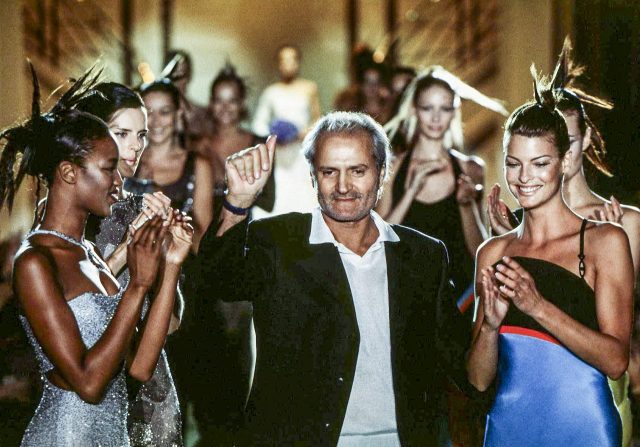
Gianni Versace with Naomi Campbell, Stella Tennant, and Linda Evangelista. (Victor Virgile/Gamma-Rapho/Getty)





I
It was not the first time I had been in South Beach. An earlier visit to Florida had come about by happenstance. A chilly autumn in the mid-Nineties, and I was on a book tour through half a dozen northern cities — New York, Philadelphia, Chicago, Minneapolis-St Paul, San Francisco — when a last-minute invitation came for me to do a public reading at the Miami Book Fair. I imagine someone important had canceled, and the cry went up, “Send Banville, he’ll go anywhere.”
I arrived in Miami late in the evening, befuddled by a combination of my chronic and incurable fear of flying, and the jorums of business-class bubbly — yes, it was tough, in those days — with which I had sought to quell my vertiginous terrors. The hotel, right on the front in South Beach, at first struck me as quaint, and then as downright shabby. It was a hot night, even for Miami, and there was no air conditioning in my room, except for an enormous wooden fan in the ceiling creakily circling directly above my bed; of course to me, spreadeagled sleepless beneath it, it looked like nothing so much as an airplane propeller.
When I questioned the person at reception about the down at heel appearance of the place, and the fact that few things in my room worked, I was loftily informed that the hotel had recently hired a hot-shot designer to “distress” the building back to how it had looked, and functioned, when it was built in the Thirties. The Grand Hotel Gimcrack, the manager himself assured me, was now one of the most fashionable destinations in this most fashionable of Floridian resorts.
Further assorted shocks were in store.
I had been woken that morning by the din of many persons vigorously at play outside; in fact, the racket had been going on all night but my exhaustion had deafened me to most of it. I rose shakily from my bed of pain, balancing on my forehead an invisible cutglass flute in which my hangover was busily fizzing, and stumbled to the window and drew open the slatted shutters, wincing against the thrumming sunlight and the harsh sea-glare.
Spread before me on street, on grass, on sand and in the blue-and-white breakers was a scene of carousal, in which everyone seemed to be about seven feet tall, as near to naked as they could be without inviting arrest, and perfectly, oh but perfectly, suntanned. All were moving, and all were making noise. This I had more or less expected — my sons when young never missed an episode of Miami Vice — but there was one spectacle that baffled me utterly.
Just across the street, beyond a low hedge, was a paved pathway upon which many marvelously youthful and, again, half-naked titans and titanesses were effortlessly, endlessly gliding back and forth, swooping and bending and elegantly pirouetting, without it seemed the slightest danger of collision or collapse. Because of the hedge I could see them only as far down as their taut calves and glistening shins. My God, I thought, they’ve had their feet removed and been fitted with wheels instead!
I had come from Ireland, where at the time the rollerblade was as yet unheard of.
II
The reading in which I was to participate took place in a large, airy and somehow reverberant pavilion, into which people would stroll and stop for a moment and then stroll out again, with what seemed to be either moody disdain or frustrated eagerness; the real action, at these events, is always elsewhere, on the next stage, in the next hall, or in that bar where the celebrities congregate though no one knows where it is.
The writer I was to read with had the previous day been named as that year’s winner of the Pulitzer Prize for fiction. This was a small detail the PR people at my publishers had neglected to share with me. After the event, we two performers were led to a large, sunny courtyard and seated at a pair of small tables on which were piled many copies of our books, to be sold and signed.
Awaiting the Pulitzer winner was a queue of fluttering fans that stretched, as far as I could see, halfway up the spine of Florida. In my line there were three people. One was a scholar from the University of Miami who was writing something on my work, the second was the madman in the raincoat — there is always a madman in a raincoat, bearing urgent testimony along with a thick, much-thumbed and long pored-over manuscript — and the third a smiling, kindly fellow who leaned down at my ear and whispered that he was not going to buy my book, but he had thought to stop and say a few words to me, since I looked so lonely.
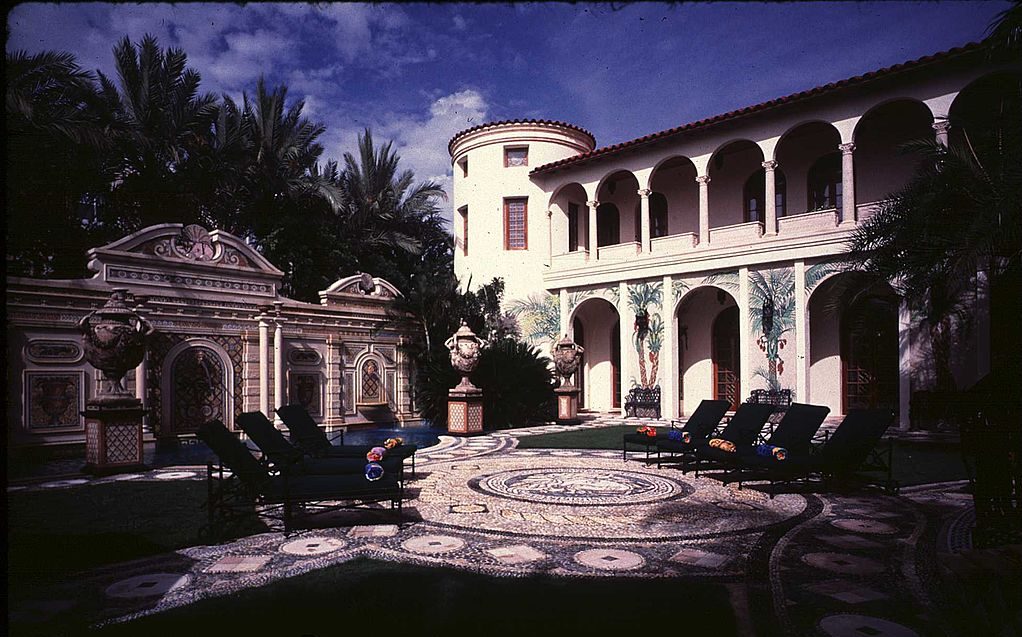
Afterwards, my scholar friend bought me a consolatory drink and walked me to my hotel. I was sure the back of my neck was still burning from embarrassment. We came out on to Ocean Drive, and passed by a fine old house, three-story, cream-painted, with balconies, and a mock-medieval front door studded with iron bolts, and luxuriant palms in giant pots flanking a decorative, wrought-iron gate.
“That’s Versace’s place,” my friend said. “Casa Casuarina.”
“Versace?” I said. “Versace who?”
My friend sighed.
“Gianni Versace,” he said. “Fashion designer. Which century are you living in?”
III
His name, and the name of the house, must have lodged in some dusty cubbyhole of my mind, for I was able immediately to retrieve them when, some years later, in 2001 or so, an American style magazine contacted me to ask if I would be interested in writing a piece on Casa Casuarina, in South Beach, Florida.
Why?
It has been bought by a local businessman, I was told. He’s going to transform it into a private club, or maybe a small hotel, and he wants to have an impression done of the place as it is, before the redesigners arrive.
“Why did Versace sell it?” I innocently asked.
A pause, and then:
“He was murdered, years ago. What planet are you living on?”
IV
Gianni Versace was one of the most successful, iconoclastic and outrageously talented fashion designers of the 20th century. He was born in 1946 in the south of Italy, in Reggio Calabria, a place he loved and was proud of. His mother was a dressmaker — aha! — and his sister was, and is, the redoubtable Donatella, his business partner. He was interested in ancient history, his birthplace being soaked in the stuff, but also he looked hard at the modern painters, Andy Warhol and his ilk, if Andy Warhol has an ilk.
Success came quickly, and before he knew it Gianni was hobnobbing with such figures as Elton John, Lady Diana, Naomi Campbell, Joan Collins. He designed and sold lots of womenswear, founded the Versace brand, which makes everything from, oh, I don’t know, frocks to fragrances, and worked on opera and film sets. He was flamboyantly gay, declared that he did not believe in good taste, and generally thumbed his nose at the wiseacres of the industry in which he was making trunkloads of money. Giorgio Armani is said to have said that while Armani dresses the wife, Versace dresses the mistress.
By the early 2000s all this was probably known to the entire world, but not to me. When I was asked to travel to Miami and write about his house, my first reaction was to laugh — I knew as much about houses as I do about fashion design — but after a moment or two I stopped laughing and said, yes, why not? An adventure is an adventure. And Casa Casuarina would turn out to be both a revelation and a delight. My time there was a sort of dreamwalk into another, gorgeous world which to my surprise touched on my own old rumpled world in unexpected ways.
V
This time I took the right gear with me. On my first, humiliating visit to South Beach I had only winter woolens to wear, and when I ventured outdoors in my tweed jacket and worsted trousers and slithered and slipped my way among those jostling, oilily bronzed Brobdingnagians, I felt like a cloth-moth in search of a shady crevice in which to lodge until the weather cooled. Now I was decked out in short-sleeved shirts and lightweight slacks and loafers. Not shorts, however; I draw the line at shorts; later, my wife and I often bemoaned the tragic legacy of the Covid lockdown: men in shorts.
The new owner of Casa Casuarina, Peter Loftin, who had made a lot of money in the telecom business, was a large, laconic fellow with the softly burnished skin and fair coloring that seems exclusive to successful American businessmen. He received me with old-fashioned Southern courtesy, and suggested that before he showed me the house we should stroll over to a nearby restaurant for lunch and a talk.
It was a good restaurant, and a good talk.
I expected directives as to how I should approach the “legacy” of Casa Casuarina, and so on, but not a bit of it. Peter was a gentleman, and assured me straight off that he had no intention of telling me what to write or how to write it. He had heard I was good at describing houses — from whom, I wonder? — and that was all he expected me to do: write about an old house. I felt like a character in a Henry James novel being charmed by a cultivated plutocrat of the American Gilded Age.
We sat on the restaurant terrace in the shade of a giant palm trees, one of the many such that stand about the city, murmuring to themselves and gently clattering their fronds. I spoke of Ireland, he spoke of America. Both countries were in a relatively calm state at the time — we had an IRA ceasefire in Northern Ireland, and the United States had that good ole boy Bill Clinton as president — and the conversation was discursive and easy. Life is like that, on occasion.
When we returned to Casa Casuarina there was clustered around the front steps a crowd of 20 or 30 rubber-neckers, bedecked with cameras and doing the things rubber-neckers do. I asked why they were there, and I caught Peter not giving me a pitying look.
“Didn’t you know?” he said. “That’s where he was shot, right there on those steps. There’s always a crowd.”
VI
The house was built in 1930, in a U-shape surrounding an elegant courtyard. The building itself has a slight suggestion of the Cote d’Azur in its Scott Fitzgerald days of ease and excess. At the front door Peter handed me over to his staff, professionals to a man, woman and maid. I was shown to my room, an airy birdcage with, yes, a wooden fan circling in the ceiling, but this one was for decorative purposes only. This was, so the major domo informed me, the only room in the house to boast a bath.
Madonna always stayed here, in the old days, the major d’ murmured, with a nostalgic little smile. She was fond of a bath.
I began to unpack, but I had that buzz in the blood I always get when I arrive in a foreign place; a stroll about the neighborhood would get rid of the jitters. The folk on the street were as they had been on my previous visit, loose-limbed, honey-hued and noisy. I followed Peter’s directions to the café where each morning Versace bought a newspaper and drank an espresso. I bought a newspaper, and drank an espresso.
Back at the house, I was told that I had been moved to another room, as the one I had been first assigned was not cool enough.
“Madonna’s favorite room is not cool enough?” I asked, with a stare.
Polite laughter. What was meant was that the air conditioning was not working properly.
“Oh, right,” I said grumpily; for I was disappointed, as who would not be?
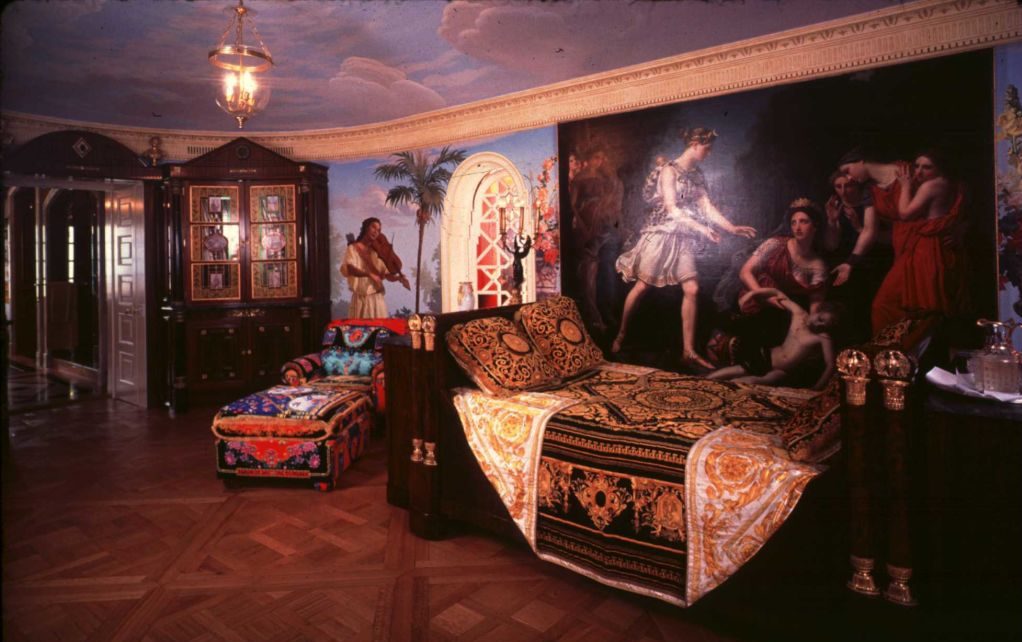
In recompense, they put me in Gianni’s own room, where I would sleep in his bed, among his treasures — all of them at once garish and exquisite — and think how strange life is, and how strange the situations it lands us in sometimes.
VII
I had foreseen vulgarity at Casa Casuarina, and I got it, in spades. However, it was not the kind or quality of the vulgar that my cultural short-sightedness had led me to expect. The Casa Casuarina was a masterpiece of interior design, and every inch of the place was stamped with the personal mark of one man. Versace’s genius, I saw right away, was to have aestheticized bad taste. Everything, from the ubiquitous and tiny stained-glass windows to the garden pool with its million pieces of blue mosaic — specially imported from Italy — should not have worked, but did, triumphantly. The place was beautiful despite.
The key to Versace’s success was nothing more, and nothing less, than absolute, rigid but always loving attention to detail.
For instance. I was walking across the courtyard one day when I thought to take notice at last of the rain ducts, half a dozen of which were set flush into the tiles at measured intervals. They were circular, four or five inches in diameter, and made of bronze. To examine one of them in detail I had to kneel down and lean forward at a sharp angle.
In the center of the little drain was set a figure I recognized at once as the Medusa head which was Versace’s trademark. It was a treasure in itself, the features perfectly molded, with heavy tresses and tragically lowered eyes and exquisitely sulky mouth. Had Versace expected people to get down on their knees, as I had — not a posture the beautiful people would favor — in order to see close-up this meticulously and marvelously made little objet? But that was the point: they were exquisite, they were there, and what matter if no one saw them up close?
I cannot remember how long I stayed at Casa Casuarina — a short week, I suppose — but in that time I came to know the place and, yes, to fall in love with it. Even the kitchen was a masterpiece of design, while the bathrooms, even the ones sans a Madonna tub, were chambers of grave quietude, such that a noble Roman would retire into when one of the more demented Caesars had ordered him to fall on his sword.
As a schoolboy Gianni Versace attended a liceo classico in Calabria, and studied Latin and Greek. He may not have completed the course — I see him as impatient, always impatient — but the lessons he learned there abided. As I got to know Casa Casuarina, as I came to be able to feel I was not staying but living there, I was reminded irresistibly of two of the most impressive, for me, of Italy’s ancient sites.
Everyone goes to Pompeii, a charnel house which should be bulldozed over, in the same way that the Colosseum in Rome, that vile abattoir, should be razed to the ground. But a little way to the north, in the city of Herculaneum, something precious endures; here are rooms decorated with murals, the paint as fresh as if it had been applied yesterday, that surely Versace knew, and emulated, whether consciously or by aesthetic osmosis.
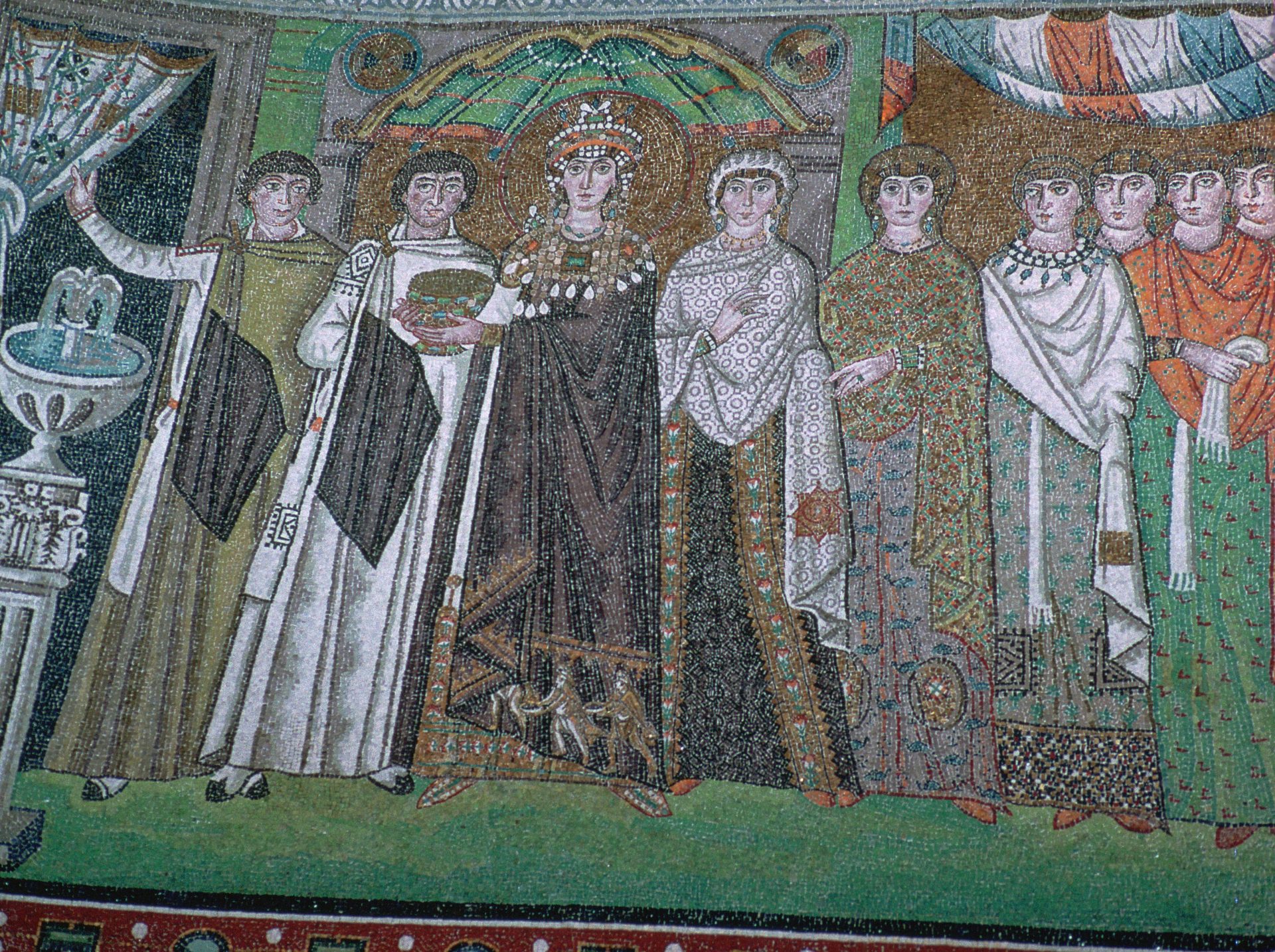
And then there are the mosaics at Ravenna, that western outpost of Byzantium which was once the capital city of the Christian world. In the Basilica of San Vitale there is a mosaic portrait of the Empress Theodora, a very grand lady who is said, by Procopius in his Secret History, to have started out as a sexual athlete performing in the city’s Hippodrome, and went on to marry the God-tormented Emperor Justinian. Look at her. That’s a Versace gown she’s wearing, if ever I saw one.
On one of the nights when I was at the Casa, Peter held a grand party — there seemed to be lots of local grandees present, anyway — and at one point in the evening I found myself standing in the soft warm darkness on a high balcony and looking down upon the courtyard where the stately shenanigans were in progress. In a corner of the garden there stood — I wonder if it is still standing? — a pretty little pergola containing six open showers, handy for sea-bathers to wash off the salt, and, later in the evening, for post-orgy sluice-downs.
As I lingered there, I reminded myself that the Greeks and the ancient Romans painted their statues in the most garish of colors and decorated them with all manner of frivolous furbelows. The notion we have of the classical world, foisted on us by Winckelmann and other fossilized antiquarians, is a marmoreal fantasy. Athens and Rome were not marbled cities; rather, they had the aspect, and surely the atmosphere, of a Liberace concert. That was Versace’s genius, to remember and acknowledge that the Glory that was Rome was in fact vulgarity writ large. And the ancients gloried in it.
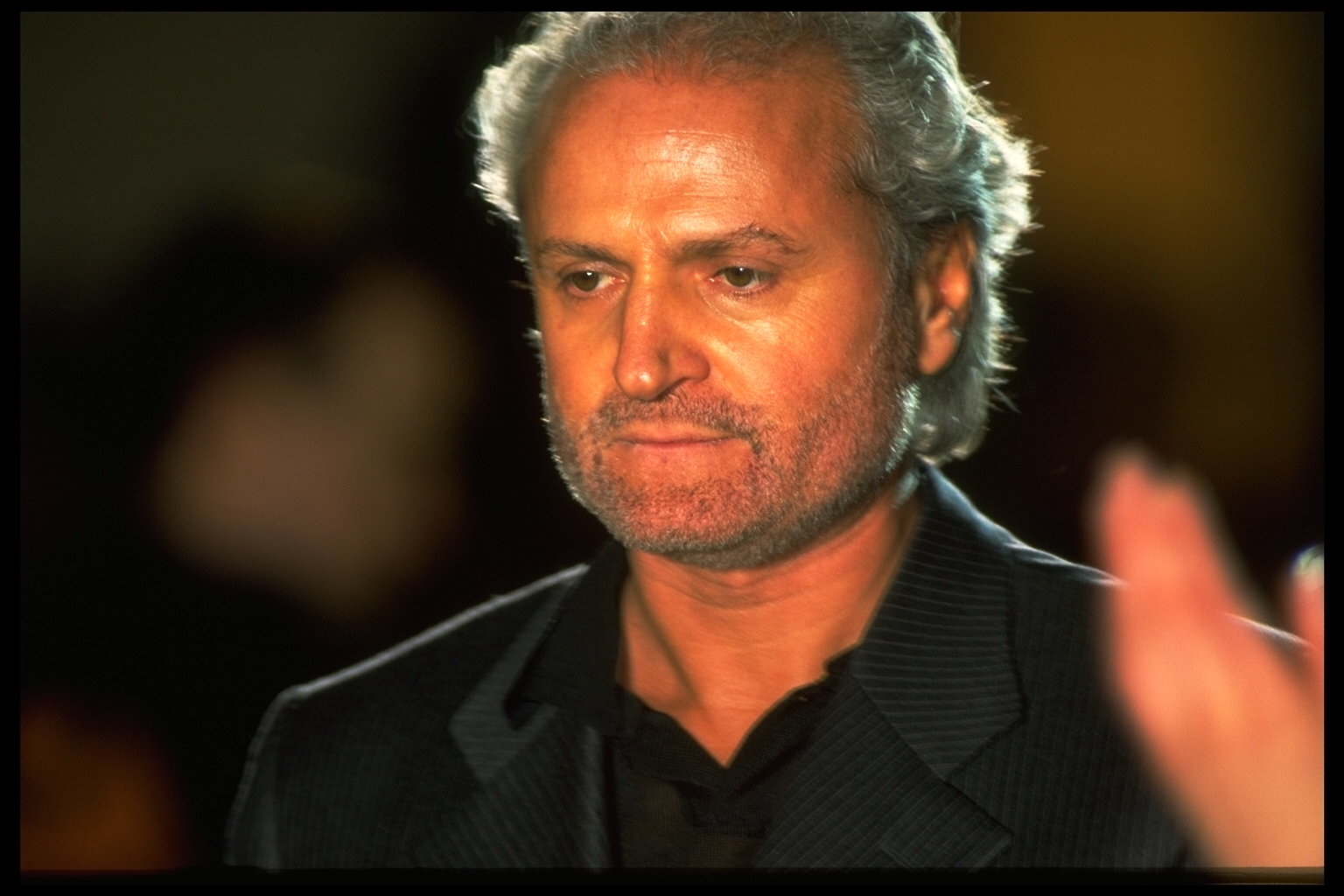
Consider a photograph, any photograph, of Gianni Versace when he was at the height of his wealth and fame. Look at that big square handsome head, the trim beard, those dark, ever-smiling eyes in the depths of which lurks a glint of terror, the terror of a man of vast talent who knows that he must depend for his fame and wealth on the denizens of café society, people at once cheap and fabulously famous, who might turn on you in a flash or, more devastatingly, turn away from you, towards the newest bright young acrobat prancing upon the sandy floor of the Hippodrome. Both Athens and Rome would have recognized him, and his genius.
He was only 50 when his nemesis, a “spree killer”, so it is said, stepped up behind him as he was entering the front gate of the Casa Casuarina and shot him through the skull at point-blank range. There was no motive for the killing, it seems — just part of the spree. One imagines an observer on some planet in the region of Cygnus X-1, say, whose tedious task it is to monitor our blandly pastel world, seeing, that day in the middle of July in 1997, at the edge of a finger of land pointing south from one of the northern continents, a shimmering spot of vividest color being suddenly extinguished.