









May 14 2026 - 10:00am
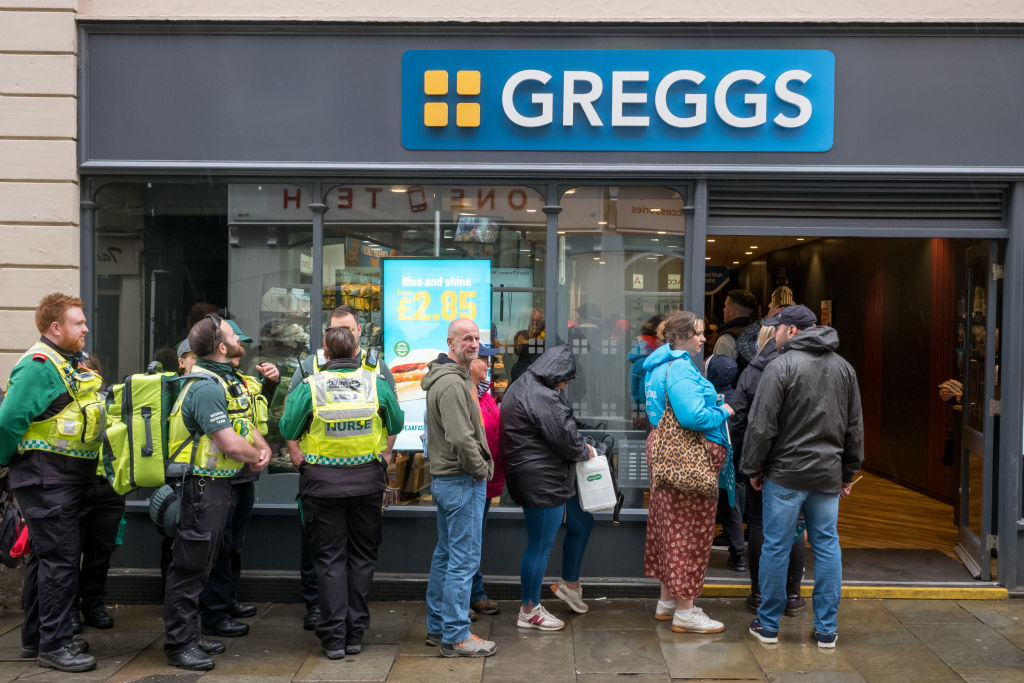
Many years ago, I asked for an espresso in a Greggs in Sunderland, and the lady behind the till said, with some concern: “They’re just those little coffees, mind.” To me, this said a great deal about the touching friendliness of ordinary people in the North East. But the fact that I could order “un caffè” from a branch of a company that began as one man on a bicycle selling eggs and yeast to miners’ wives on Tyneside should surprise no one. The famous Greggs didn’t grow from a single shop on Gosforth High Street in 1951 to a business with a £1 billion turnover without innovating. In exciting news, it has recently been announced that the brand has gone global.
Or, more precisely, it has gone to Tenerife Airport, which for millions of British holidaymakers is emotionally indistinguishable from home anyway. Still, the symbolism is irresistible: the UK’s most beloved purveyor of cheap, comforting beige food has plans to open an international outpost and, in doing so, has offered a strangely revealing snapshot of the state of the nation.
The shop’s success is all the more remarkable considering how few culinary gifts Tyneside has given to the world. The caloric demands of coal-mining — the only profession entitled to extra wartime rations — ensured the popularity of stodgy spud-based Geordie fuel like panhaggerty and panackelty, not to mention ham and pease pudding stotties, which are a former Greggs staple.
Within this is a deeper irony: Tyneside may once have exported coal, ships and footballers. Now it exports snacks. But what snacks! So here we are, exporting the one thing we’ve mastered: meaty or cheesy fillings encased in a reassuringly industrial crust. Never mind the green tech revolution: the true ambassador of British enterprise is a £1.25 sausage roll now priced in euros.
Greggs is also something of a victory lap for the North East, a region that has spent a century being politely ignored by Westminster unless a by-election demands otherwise. Yet Tyneside’s proud history as a center of retailing excellence is often overlooked. After all, Bainbridge’s of Newcastle claims to be the world’s oldest department store, and Fenwick remains a storied Geordie institution. But Fenwick has recently closed its flagship store on Bond Street, which itself has disappeared like those other embassies of the North East in the capital. Look at the demise of the Coal Exchange in the City of London, Armstrong’s Head Office opposite HM Treasury, or even the Bishop of Durham’s long-lost palace on the Strand.
In 2018, it fell to Greggs to establish a new Geordie bridgehead in the capital when it opened a branch in Westminster tube station. So now the aromas of freshly baked cheese-and-bean melts waft through the corridors of power. With its new outpost in the Canaries serving the same pastries that fuel half the British workforce, Greggs has provided a kind of edible stability in an uncertain world and has shown that Tyneside enterprise is still a force to be reckoned with. Forget coal and ships: we built this city on sausage rolls.
Dan Jackson is the author of the best-selling book The Northumbrians: The North East of England and its People. A New History, published by Hurst (2019)
 northumbriana