









April 17 2026 - 7:00am
Yesterday, Donald Trump announced a 10-day ceasefire between Israel and Lebanon after six weeks of escalating violence. Later in the evening both Israel and Lebanon declared their participation, as did Hezbollah. Fighting in Lebanon broke out earlier this year, just days after the US launched strikes on Iran. A tentative pause had held since the 2024 ground offensive in southern Lebanon, an operation Israel said was necessary to eliminate the threat posed by Hezbollah.
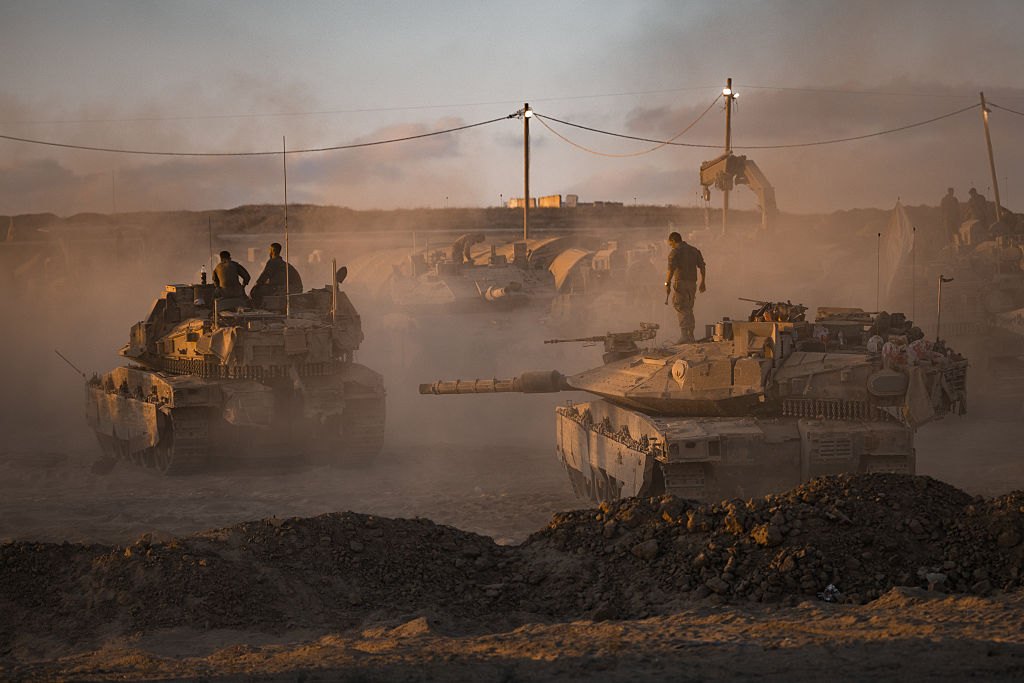
However, at the center of Israel’s strategy in negotiations with Lebanon is the creation of a “buffer zone” between the two countries. Benjamin Netanyahu yesterday announced that there would be a “security zone” in south Lebanon included in the ceasefire. The idea is to establish this zone to push Hezbollah fighters and weapons away from Israel’s northern border. Even if the ceasefire holds, a central question remains: whether Israel will maintain its buffer zone in southern Lebanon — and whether such a strategy can deliver lasting security. For many Israelis, particularly those displaced by Hezbollah rocket fire, the further the terrorist group is pushed back, the safer they feel. Yet buffer zones have a poor record of delivering durable protection. In fact, as Israeli history shows, they can often end up expanding the war zone, increasing the threat beyond border towns to those occupying these buffer zones.
So why are many Israelis so desperate for the policy to return? In 2024, I visited Kiryat Shmona, a northern Israeli town largely abandoned due to Hezbollah attacks. Entire streets stood empty. Homes had been struck by rockets, and the local primary school bore the marks of fire and shrapnel. For residents I spoke to, forced to leave, the idea of a buffer zone was a condition for return.
Those residents are not alone. Netanyahu has leaned heavily into this argument. Visiting Israeli positions inside southern Lebanon last week, he claimed that the security zone had already “thwarted the threat of an invasion” and helped reduce rocket and anti-tank fire. Yet behind this confidence, the strategy has plenty of critics, including within the Israeli military itself.
Standing on the border between Israel and Lebanon just days before the 2024 invasion, I spoke to an IDF colonel who cautioned against the very policy now being pursued. Buffer zones tend to expand over time, rather than succeed in delivering long-term security. So too does the infrastructure needed to sustain them, creating new targets for attack. What begins as a defensive measure can quickly become a new front line.
Previous attempts at buffer zones underscore this point. Israel itself maintained a “security zone” in southern Lebanon from 1982 until 2000, intended to push rocket fire away from its northern border. Instead, the zone snowballed into a prolonged occupation and Israel withdrew after sustained casualties. This is not unique to the occupation of Lebanon. Since it intervened in northern Syria in 2016, Turkey has sought to carve out a series of buffer zones along its border. These were intended to provide security and manage refugee flows, but instead they have produced a patchwork of unstable enclaves, plagued by violence.
A repeat of this dynamic risks locking both sides into a cycle of escalation. Rather than eliminating threats, buffer zones displace them, forcing adversaries to adapt. Such tactics can push militant groups deeper into territory they might not otherwise occupy, encouraging the spread of their infrastructure and influence. The broader context makes broader stability even more difficult. The Lebanese government has repeatedly signaled a willingness to curb Hezbollah’s influence, but its capacity to do so is limited. I’m told Hezbollah’s financial resources far exceed those of the Lebanese armed forces, distorting recruitment and weakening state authority.
We should not be overly optimistic about this ceasefire. Hezbollah’s support for the measure is hardly convincing. Speaking earlier this week, the group’s leader Naim Qassem stated: “We will not rest, stop or surrender. Instead, we will let the battlefield speak for itself.” Combined with Netanyahu’s own bullish rhetoric, a durable settlement appears unlikely. The ceasefire may offer a reprieve. But it does little to resolve the deeper questions facing both sides. If Israel maintains its buffer zone — or seeks to establish a new one in the future — it risks repeating a pattern that has historically deepened, rather than diminished, the threat.
For now, the violence may be contained as the ceasefire begins; however, the future of displaced Lebanese and northern Israelis without the luxury of the Iron Dome remains up in the air. As long as a buffer zone exists, the prospect of lasting peace should be treated with deep skepticism.
Thomas Munson is a freelance writer and political commentator. He spent six years working in foreign policy and in government.
 TWMunson