




Tweeting is the now jousting. (Credit: Brandan Smialowski / AFP / Getty Images)





To quote one leading expert in the field, diplomacy ultimately involves the “transition from a state of peace to a state of war, and vice versa”. Yet any such formulation inevitably entails a plethora of human interactions. These moral and political complexities are neatly captured in two well-known maxims. In 1604, on his way to Venice as the envoy of James I, Sir Henry Wotton famously stated that “an ambassador is an honest man sent to lie abroad for the good of his country”, a quip that not only annoyed his royal master but also evoked the famed duplicity of the Venetians themselves. A century later, François de Callières, a diplomat and adviser to Louis XIV, offered a more sober view. In his treatise on negotiation, he insisted that “open dealing is the basis of confidence” — and deceit “the measure of the smallness of mind of him who uses it”.
Today’s headlines suggest that neither Wotton’s irony nor Callières’ restraint has survived the new diplomacy. Washington says talks with Tehran are “going very well” even as military preparations continue. Iran denounces the terms as one-sided while keeping the diplomatic door ajar; European ministers warn that the conflict cannot be separated from wider confrontations with Russia. In an era of “policy by tweet”, then, what presents itself as realism looks, on closer inspection, like something older and less stable: a return to personalized statecraft, part feudal pageant, part mafia-style armed bargaining.
Donald Trump stands at the center of this shift. His postponement of threatened attacks, while marshaling troops and marines for a possible ground invasion, reflects a businessman’s transactional approach to international affairs — one that has had some purchase in the Western Hemisphere. But Iran is not Venezuela. Here, the same method risks producing not leverage but escalation, hardening positions into what increasingly resembles the religiously charged confrontation encouraging the same ideas of martyrdom and sacrifice that allowed Iran to weather the Iraqi onslaught of the Eighties.
What we are witnessing, in short, is not merely a crisis over Iran but a transformation in the culture of international policymaking. Late-night tweets by an aging leader now reverberate globally in real time. This marks a departure from the centuries during which international affairs, however imperfectly, were conducted through institutional channels that imposed a degree of predictability. In the digital era, diplomacy appears to be reverting to something closer to a pre-Westphalian condition: less governed by procedure, more by impulse; less mediated by institutions, more by personalities. Between Wotton’s irony and Callières’ restraint lies the enduring tension at the heart of diplomacy: the management of truth, trust and interest within a shared framework of rules. That framework — laboriously constructed over centuries — now looks shaky indeed.
Diplomacy, as it originally evolved, was designed precisely to restrain the arbitrary exercise of power. It became what the writer and diplomat Sir Harold Nicolson called a “skilled and difficult art”, embedding political action within recognized procedures governing the transition between war and peace. Its central premise was simple: states, not individuals, are the primary actors in international affairs. The contrast with today is striking. Decisions once filtered through diplomatic channels are now compressed into social media declarations, often addressed as much to domestic audiences as to foreign governments.
Marshall McLuhan’s famous aphorism that “the medium is the message” captures the significance of this change. A tweet is not merely a message conveyed through a different medium; it alters the nature of the act itself. It is immediate, public, performative. It collapses the distance between deliberation and declaration, bypassing the slow accretion of consensus on which diplomacy depends. In such a space, ambiguity — once a resource of diplomacy — becomes a liability, even as clarity can easily slide into provocation.
This transformation is reinforced by the erosion of formal diplomatic channels. In the Iran crisis, after all, negotiations have involved not only established officials but also informal envoys operating through fluid and sometimes opaque lines of communication. Steve Witkoff’s globetrotting is a case in point. All the while, European diplomats view such arrangements with skepticism, questioning both their coherence and their credibility. The result is a curious inversion: the most powerful state in the international system seems to be undermining the very structures that make diplomacy intelligible. To see how much of a departure this represents, it is worth recalling how those structures first emerged.
In the ancient world, envoys traveled between courts bearing messages that could avert — or precipitate — conflict. The Greeks developed rules governing treaties and war; the Romans treated agreements as legal instruments while manipulating them to advantage; Byzantium professionalized negotiation through trained envoys. Yet these practices remained personal. Rulers negotiated with rulers; alliances were sealed by marriages; agreements depended on honor as much as law.
It was only from the later Middle Ages that diplomacy acquired more robust institutional form. Wotton’s dig aside, the Venetian Republic provides a striking example here. Its diplomatic archive contains documents covering a formidable nine centuries, from 883 to its eventual destruction by Napoleon in 1797. This can be read as a vast parchment intelligence network, mixing gossip with sharp observations from the courts of Europe and beyond. The famous “relazioni” analyze neighboring states in forensic detail — measuring rulers, armies and economies with cool detachment.
For the Venetians, and soon for other Europeans too, policy became cumulative, grounded in institutional memory and precedent more than personality alone. These developments culminated in the Peace of Westphalia. Concluded at the end of the Thirty Years’ War, and involving some 190 delegations, it established the principle that states — territorial units governed by sovereign authorities — were the primary actors in international affairs. The system that followed was refined in later settlements, notably the Congress of Vienna, which codified rules of diplomatic precedence and representation.
That legacy is now under strain — not just from social media, but also the provenance of the new diplomacy’s leading actors. To understand Middle Eastern politics, particularly its manifestations in the Gulf, it is well worth starting with the Muqadimma, by the renowned North African scholar Ibn Khaldun. Born in Tunis in 1332, he is often seen as a precursor of Western political and social theorists from Machiavelli to Marx. Leadership, according to Ibn Khaldun, exists through superiority, and superiority through a concept he calls asabiyya. An Arabic word, it is usually translated as “group-feeling” or “clannism”.
More to the point, drawing on asabiyya allows us to more clearly understand this shift in practice. In Khaldunian terms, power rests not on abstract institutions but on the cohesion of ruling groups, often organized around family or clan, and buttressed by endogamous practices such as marriage between first or second cousins. The force of asabiyya resists impersonal structures and tends to revert, under pressure, to personalized forms of rule. Across the Arab Gulf , petrodollar wealth has reinforced these patterns. In these tribal monarchies, political authority remains tied to ruling families whose internal cohesion — not public legitimacy — underpins the state.
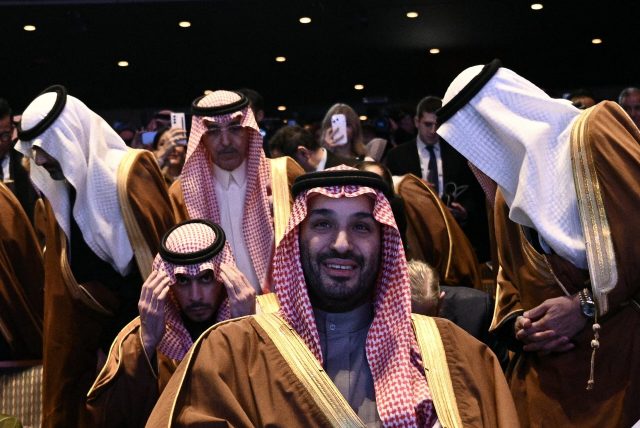
Iran, for all its authoritarianism, presents a more complex model, combining clerical power with electoral mechanisms and a layered constitutional structure. Seen in this light, the drift towards personalized diplomacy reflects a convergence: the erosion of the public domain in the West meets the persistence of kin-based systems elsewhere. The comparison with the medieval world becomes instructive. Before the modern state system, political authority was personal. Kings operated within networks of kinship and rivalry; agreements were contingent; reputation was central. Conflict could be ritualized. Jousting offers a suggestive parallel: a controlled encounter governed by rules, yet driven by personal honor. Victory conferred prestige; defeat entailed humiliation. The contest was as much about display as outcome.
There is, however, a crucial asymmetry. Israeli and US reliance on targeted assassination reflects the logic of personalized power. Yet applied to Iran, it risks confusing visibility with vulnerability. Unlike many Arab regimes, Iran possesses a dense institutional structure in which authority is distributed across clerical bodies, elected institutions, and the security services. Power resides not in individuals alone but in an interlocking system capable of absorbing losses and regenerating leadership. The paradox is clear: strategies based on personalized power can fail against systems whose resilience lies in institutional depth.
No less important, the feudal approach to foreign policy is also bewildering for everyone else. European leaders, already divided over Iran, respond not to coherent strategies but to shifting signs from Washington. The lack of consultation undermines trust; volatility undermines credibility. Nor are regional actors themselves exempt from these challenges. Personalized diplomacy may allow for rapid engagement, but it also undermines predictability. Relationships become central — but also fragile. For the Gulf states, particularly the United Arab Emirates and Saudi Arabia, the implications are vast.
If, after all, American policy appears contingent on personal relationships rather than institutional commitments, the incentive to hedge increases. This may take the form of diversified alliances or, more ominously, the pursuit of independent deterrence. Reports that Saudi Arabia is gathering uranium, together with its longstanding links with Pakistan, raise the question of whether Israel’s regional nuclear monopoly will remain uncontested. Such calculations belong not to a stable order but to a system in which trust is eroding and guarantees are no longer taken at face value.
Of course, none of this implies a simple return to the medieval past. States remain powerful, and institutions persist. But the balance between institutional constraint and personal agency is shifting. And unlike the jousts of old, the consequences will not be contained to sport.