









March 18 2026 - 4:00pm
On Tuesday night, Evanston Mayor Daniel Biss won a closely contested Democratic primary in Illinois’s 9th Congressional District. In doing so, he survived a last-minute accusation of sexual misconduct which in previous years could have derailed his campaign.
Biss was the frontrunner in the race when Megan Wachspress, a Stanford Law School lecturer, alleged in a Bluesky post this week that he had previously initiated an inappropriate romantic relationship with her. At the time, he was a teaching assistant at the University of Chicago and she was one of his undergraduate students.
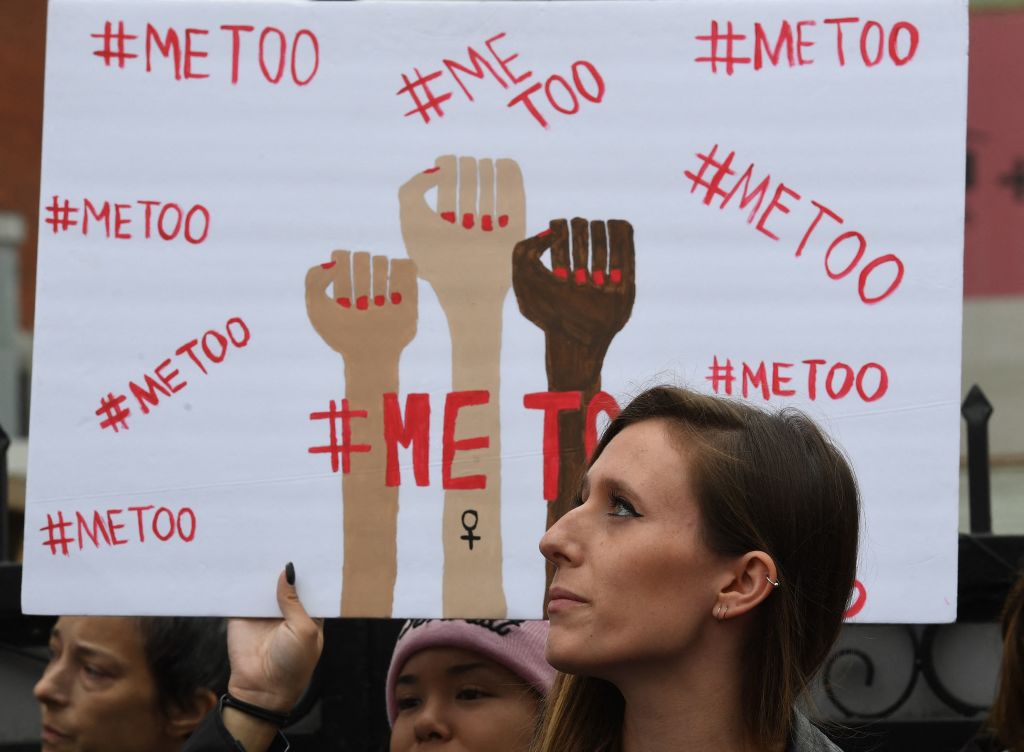
Wachspress framed these revelations in grandiose terms, suggesting they were part of an emerging #MeToo sequel (#MeTwo?), one that could be more effective than the original because of the exposure of the Epstein Files. “Maybe visibility, this time, will work in our favor,” she wrote.
The problem is that the case itself isn’t as weighty as she suggests. According to Wachspress’s own subsequent account on Substack, it occurred 22 years ago; Biss was 26, while she was 21. They went on a handful of dates after the class ended, before he realized the relationship was ill-advised and ended things. There was no assault; they didn’t even have sex. It’s much ado about not much.
All this raises the more interesting question of whether there actually is a #MeToo 2.0. The honest answer is no — or, at least, not yet. Loose talk of “#MeToo 2.0” — on the heels of Woke 2.0 — looks increasingly like wishcasting, an attempt to summon the energy of 2017 when there isn’t much in the tank.
Consider this year’s Oscars. The original #MeToo moment transformed the 2018 ceremony into a referendum on Hollywood’s abuser culture. Remember the black dress moment? None of that was on the agenda on Sunday. Women were celebrated, but the most notable speech was given by actress Jessie Buckley, who dedicated her Oscar to “the beautiful chaos of a mother’s heart”. The movement as a political category was conspicuously absent. The culture has moved on, or moved elsewhere, which had progressive journalists calling it the first “post-#MeToo Oscars”.
Brooke Nevils, the former NBC producer who accused Matt Lauer of rape at the 2014 Sochi Olympics, published her #MeToo memoir Unspeakable Things last month, yet it has already largely disappeared; Amazon ranks the book somewhere around the 24,000 mark in its bestseller charts. The audience that once devoured Ronan Farrow’s Catch and Kill — which rocketed to number one on Amazon before it even hit shelves — simply wasn’t there in the same way.
In some ways, #MeToo is a victim of its own success. The behavior it exposed had been happening for decades, suppressed by NDAs and a culture of institutional protection. There are simply fewer skeletons left to tumble out of the closet in that dramatic fashion. That’s not because sexual harassment has ended, but because the most compelling stories, such as the Harvey Weinstein case, have already been told, while the Epstein files are now absorbing the public appetite for elite sexual misconduct.
Then there is the changed texture of white-collar work itself. The shift to remote and hybrid arrangements since 2020 has altered the proximity necessary for physical intimacy. The office, the elevator, the closed-door meeting and the work trip were the original #MeToo’s primary theater. Those settings are less universal now. And the broader cold war between the sexes, with men pulling back from professional mentorship and mixed-gender socializing, has changed the dynamics in ways that are harder to fit neatly into a narrative. More broadly, the real story of the mid-2020s is that hardly anyone is having sex, much less the problematic kind with co-workers.
A few weeks before her accusation, Wachspress made the bizarre claim that the recent anti-ICE protests in Minneapolis had provided a longer runway for #MeToo 2.0 because they represented the triumph of female-dominated politics in action. “Maybe in Minnesota, we are seeing a politics of invisible power, of anonymous action, of women’s orchestration of the world, building toward something bigger, something transformative,” she wrote.
But no, neither Minneapolis nor the Biss affair appears to be the opening scene of a #MeToo sequel. It is proof that people are still trying to reboot a franchise whose moment has largely passed.
