









March 12 2026 - 6:30pm
Perhaps my earliest experience of culture shock in Texas was seeing the sheer size of the vehicles on the road. I regarded the humongous trucks, Hummers and SUVs as being completely over the top. “Ridiculous!” I said to my wife. “Who needs to drive something that big?”
“What’s need got to do with it?” she shot back. “If they’ve earned it, they can drive what they want.”
At that moment, a crucial difference between the European and American mentality stood revealed. I absorbed the idea that driving a small, crappy car is a sign of sophistication and moral superiority. To understand this country, I would have to change my attitude. Less is not more: more is more.
Car culture is fundamentally fueled by one thing: oil. Even in the age of the electric vehicle, about 85% of American cars run on black gold. That’s why, with fears that oil could hit $200 per barrel, people are increasingly worried that American motoring will be blighted. What does the country lose if the ability to drive becomes extortionately expensive?
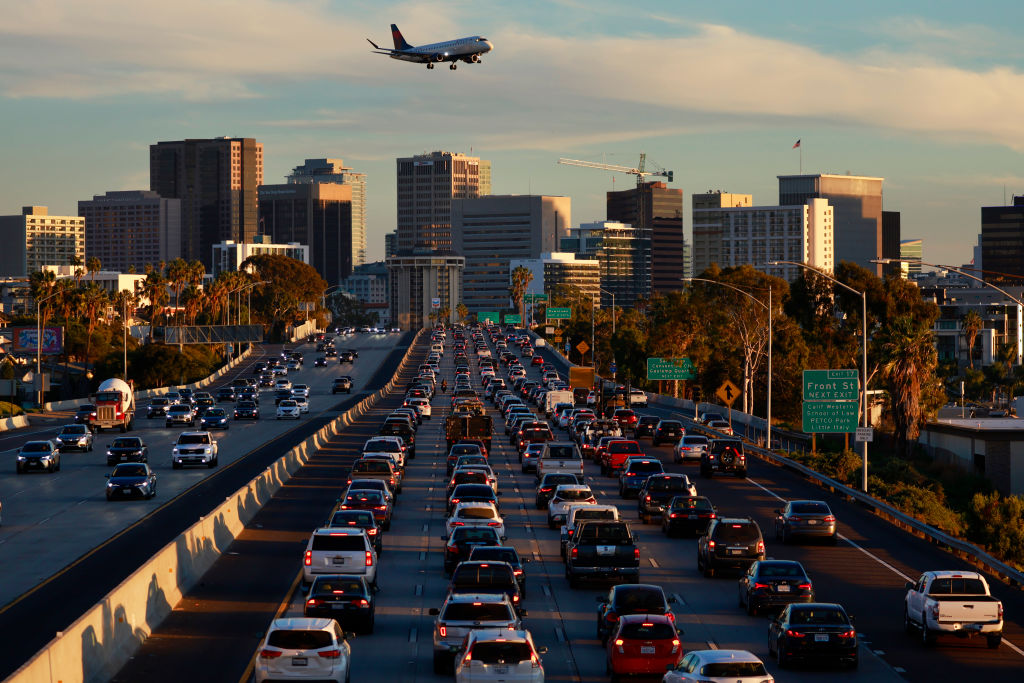
America’s relationship with the automobile is not simply a love of extravagance for its own sake. It is a logical response to the environment. If you’re going to be crawling down the interstate every day en route to the office, or driving across vast expanses to visit family, then you want to be comfortable. You want plenty of room, climate control, giant cup holders, and, why not, some built-in seat warmers. If you’re going camping or hunting, then naturally you need space for all your expensive gear, and perhaps a special compartment for your rifle.
Nor is this a Right/Left thing. Whether it’s a progressive soccer mom driving her kids to daycare in a Zeppelin on wheels or a flag-waving Trump voter cruising around in a Ford F-350, all Americans are united on the importance of a good car. When I upgraded from a sensible Ford sedan to a Dodge Challenger “muscle car”, I expected that my ecologically-minded friends and colleagues would lecture me on my crimes against the planet. Only the British expats did that; the Americans were all very excited. One especially progressive friend suggested the only thing that could make the Challenger more awesome would be if it ran on meat instead of gas.
For years, American cars have been getting bigger, and since 2009 the number of SUVs on the road has doubled. This is not just down to consumer demand, however, but an unintended consequence of fuel efficiency standards set by the Obama administration in 2012. A consequence of this shift is that oil price shocks, such as the current spike due to the war in Iran, are felt ever more acutely at the pump. But the war in Iran doesn’t just drive up the cost of driving to the supermarket and back. It affects the millions of contractors who drive around in pick-up trucks, working on roofs, siding and yards, as well as the fleets of vehicles transporting goods across the country. It has the potential to cause prices to rise or businesses to close. This isn’t Britain, where the government can gouge away in the name of Net Zero and expect little more than grumbling in response. Americans get very agitated at high prices: if you’ve promised affordability and can’t deliver, then many will vote for the other guy.
Trump, of course, could always point back to the Biden administration, which had the highest average gas prices in history. But that kind of whataboutery isn’t very persuasive. Meanwhile, although their party is historically unpopular, Democrats running on affordability have a habit of winning. In this sense, the ayatollahs’ greatest hope in this war is not their ravaged armed forces but the suburban mother filling up the tank of her giant SUV. They don’t have it in their power to punish Trump, but she does.
Daniel Kalder is an author based in Texas. Previously, he spent ten years living in the former Soviet bloc. His latest book, Dictator Literature, is published by Oneworld. He also writes on Substack: Thus Spake Daniel Kalder.
 DanielKalder