









December 2 2025 - 1:00pm
Scotland’s largest city is undergoing profound social changes as a result of mass immigration. New data has found that almost a third of children in Glasgow schools do not speak English as a first language. Out of 71,000 pupils, 28.8% are now classed EAL, which stands for “English as an Additional Language”.
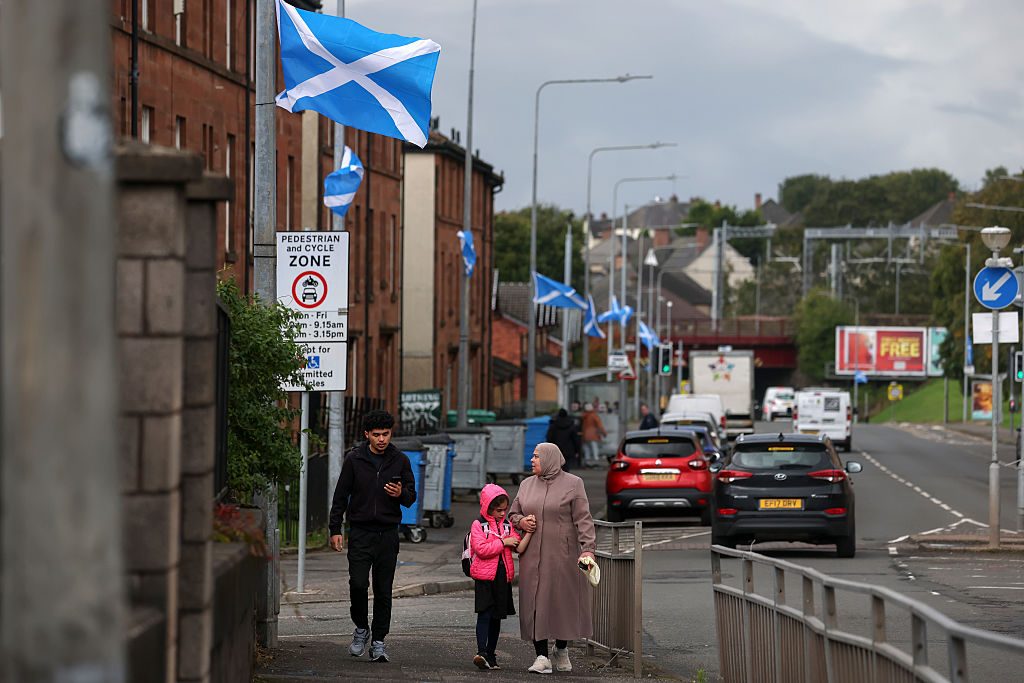
Opposition politicians say the rapid increase in the numbers of children not speaking English at home is a “failure of integration” and poses a risk to social cohesion. But this is part of a much wider problem for the city, which is rapidly tiring of being the asylum capital of Britain.
The need to hire specialist teachers for 21,000 EAL children will add to the city’s deepening financial crisis. Already in £1.6 billion of debt, Glasgow says it is facing a £66 million “black hole” next year through having to house a disproportionate number of asylum seekers in a city which has a chronic shortage of social housing.
Glasgow has the largest asylum seeker numbers of any UK council — approximately 3,800 — largely because of its justified reputation for being welcoming to migrants in the past. But this is rapidly altering the character of the Dear Green Place. The perception is growing that those in charge care more about migrants than about Glaswegians.
Statements from the council tend to confirm this attitude. Questioned about the large numbers of pupils not speaking English at home, a council spokesman said airily: “Glasgow thrives as a city enriched by many different languages and cultures, and we proudly celebrate this diversity and the positive impact it brings to all our school communities.”
Yet this conflicts somewhat with SNP council leader Susan Aitken’s threat earlier this year to “pause” the influx of refugees to Glasgow on the grounds of “community tension”. She has even been quoted in the Times as saying that the city has reached “breaking point”. Many may recall Nigel Farage saying something similar in front of an infamous billboard a decade ago.
But this asylum problem is entirely self-inflicted. In 1999, Glasgow opted to become Scotland’s only Dispersal City under the UK Home Office scheme for relocating asylum seekers with indefinite leave to remain. Scotland has a more liberal policy on housing refugees than the rest of the UK.
In England, asylum seekers with indefinite leave to remain are housed on the basis of “priority need”, meaning that families and people with disabilities get preference. In Scotland, thanks to legislation passed back in 2012 by the Glasgow MSP and former first minister Nicola Sturgeon, single males also have an equal right to be immediately housed. As a result, many asylum-seeking young men who can’t get a roof over their heads in England now head to Glasgow.
SNP leader John Swinney insists at every opportunity that “refugees are welcome here” and that Scotland’s open-arms policy on immigration is a source of pride. He even suggests that one reason Scotland needs independence is because England is moving dangerously to the Right on immigration.
However, Scotland’s much-vaunted tolerance of mass immigration is fraying. There have been demonstrations outside asylum hotels in towns including Falkirk and Perth. The SNP-led Highland Council is opposing Home Office plans to house 300 asylum seekers in Cameron Barracks in Inverness after local protests. And Glasgow says it cannot take any more refugees without financial help, which has not been forthcoming from either the UK or Scottish governments.
The truth is that Scotland is not as keen on migrants as the SNP and the Scottish Left care to believe. In a September Norstat poll in the Sunday Times, a majority claimed there are already too many immigrants in the UK while 60% said they support detention and deportation of illegal arrivals.
With Reform UK threatening to win a raft of MSPs in next year’s Holyrood elections, there is some panic on the Left at the prospect of Scottish “lemmings”, as one commentator put it, turning to the “far-Right”. If that happens, it will be a result of the SNP’s reckless immigration policies.
Iain Macwhirter was political commentator for The Herald between 1999 and 2022, and is the author of Disunited Kingdom: How Westminster Won a Referendum But Lost Scotland. He was Rector of the University of Edinburgh from 2009-12.
 iainmacwhirter