









Nov 20 2026 - 10:00am
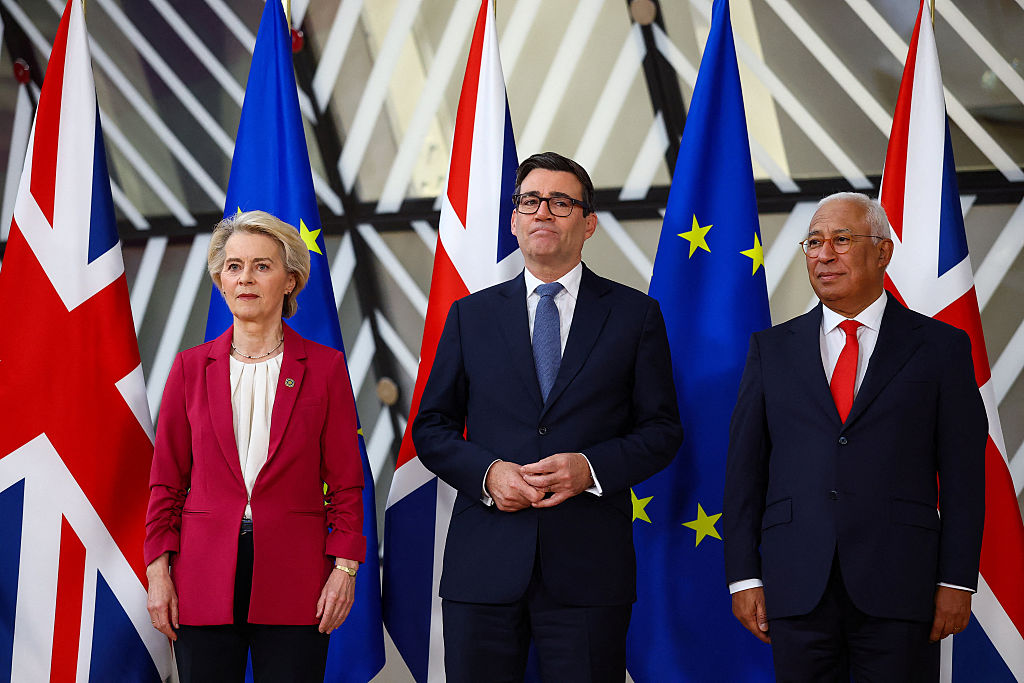
People are obsessed with answers, but the biggest intellectual breakthroughs start with questions. What is true for mathematics, science and life in general is also true for politics. When you get the wrong answers, it is usually because you did not ask the right questions. As Andy Burnham meets this morning with European Union leaders, the British establishment is asking what benefits would come from rejoining. The big question in Brussels, meanwhile, is how to protect aid for Ukraine against vetoes from skeptical politicians such as Marine Le Pen. This is not an interesting question, compared to those that could be asked.
A far more interesting question for the UK would be what it can do for the EU. This is not intended as a hokey invocation of John F. Kennedy. The UK is better connected than any other European country to the world of AI. It has a claim to be the only country on the continent with a proper capital market. If the UK manages to reconnect Europe to the world of 21st-century technology and financial services, the EU might actually be a place worth joining. The way the union is progressing at present, it is hard to see what benefits the UK would gain from membership.
Questioning how Brussels can Le Pen-proof its budget and future loans to Ukraine is absurd. The EU cannot exist, let alone succeed, when voters no longer support it. The idea that one can shield the EU against future democratic decisions is a denial of political reality. There are also far more pressing questions which Brussels should be considering.
The parameters of a Russia-Ukraine peace deal are being negotiated by Donald Trump, Vladimir Putin and Xi Jinping. A new G3 was born this week, the first of the Gs without the usual overcrowded European representation. The European media was full of cynical and arrogant comments, focused on body language and seating arrangements. For Putin, this summit was an important diplomatic coup that ended his international isolation. The format could also be here to stay, because future US presidents may find that it serves American interests to have a forum in which they can discuss global security issues. The US and Russia are the two great nuclear powers. Russia is one of the largest global oil and gas producers. China has the largest installed electricity capacity. The US and China shape modern technology.
Meanwhile, Europeans have chosen not to set up the financial infrastructure needed to compete in 21st-century technology, and to impose anti-tech regulation instead. Energy and AI shape politics like nothing else right now. The Europeans are essentially out of the picture.
If Europe were a serious geopolitical power, it would lead the debate on the shape of a future Ukraine peace deal and the post-war architecture. It would have discussed AI policy at the Dublin informal summit this month, and not been derailed by a row over who represents Europe at future peace talks. There is no debate going on in Brussels, Berlin, Paris or London about the content of a peace deal. Yesterday’s summit of the “Coalition of the Willing” in Berlin was reduced to yet another photo opportunity with Volodymyr Zelensky, coupled with promises of never-ending support. The official line is that the funding of EU loans will ultimately come from Russian reparation payments. This is not how real powers behave. They put real money behind their policies, and they focus on what they can bring to the table rather than who sits there.
Since the wider public debate in Europe, including in the legacy media, avoids the bigger questions, the problem cannot be pinned down to one politician, one party or one event. Europe’s decline is a broader cultural phenomenon. The prevalence of uninteresting questions is why life in 21st-century Europe is full of things that no one could have predicted.
This is an edited version of an article which originally appeared in the Eurointelligence newsletter.
