









Nov 19 2026 - 7:00am
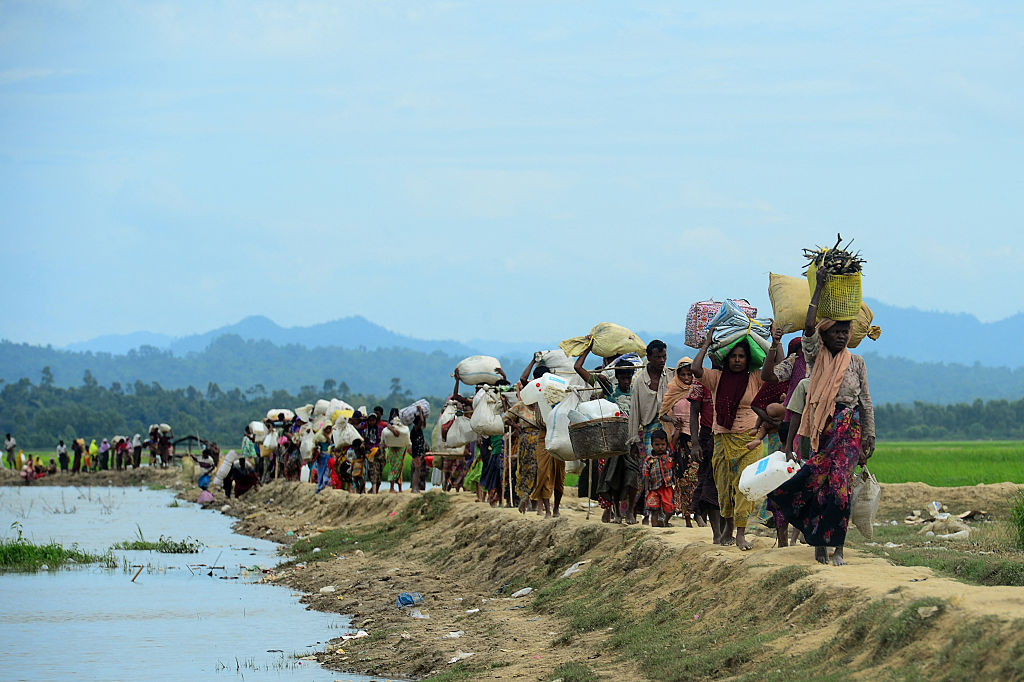
The International Court of Justice will rule today on whether the violent persecution of Rohingya Muslims in Myanmar in 2017 amounted to genocide. Its decision could blur the distinction between atrocity and genocide — in law and in the public mind — for other historical and contemporary atrocities, from the Irish famine to the Ukraine war.
Ireland and Britain are among several countries that have intervened in the case, urging the court to lower the threshold for establishing “intent”. Under the current test, intent must be the only reasonable inference from the evidence. This may lower the bar for establishing a crime that is notoriously difficult to prove, but it risks diluting the moral weight of the word “genocide”. If the term is stretched to encompass both the murder of the Tutsis in Rwanda and Britain’s callous agricultural policies in mid-19th-century Ireland, it risks suffering the same fate as “fascism”. As George Orwell observed, the word had been so debased that it came to mean little more than “something not desirable”.
Britain’s response to the Irish famine was at times indefensible. In 1847 Sir Charles Trevelyan, the civil servant charged with famine relief, said: “The judgment of God sent the calamity to teach the Irish a lesson. That calamity must not be too much mitigated.” The greater evil, as Trevelyan saw it, was not the famine but the “moral evil of the selfish, perverse and turbulent character of the Irish people”.
Cruel and indifferent as these sentiments may be, they do not amount to the deliberate destruction of an ethnic group, not least because the blight was a natural disaster — one the British attempted, albeit inconsistently, to mitigate. While the British government did not prevent private businesses from exporting foodstuffs that could have saved lives, this was in the service of free trade and property ownership principles, not a Holodomor-style attempt to murder a specific group. Collapsing these distinctions resembles the soft form of genocide denial that treats all historical crimes as equivalent.
Loosening the criteria for genocide would not only risk distorting the historical record, but also muddying the classification of contemporary conflicts where there is broad moral consensus. It might become harder, for example, to dismiss Moscow’s claim that Ukraine committed genocide against Russian speakers in the Donbas. Dmytro Kuleba, Ukraine’s former foreign minister, recently wrote that his ministry resisted calls to amend the criteria as “a lower bar would have helped Moscow more than us, because it would have put our case on the same shelf as Russia’s invented one.”
As full-throated supporters of Ukraine, neither Ireland nor Britain appear to have fully considered the consequences that such a shift might have for their geopolitical interests. The more expansive the term becomes, the greater the scope for its weaponization. This will have predictably asymmetrical consequences, as the countries that lend the term the most moral and legal weight will in turn be most vulnerable to its vexatious deployment.
For the Rohingya, a finding of genocide on Thursday might provide some consolation for their plight at the hands of the Myanmar junta. It would be a bitter irony, however, if it came at the price of rendering the term more useful for tyrants and worthless for everyone else.
Michael Murphy is a journalist and documentary filmmaker covering immigration and international affairs.
 michaelmurph_y