









Nov 21 2026 - 8:00am
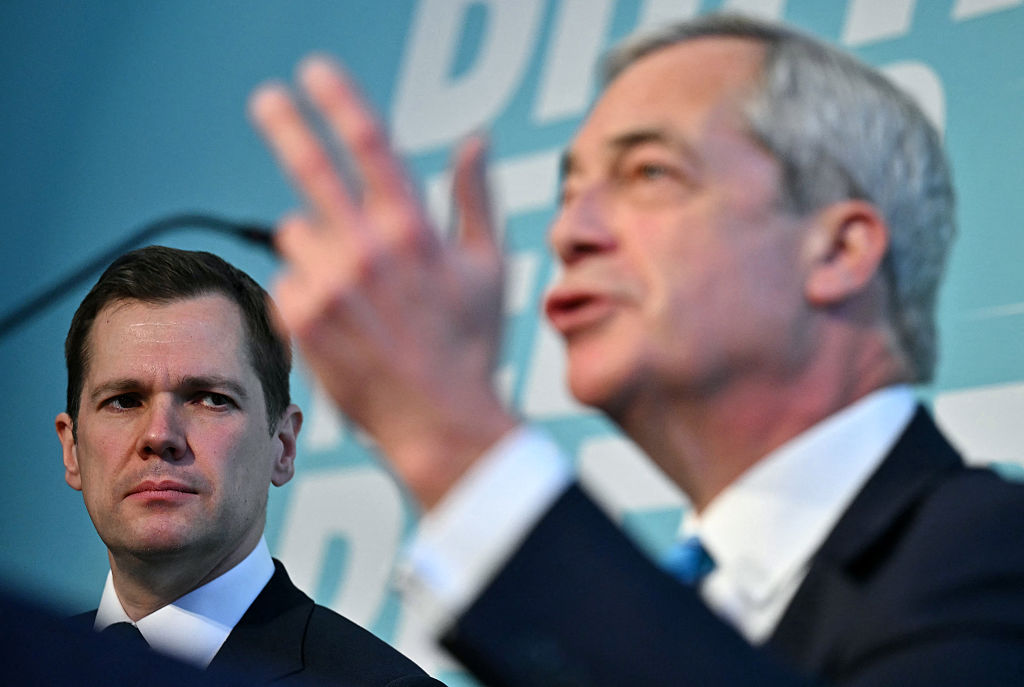
Robert Jenrick, newly reselected as Reform UK’s candidate in Newark, has ramped up his bid for media attention this week. In an interview with the Sun he attacked the legacy of Margaret Thatcher’s government, which he said had left a “deep scar” on communities of the kind in which he grew up. He also released a spoof trailer for a computer game inspired by the release of Grand Theft Auto VI. Called “Grand Theft Jenrick” (yes, really), it features the politician fighting shoplifters and the cost-of-living crisis.
It’s fair to say that neither the interview nor the stunt have met with universal acclaim. Stories about Jenrick’s previous enthusiasm for the Iron Lady have recirculated, including his earlier claim to have given his daughter the middle name Thatcher, prompting accusations of hypocrisy. As for the GTA parody, the reaction has been dominated by words such as “slop” and “cringe”.
And yet, amid the mockery, the real point is being lost — which is that Jenrick’s high profile this week is neither an accident nor a one-off. It comes just after the appointment of a key ally, Tom Milford, as Reform’s Head of Press. According to an unnamed party insider quoted in the Mail on Sunday, Jenrick “is in control now. He’s won the battle with Zia [Yusuf]. He’s the heir apparent.”
But can Jenrick really take the reins of power? It’s unlikely that Reform will be changing leader anytime soon. The party has circulated a clip showing Nigel Farage pretending to play “Grand Theft Jenrick” — a metaphor, perhaps, for who remains in control.
Nevertheless, Jenrick is a formidable contender because he has a plan for getting Reform out of its current hole. The polls presently show the party neck and neck with the Conservatives; but considering that Reform’s support is less efficiently distributed, it will likely to end up with many fewer seats than its rivals on the Right. For instance, the Nowcast model puts Reform at just 45 seats against 126 for the Tories in a hypothetical election, and that’s without factoring in anti-Reform tactical voting.
The Liberal Democrats went from 15 to 72 seats in the last election by concentrating their support in Remain-voting parts of Southern England. Jenrick understands that Reform needs its own heartland: somewhere the party can win a significant number of seats even if it doesn’t improve on its current national vote share. The obvious location is the Red Wall seats of Northern England, the Midlands and Wales. And as Reform’s economic spokesman, Jenrick’s new anti-Thatcherism and his criticism that “Kensington Kemi” and the Conservatives stand for “the wealthy, not workers” will play well here.
It goes deeper than that, though. Jenrick understands that Reform will not be trusted as a government-in-waiting unless it tackles its personnel deficiency. Farage’s popularity continues to suffer after a year of financial scandals. Reform’s previous plan to attract a credible team of potential ministers from outside Westminster politics has failed to produce any notable appointments. And so with that shortcut unavailable, the talent problem can only be solved from within the parliamentary party. Of course, that would require getting many more MPs than the eight currently on the Reform bench. The question now is whether Reform is willing to dump Farage and his Thatcherite baggage, and embrace Jenrick’s vision of a full-on populist party.
Peter Franklin is Associate Editor of UnHerd. He was previously a policy advisor and speechwriter on environmental and social issues.
 peterfranklin_