







 Prefer us on Google

Nov 11 2026 - 7:30pm
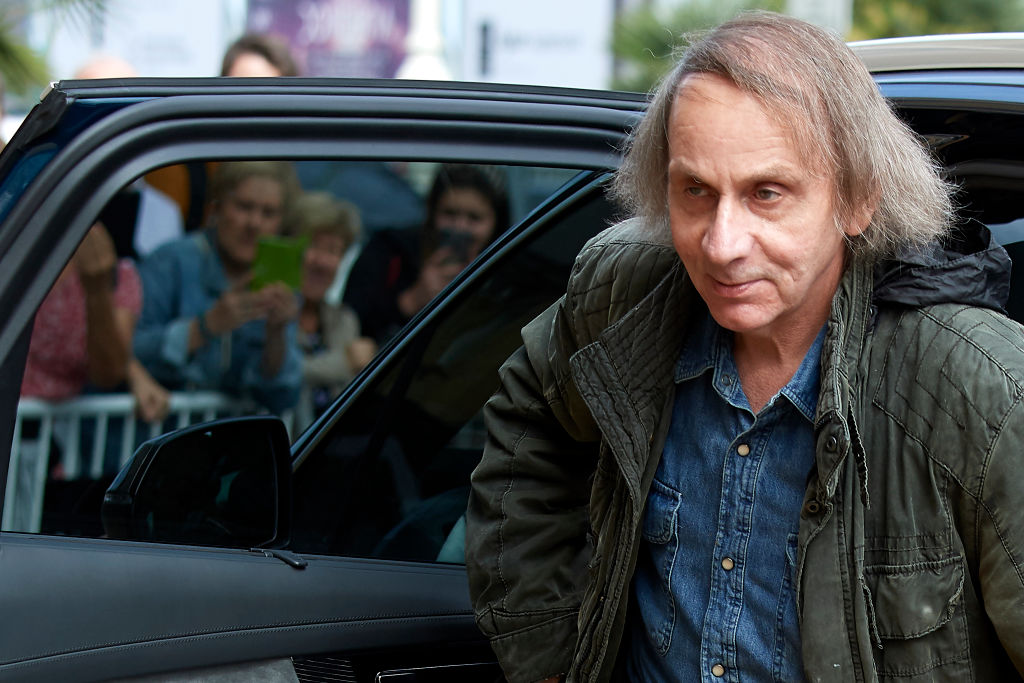
Michel Houellebecq, France’s most famous living writer, has been indicted for alleged hate speech. His crime was to criticize Muslims and invoke the phrase “the Great Replacement” to describe demographic change in Europe as “statistical fact”. He committed these supposed offenses in a November 2022 interview in Front Populaire, a magazine founded by the French philosopher and political Leftist Michel Onfray. If found guilty, Houellebecq faces up to one year in prison and a fine of €45,000.
These new charges confirm fears that France’s hate speech laws are criminalizing criticism of immigration. This lawfare then deters media publications from platforming any skeptical perspectives on the issue. Under French law, Front Populaire is liable for publishing hateful material, and the formulation of the charge against Houellebecq — “complicity in incitement to discrimination” — suggests the main indictment will fall upon the magazine. Curiously, though, there are so far no media reports claiming that Front Populaire has been charged.
The legal precedents for these kinds of prosecutions were set long ago. Houellebecq is being prosecuted under the Pleven Law, which was passed in 1972 and celebrated for enshrining antiracist principles in France. It banned incitement to hatred, as well as insults that targeted groups based on their race, ethnicity, or religious beliefs. The Pleven Law also allows NGOs to launch accusations, even if they weren’t directly affected, and collect cash rewards from the accused if their prosecution is successful.
Since 1972, therefore, Left-wing activists have been able to play the system to take money from politicians, journalists, and writers they don’t like, with the French essayist and presidential candidate Éric Zemmour subject to several such extractions. In Houellebecq’s case, the initial complaint was filed by a collection of Muslim and Left-wing anti-racist organizations.
This isn’t the first time that Houellebecq has run afoul of the Pleven Law or been accused of Islamophobia. In 2002, he was tried for incitement to racial hatred after calling Islam “the stupidest religion” and saying that the Quran was “dreadful”. The judges acquitted him by concluding that his comments were about a set of beliefs, not directed at any particular people. Because Houellebecq spoke of “Muslims” in the Front Populaire interview, he’ll have a harder time defending himself on the same basis.
Houellebecq’s indictment should reignite concerns about threats to free speech in France and throughout the West. Indeed, intellectual debate should be the last thing subject to criminal liability. But in our overly abstract intellectual culture, debates around free expression often ignore the social conditions that prompted jurisdictions to embrace speech restrictions in the first place.
Modern hate speech laws are a technique to manage the tensions of a multicultural society. Looking at the deterioration of race relations in Sixties and Seventies America, while dealing with their own waves of postwar immigration, France and Britain decided that criminalizing hate speech was a necessary preemptive measure to prevent negative race relations. The Pleven Law described a “critical threshold of tolerance,” which Seventies France, receiving an influx of cheap labour from North Africa, was in danger of exceeding. As the country took in more immigrants, hate speech laws were needed to ward off unrest.
Advocating for the 1965 Race Relations Act that brought hate speech laws to Britain, Home Secretary Frank Soskice said that “it is far better to put this Bill on the Statute Book now before social stresses and ill‐will have the chance of corrupting and distorting our relationships.” As in France, the law’s architects had good intentions. But their objective wasn’t really to tackle a specific problem of racist speech inciting violence, but rather to manage a whole new multi-ethnic social order. Consequently, their successors were destined to embrace more expansive techniques of social control.
Now, hate speech laws have expanded to counter growing public criticisms over mass immigration and Islam. At the height of the migrant crisis in 2015, the German government sought to prosecute the European head of Facebook for failing to remove posts criticizing Angela Merkel for letting in Syrian “murderers”, labeling them, as well as warnings about Islamism, as “hate speech”. Increasingly, Western governments seek to label such opposition as dangerous. Houellebecq joins the ranks of thousands of others across the continent who have been prosecuted for saying similar things. The multicultural speech regime spares neither ordinary citizens nor celebrities, and the price of its censorship is steep.
