




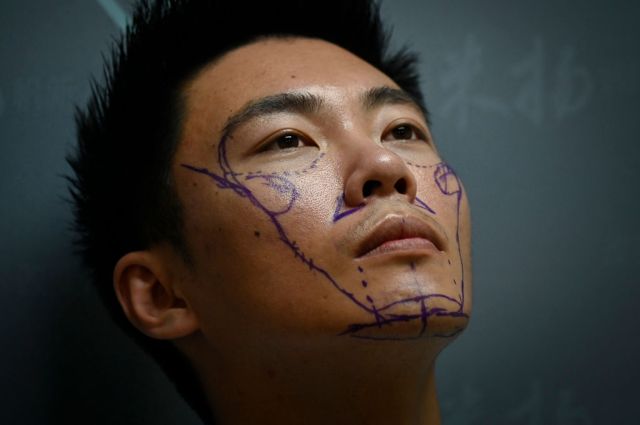
“Frustration is boiling over in the nascent Chinese manosphere.” (Wang Zhao/AFP/Getty)





Chinese middle schoolers have had to get their heads around some new reading material this year. Following a once-a-decade reshuffle of the literature syllabus, China’s ninth graders are going back to school with new books. In addition to Three Hundred Tang Poems (a canonical anthology of medieval verse), Red Crag (a realist novel set during China’s civil war), and Jean-Henri Fabre’s Souvenirs entomologiques (a 19th-century treatise on bugs authored by an anti-Darwinian Frenchman), the most striking addition to the curriculum is that landmark of Gothic romance, Jane Eyre.
It’s not immediately clear why Beijing has given Charlotte Brontë’s classic such prominence in the classroom. Thankfully, the West’s top China watchers are on the case. If you’ve read the spate of recent articles from Western media outlets concerning Jane Eyre in China — articles in which there’s been much white-knuckled pearl clutching over China’s “compulsory curriculum” (The Times), “mandatory reading list” (CNN), and other histrionic synonyms for, well, a middle-school syllabus — you’ll find one explanation repeated ad nauseaum. The Ministry for Education has, so we’re told, assigned the didactic, pro-family Jane Eyre as a last-ditch effort to reverse China’s precipitous population decline. As the Economist puts it: “The independent-minded heroine, Ms Eyre, who rejects two proposals before ultimately marrying and bearing a son, has a thing or two to teach young Chinese, the Communist Party thinks.”
To be sure, Chinese officials are wary of the looming demographic crisis. As of this year, marriages have hit a decade-long low; birth rates an all-time low; and China expects a population decline of 250 million by 2050. But even if the nomenklatura did imagine that a 19th-century English novel was the way to win young Chinese hearts and minds to baby-making, Jane Eyre would be a strange choice. For one, the novel just doesn’t really seem to care about Jane’s maternity; Jane’s son, whom Brontë never bothers to name, exists by virtue of a single subordinate clause tossed off in the middle of the book. Our author devotes twice as many words to describing the embroidered chaises of Thornfield Hall as she does to Rochester Junior. Second, Middlemarch and Pride and Prejudice enjoy similarly storied literary reputations in China; and the orphaned children, Christian ascetics, and wife in the attic that make Brontë’s novel such an unlikely candidate for the transmission of stolid family values are conspicuously absent in the other two novels. If the Ministry for Education really wanted to assign a conservative-minded English classic, why wouldn’t they have gone with Jane’s more presentable cousins?
When one turns from CNN to the Chinese sources, however, a much clearer picture emerges of Jane Eyre’s actual purpose in the classroom. Anyone expecting Brontë to be filtered through dense layers of Marxist-Leninist propaganda and Xi Jinping Thought, however, will be sorely disappointed. According to the Beijing Daily article which announced the updated curriculum, the novel will be taught in a course module on “Maturity”, which takes a fairly orthodox view on Jane Eyre’s key themes: “[Jane Eyre] recognized that love ought to be founded upon the basis of spiritual equality, rather than wealth, social status, or outward appearance.”
For the Chinese government, then, the point of teaching Jane Eyre isn’t to promote biological reproduction, but true love. I realize that, at first pass, the notion of faceless Communist Party bureaucrats spreading romantic ideals among the youth sounds absurd. However, Beijing’s pedagogical intervention makes perfect sense when seen against the backdrop of the gender wars raging everywhere in contemporary Chinese society.
Like pretty much everywhere else in the world, gender relations in China are in complete free-fall. We’re all too familiar in the West with developments like the manosphere, tradwives, looksmaxxing, incels, cucks, chads, etc; recent Chinese history has seen the emergence of similar controversies, coded dogwhistles, and ultra-extremist ideological factions along gendered fault lines. One key moment was the April 2024 suicide of Fat Cat (胖猫), the online alias of Liu Jie, who jumped off a bridge following a breakup. In the aftermath, his girlfriend became the target of a concerted nationwide witch hunt led by Chinese incels on the assumption she was a 捞女 / lāo nǚ, or gold digger. Meanwhile, a terminally online subset of “feminist eugenicists” have developed what they term “uterine morality”, or a refusal to settle for “ugly, poor, sick, and abusive men” in an effort to secure the best possible genetic material for their offspring. This January, China’s Ministry of State Security even issued a communiqué framing 性别对立 / xìngbié duìlì or “gender antagonism” as a threat to national security. It’s this toxic mire of gender politics that Chinese teenagers will have to negotiate in order to date, marry, and have children; a plight that makes even the wildest of Rochester’s indiscretions seem tame by comparison.
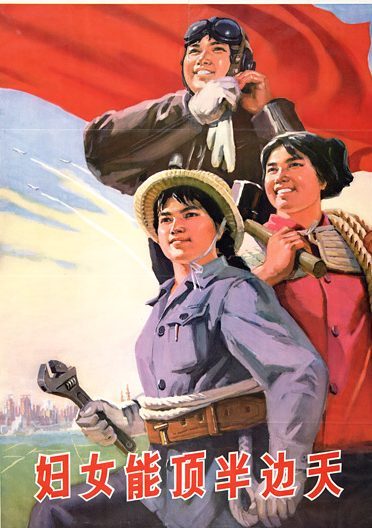
Contemporary China has left behind what was arguably the central achievement of the Mao era: economic parity between men and women. Following socialist collectivization, Chinese society became highly egalitarian, with the percentage of women working outside the home hitting roughly 90% in urban areas by the Seventies. With women entering the workforce en masse, the state took on the role of performing domestic labor, investing heavily in free childcare centers, collective kitchens, and other welfare programs. The state meanwhile suppressed the development of feminism outside of the proscribed boundaries; as China scholars Angela Xiao Wu and Yige Dong argue, the state’s firm control of “women’s work” reduced femininity to economic categories. Popular representations of women were accordingly non-sexualized, and to some extent androgynous, emphasizing their class identities as proletarians and farmers.
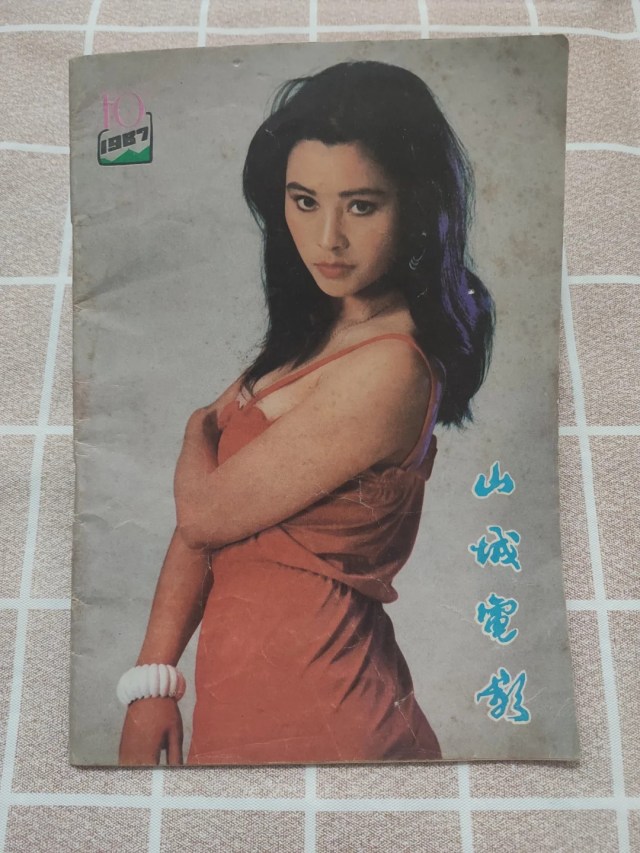
China’s socialist era ended with Deng Xiaoping’s capitalist reforms, whereupon the state abandoned its commitment to egalitarianism for the full-throated pursuit of economic development. As privatization shuttered the state-funded public daycares and kitchens, domestic labor was relegated back to the domain of the family — in practice, back to women. These developments were part of a broader retrenchment of traditional gender norms in the Deng era. The Puritanism of Mao’s China was submerged under a tidal wave of (at the time) risqué advertisements, television shows, and eventually, digital media, as an emerging consumer culture found a natural ally in sex appeal.
While Deng’s reforms generated rapid economic growth, they also intensified class stratification. By the Eighties, socialist egalitarianism was fading; as Wu and Dong write: “against the spectacular rise of wealthy elites and a massive middle-class were forty million laid-off state workers and more than 200 million migrant laborers”. Chinese citizens could stomach the decidedly unsocialist existence of an ultra-rich class so long as everybody else’s living standards went up, too. But this is no longer the case. Youth unemployment in 2026 hit a record high, while precarious gig work is rapidly replacing full-time employment. And with China’s broader economic slowdown showing no signs of abating, there seem to be few options available to check a rising tide of class resentment. This neoliberal precarity is one of the structural problems behind today’s gender crisis.
While most Western readers can easily relate to issues like youth unemployment and class resentment, there’s another problem at work that’s unique to the Chinese situation: a “marriage squeeze” resulting from a dangerously lopsided gender ratio. This is one of the unintended consequences of the government’s laws on family planning. When the one-child policy was implemented in the Eighties, many couples practiced sex-selective abortions to ensure they had sons, given the traditional preference for a male heir. As a result, there are 24.7 million more Chinese men than women, a surplus greater than the population of Florida.
To combine years of neoliberal precarity with a radical gender imbalance would destabilize marriage rates in any country. However, in China’s specific cultural context, the confluence of these two structural factors have created a marriage market that’s nothing short of apocalyptic. These two factors come to a head in the widespread custom of bride price, or 彩礼 / cǎilǐ , a prerequisite step to marriage where the groom’s side of the family must make a payment to the bride’s. From a traditional Chinese perspective, because the bride was considered exclusively a member of her husband’s family, cǎilǐ was paid as ritual compensation to the bride’s family for having “given away” their daughter. Historically, this took the form of tea, jewelry, or deer hides and for most of modern China, bride price was seen as a quaint formality. However, escalated competition over marriageable women has now resulted in a textbook case of supply and demand. Twenty years ago, the average bride price hovered around 10,000 to 20,000 RMB (~$1,500 – $3,000). It has since skyrocketed to around 140,000 RMB (~$21,000) in 2021, a crippling economic burden, especially for rural, low-income households.
Even under ideal economic circumstances, the surge in bride price would have presented a serious financial barrier to would-be grooms. China’s fiscal downturn has made scrounging together the funds more difficult — and the situation is made even worse by the particular cultural dynamics at work when two families come together to negotiate cǎilǐ. In a perverse twist, the poorer the groom, the higher the expected bride price, and vice versa. The logic here is that if the bride’s family feels uncertain about the groom’s financial prospects, they’ll hedge their bets by setting a higher cǎilǐ, which then acts as a kind of surety for the bride’s future.
In a culture where remaining single and childless carries a heavy stigma, the romantic prospects for the less fortunate among China’s 25 million surplus men are, to put it mildly, bleak. Frustration is boiling over in the nascent Chinese manosphere. Echoing a widespread view, one popular post on WeChat ties the rise in bride price to feminism: “I was born in the 1980s. When I got married, there was no bride price […] Now feminism has even brainwashed some women born in the 1970s into thinking they’re ‘goddesses.’ Policies to boost childbirth are useless. Why not crack down on feminism instead?”
The language of anti-feminist reaction merges with pre-existing chauvinistic rhetoric. “Feminists are anti-family, anti-Han race and anti-state,” imputes one aggrieved commentator. Thus, parallel to the red-pill rhetoric of Western incels, a vocal minority of Chinese men are framing themselves as victims of an international feminist conspiracy. Some of these anti-feminists have even taken to attacking married men; by paying cǎilǐ, so the argument goes, successful grooms undermine “the collective male effort to lower the ‘cost’ of marriage”, making them traitors to their gender.
Meanwhile, Chinese feminism has also developed in response to the destabilized marriage market. Recall that the defunding of socialist institutions for childcare and housekeeping pushed these obligations back onto the family unit, increasing the pressure on women to re-adopt traditional roles as homemakers. In response to these institutionalized values, one strand of Chinese feminism advocates malicious compliance: “entrepreneurial” feminists attempt to leverage their attractiveness to maximize bride price returns on the marriage market. One such entrepreneurial feminist known online as Ayawawa became infamous for her “PU-MV” equation; according to this heuristic, Chinese women ought to balance a high MV, or “mating value” (sexual attractiveness) with a low PU, or “paternity uncertainty” (alleviating masculine concerns of infidelity by appearing chaste, innocent, virtuous, etc.).
Then there’s the other branch of contemporary Chinese feminism: the “non-cooperative” feminists, who join the chorus of victimized men in their outright rejection of the marriage market: “No kids, no ring, keep living serene” is their go-to slogan. Instead of relying on well-matched grooms to provide economic security, these feminists take the path of Western girlbosses in striving to secure financial independence via their own careers. Mirroring their counterparts in the manosphere, the extremely online “zero-compromise” feminists decry married women as “love-brained”, “precious wives”, and “marriage donkeys”.
Any hope of reconciliation under present circumstances seems well nigh impossible. For a generation of red-pilled men whose ideals of masculinity are still based on “economic success and possession of female sexuality”, confronting the sexually unavailable, financially independent grouping of non-cooperative feminists would amount to a double emasculation. Meanwhile, the utilitarian mindset of entrepreneurial feminism would appear to confirm the manosphere’s most paranoid fantasies about gold-digging wives. As for the few Chinese couples who do end up tying the knot, marriage nowadays is no longer seen as the fulfillment of romantic love, but as a byproduct of rational economic calculation. As things stand, further rounds of acrimony and radicalization are inevitable.
If only due to its destabilizing knock-on effects on marriage, childbirth, and general political stability, the gender wars have come under increasing scrutiny from Chinese officials. At first glance, though, the recent government actions taken on this issue seem haphazard. The CCP has led a (spectacularly unsuccessful) effort to crack down on bride prices even while it enshrines cǎilǐ into law as the bride’s premarital property. And keywords such as “extreme feminism” are censored online even while the Supreme People’s Court rules in favor of the female plaintiff in a landmark case on engagement rape, enraging the manosphere.
Yet from a wider perspective, a consistent pattern does emerge. For the manosphere, soaring bride prices are due to unchecked greed of gold-digging feminists — not the result of family planning policies or China’s neoliberal turn. Similarly, for many contemporary feminists, women’s aspirations for economic independence can only be achieved through individual action: either by gaming the marriage market (if you’re an entrepreneurial feminist), or by focusing solely on one’s own career (if you’re the non-cooperative sort). The exclusive focus on the individual action of economic agents, on the grindset, ignores the conscious dismantling of Mao-era collective institutions which forced women back into performing domestic labor in the first place.
How does Jane Eyre fit into all this? What may have seemed like the height of idealism is, properly understood, a fairly cynical ploy. In treating Brontë’s novel as a sermon on the transcendent value of love (“only when two people truly love one another can they achieve true happiness,” quoth Beijing Daily), it becomes another avenue to direct frustration about social ills away from the decisions of policymakers, and into the safely apolitical domain of interpersonal relationships. Schoolboys otherwise in danger of becoming “red-pilled” may learn from the lesson of Rochester, who finds his beloved in Jane regardless of his looks or finances. And as China’s schoolgirls follow Jane’s repeated repudiations of earthly wealth for the higher affairs of heart and mind, they’ll be less inclined to countenance the economic focus of non-cooperative feminism. The story of Jane and Rochester, then, will act as a gentle corrective to the radicalizing tendencies of both the manosphere and Chinese feminism — a balm which nonetheless serves the very same ends of occluding a structural critique. Because so long as netizens are busy talking about gold diggers and gender traitors — or, indeed, waxing poetic about true love — they won’t be talking about high-level policy decisions that led to the broken marriage market, or the changes that would need to happen to fix it.