









Nov 16 2026 - 10:00am
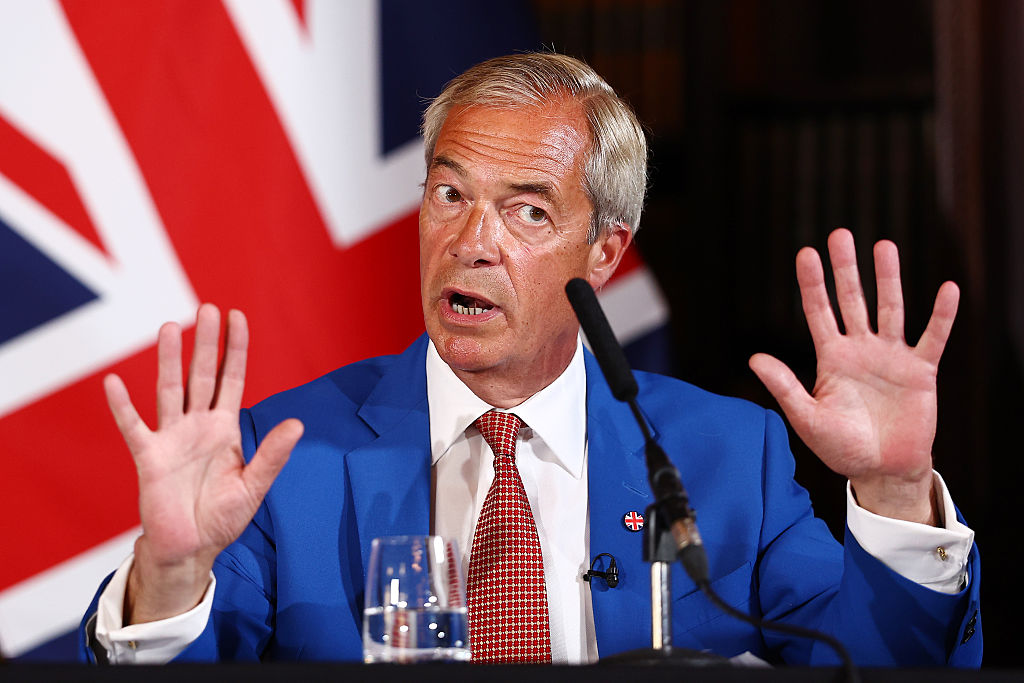
What will the next election look like? Had Andy Burnham gone to the country in the opening weeks of his premiership, as Andrew Bonar Law and Anthony Eden did after taking on the job mid-term, he could have fought precisely the sort of election campaign on which Labour has been banking. Polling still showed the contest as a largely Labour versus Reform UK fight, setting up a battle between the relatively popular new prime minister (with a +13 net approval rating in August) and the least popular party leader in Nigel Farage (with -44). Labour’s campaign plan would have written itself.
Fast-forward a few months and the shape of the next election is starting to look rather different. The Guardian has reported that Burnham is changing tack, urging Labour to “rearm” and prepare to focus its attacks on the Tories. After more than a year of principally going after Reform, the party is once again taking aim at the traditional rival Labour thought it had left for dead.
That is not terribly surprising. Kemi Badenoch and the Conservatives have overtaken Farage and Reform in several recent polls. And Badenoch, now the most credible alternative prime minister, is the only leader besides Burnham with a positive net approval rating. Conservatives are increasingly optimistic that, when the election comes, they can squeeze the Reform vote — and not the other way around.
But how might Labour fight such a campaign? One likely attack will be that the Conservatives are too weak to govern on their own and will depend upon Reform MPs after the next election. Put another way: if you vote for Kemi, you will get Nigel. For the Tories, the attack is given grim credibility by their rout in the 2024 election, which left the party needing over 200 seat gains to form a majority government on its own. The Conservatives are hoping that the same political volatility which removed them from office so dramatically will propel them back in again.
If not, Badenoch has been unequivocally against a coalition with Reform, saying that in the event of a hung parliament she would rather fight a second general election than do a deal with Farage. That doesn’t mean Labour’s attack won’t stick, however, just as David Cameron’s accusation that a vote for Ed Miliband and Labour could lead to a “coalition of chaos” with the Scottish National Party helped propel him to an unexpected majority win in 2015.
Yet the very fact that the Tories have survived the last couple of years and begun to come out on top in the battle on the Right, after a lengthy period of Reform leading the polls, shows that a lot of traditional Tory voters do not want Farage in government — and will never vote for it.
Had the Tory crossover with Reform not occurred, the next election would have been a contest between two TikTok populists. Burnham and Farage have both proved themselves expert at 30-second videos that are more about projecting authenticity and relatability than addressing issues of substance. Badenoch’s resurgence promises to be weightier, with her reputation more reliant on being an effective Commons challenger, not an online influencer. Burnham risks looking lightweight in comparison.
A conventional election dominated by Labour and the Conservatives will also help keep the focus on economic issues, contrasting the Prime Minister’s claim that Britain needs to end four decades of neoliberalism with Badenoch’s argument that “the next Conservative government will have one central principle: business, not government, creates growth.” Reform could easily find itself marooned in between — a potential no man’s land of electoral irrelevance in a campaign that might, after all the fragmentation of recent years and the supposed death of two-party politics, look eerily familiar. Even if Burnham versus Badenoch isn’t the election Labour wanted, it’s the one we look increasingly likely to get.
Lee David Evans is an historian of the Conservative Party and the John Ramsden Fellow at the Mile End Institute at Queen Mary, University of London. He is the author of Coronations & Defenestration: Choosing (and losing) Tory Leaders and the co-host of the podcast Since Attlee & Churchill.
 LeeDavidEvansUK