









Nov 23 2026 - 7:00am
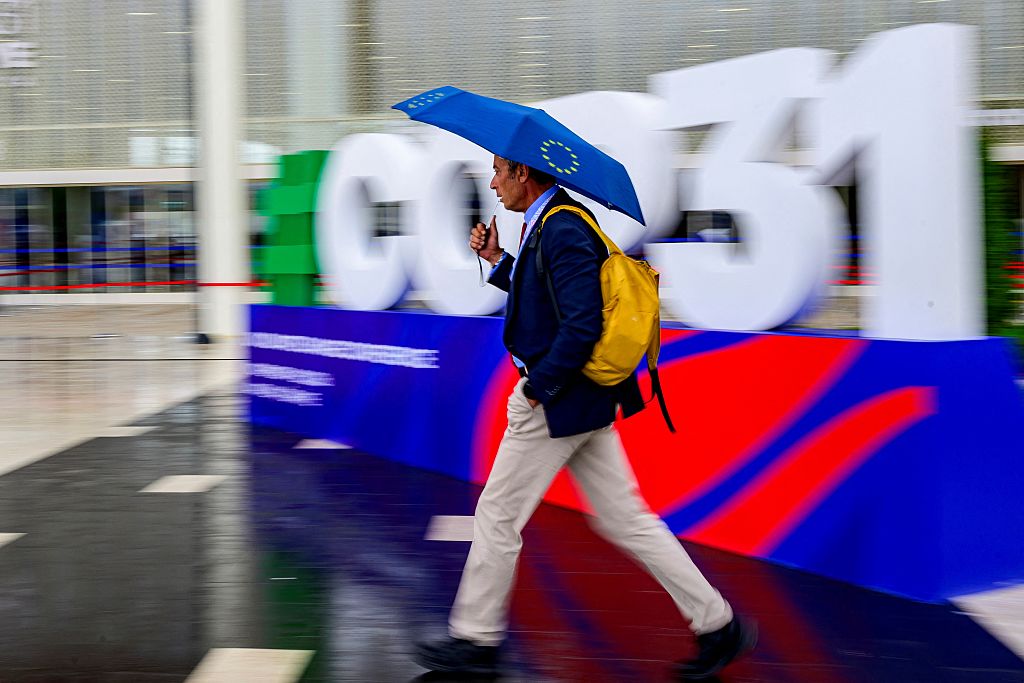
The COP31 talks in Turkey, which collapsed on Sunday with “no deal” on efforts to tackle climate change, have prompted a bitter blame game. The European Union led the revolt against the “Antalya pact”, arguing that its failure to mention fossil fuels meant it “does not respond to the science and risks deepening the chasm between global commitments and the action required”.
An EU representative added that oil-rich nations had “hijacked” the talks in order to remove reference to fossil fuels. It’s an apt expression, because the most significant revelation of COP31 is an inconvenient truth — that in a world marked by outright hostility and increased geopolitical competition, climate change consensus is impossible.
Critics of the proposed pact pointed out that an agreement on transitioning away from fossil fuels was in the conclusions of COP28 in 2023, and asked what has changed since then. The answer is simple: everything.
In 2023, notwithstanding Russia’s invasion of Ukraine the previous year, attitudes to climate change were still shaped by the now-lost era of abundant, cheap fossil fuels which had underwritten developed nations’ climate policies over the preceding decade. Today, the way we view energy is dramatically different: it has become a key arena of global power struggles, characterized by high prices and vastly greater volatility, in which being a fossil fuel provider confers a crucial geopolitical advantage.
On climate change, interests that were always in conflict are now diametrically opposed, and these differences can no longer be smoothed over or gently wished away at COP summits. States such as Russia and Saudi Arabia have a clear and unashamed interest in continuing to sell fossil fuels amid a global energy crunch. So does the USA, although the country does not participate in COP summits under the Trump administration.
Many developing nations need energy however they can get it. From an economic perspective, their interest in the climate transition lies primarily in promises of vast “climate financing” payments from richer nations and pie-in-the-sky dreams of “climate reparations” from developed countries that can barely even find money to fund their own social welfare systems. Europeans, meanwhile, are left high and dry — stalled in their electric vehicles halfway down the road of an energy transition that nobody else now seems to want.
In this context, it’s entirely logical for Europeans to double down. Barring a U-turn in attitudes to their own fossil fuel reserves, this is their only chance of gaining some measure of energy sovereignty in an era when access to energy is of paramount importance. Russia has no interest in encouraging those goals. Neither do the Gulf states nor, truth be told, does the USA.
According to the UK’s spokesperson, “the situation calls for greater ambition.” Yet the kind of ambition she was talking about is a relic of a bygone era. War, the retreat of globalization and the division of the world into competing power blocs have exposed as hollow the dream that nations could set aside their differences to fight climate change.
The insoluble differences laid bare for all to see at COP31 contrast uncomfortably with another recent summit. The trilateral meeting of Donald Trump, Vladimir Putin and Xi Jinping in China last week yielded a commitment to boost oil production “for the benefit of all nations”.
Those words will bear a twisted irony for the devastated diplomats at COP31 who had tasked themselves with saving the world. The world’s great energy powers have swapped tired visions of the sunlit uplands of the climate transition for more profitable ideals. As the climate tumbles silently down and out of their list of pressing concerns, poor old Europe is left shouting into the wind.