




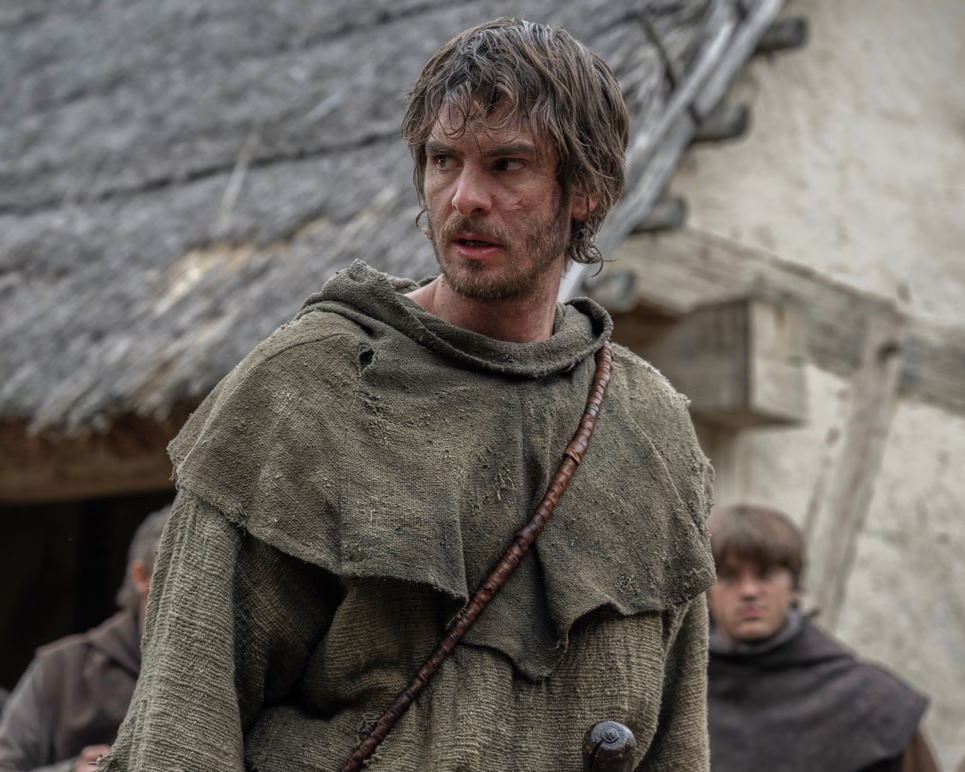
Andrew Garfield, the film’s star, describes “The Uprising” as a “Rorschach test’” (Betina La Plante/ Focus Features/AP)





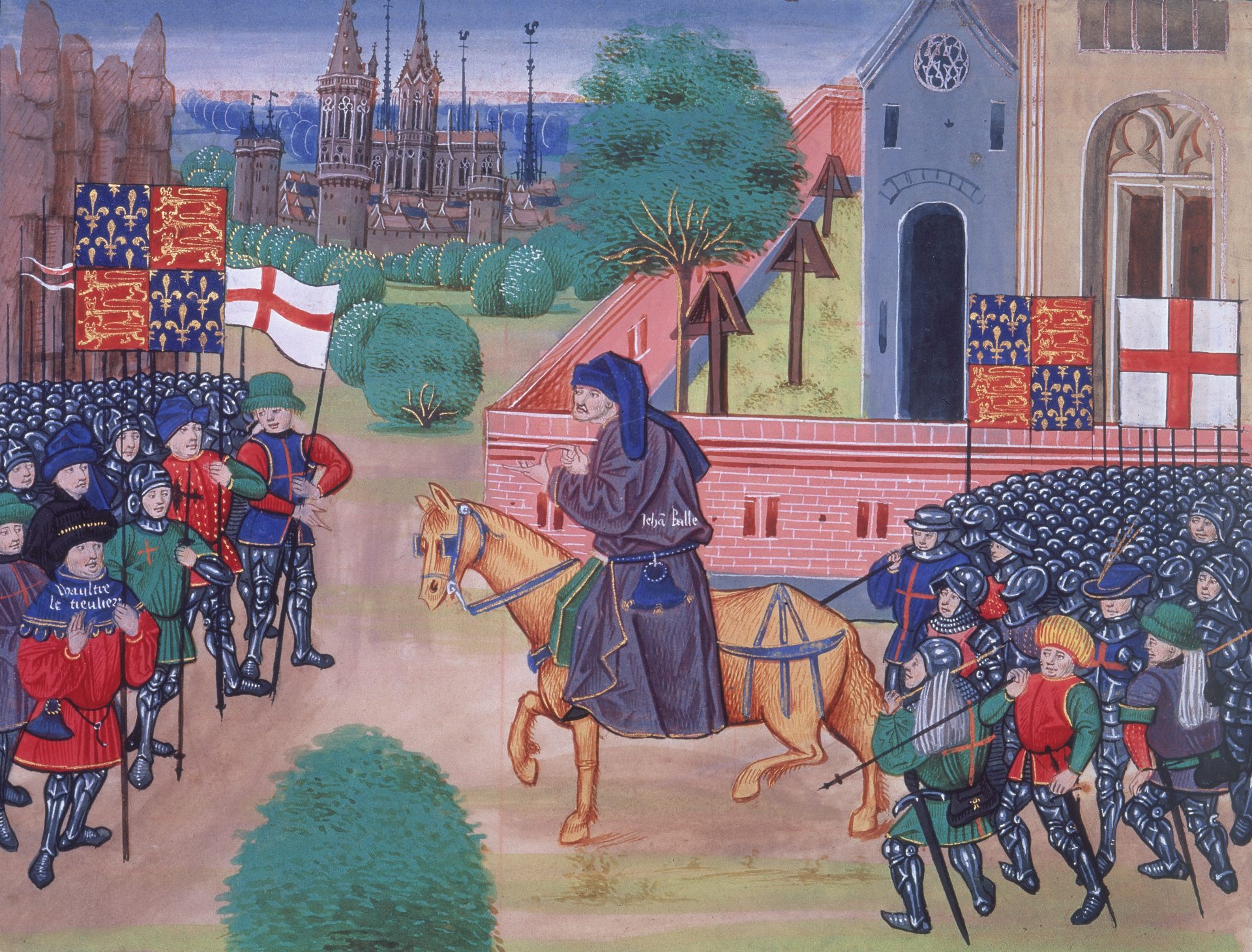
Between war and plague and famine, the 14th century was surely the grimmest on record. Yet towards its end, when history books tend to deal mainly in the deeds of kings, archbishops, and other bigwigs, the English common folk suddenly burst onto the scene. They had made their presence felt before, of course, but usually on a very small scale — downing tools here, poaching a rabbit there. But in June 1381 it was different. They burned the manorial rolls and legal documents that they couldn’t read, which their lords had used to keep them in bondage: “Away with the learning of clerks, away with it!” cried a Cambridge woman named Margery Starre, as she threw the ashes to the wind. They hunted down lawyers and tax-collectors. They stormed palaces and prisons. And somehow, as if by providence, London became theirs — on the Feast of Corpus Christi no less.
For a brief moment, the great and the good of the realm, bejeweled and decked out in ermine, were at the mercy of a rabble of farmers from Essex and Kent. Over in Hertfordshire, while Wat Tyler was marching up the Thames to London, the townsfolk of St Albans ransacked the archive of the abbey, searching for a charter of liberties which they claimed had been given to them many centuries earlier by King Offa of Mercia. These rebels in 1381 were looking back to a time as far removed from them as they are now from us. The English have long memories.
Do those memories still stir? Modern socialists certainly hope so. If we in England are ever finally going to have the revolution that’s evaded us for so long, then history, radical history, will be our guide. We might never have had a grand theorist, a Gramsci or an Althusser, but our Marxists more than made up for it in the history department. There was a golden generation of E.P. Thompson, Christopher Hill, and Eric Hobsbawm. In fact, the last outstanding member of this school, the medievalist Chris Wickham, died only last week. Another of our finest Marxist minds, Rodney Hilton, shaped how we think about the Peasants’ Revolt. Over half a century after it was published, Bond Men Made Free still makes for exhilarating reading.
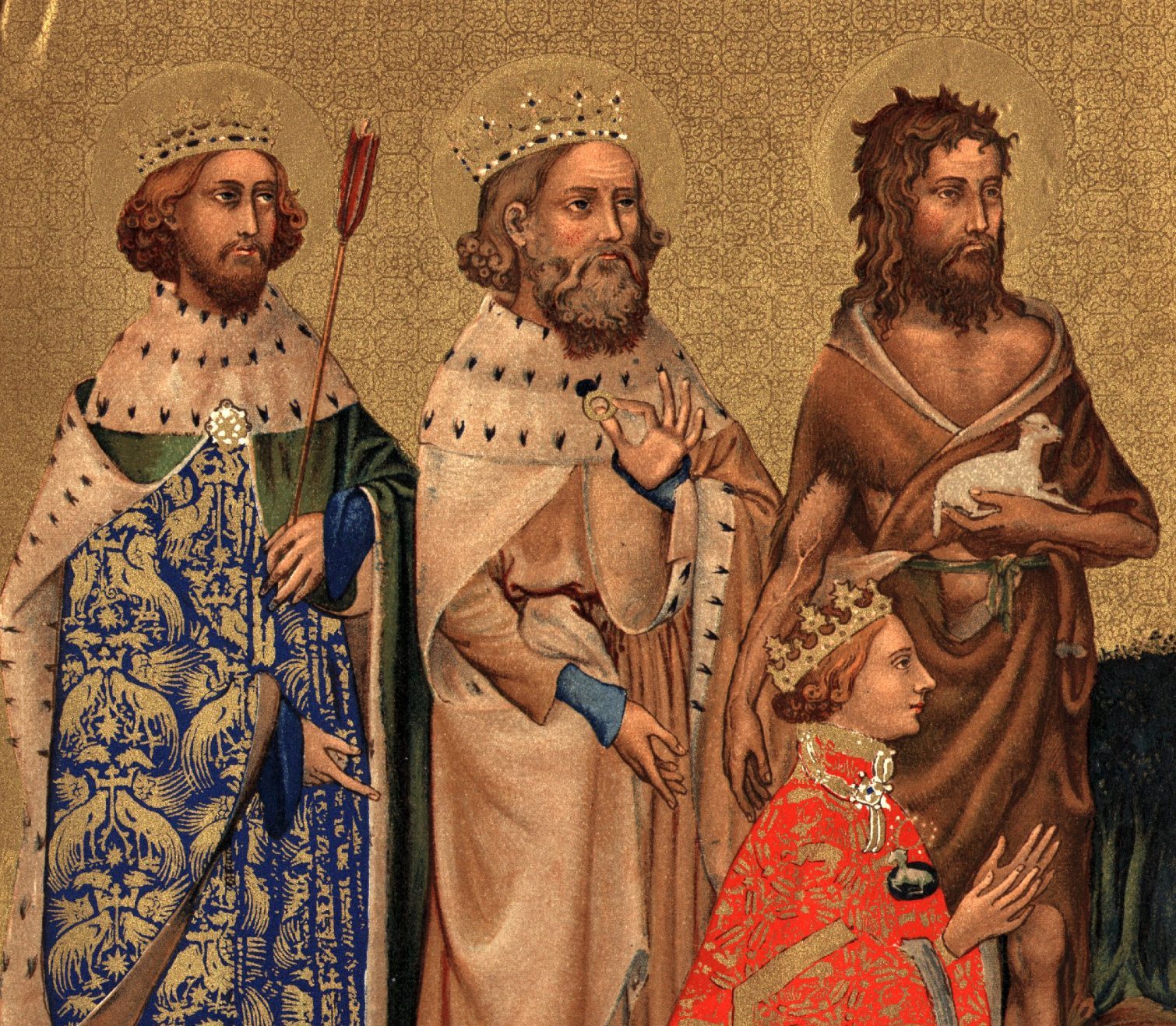
The elites had squeezed their peasants many times before; but now, with Parliament’s new poll tax, they squeezed too hard, inviting a reaction. That reaction was swift and bloody. It quickly became about much more than tax: the rebels demanded the end of serfdom, the redistribution of wealth, and the lives of many of the king’s counselors. (To the boy-king Richard II himself they remained deferential.) Today you can still see the mummified head of Simon Sudbury, Lord Chancellor and Archbishop of Canterbury, in a cubbyhole at the church in the Suffolk town that bears his name. You can look into the eye-holes in his skull and imagine what expressions they might have worn on each of the eight swings of the axe. Here, then, is a monument to the Peasants’ Revolt. It was a freak episode when everything stood on its head, and the masses enjoyed a brief and bloody respite before returning, not by choice, to the grinding cruelty of everyday life.
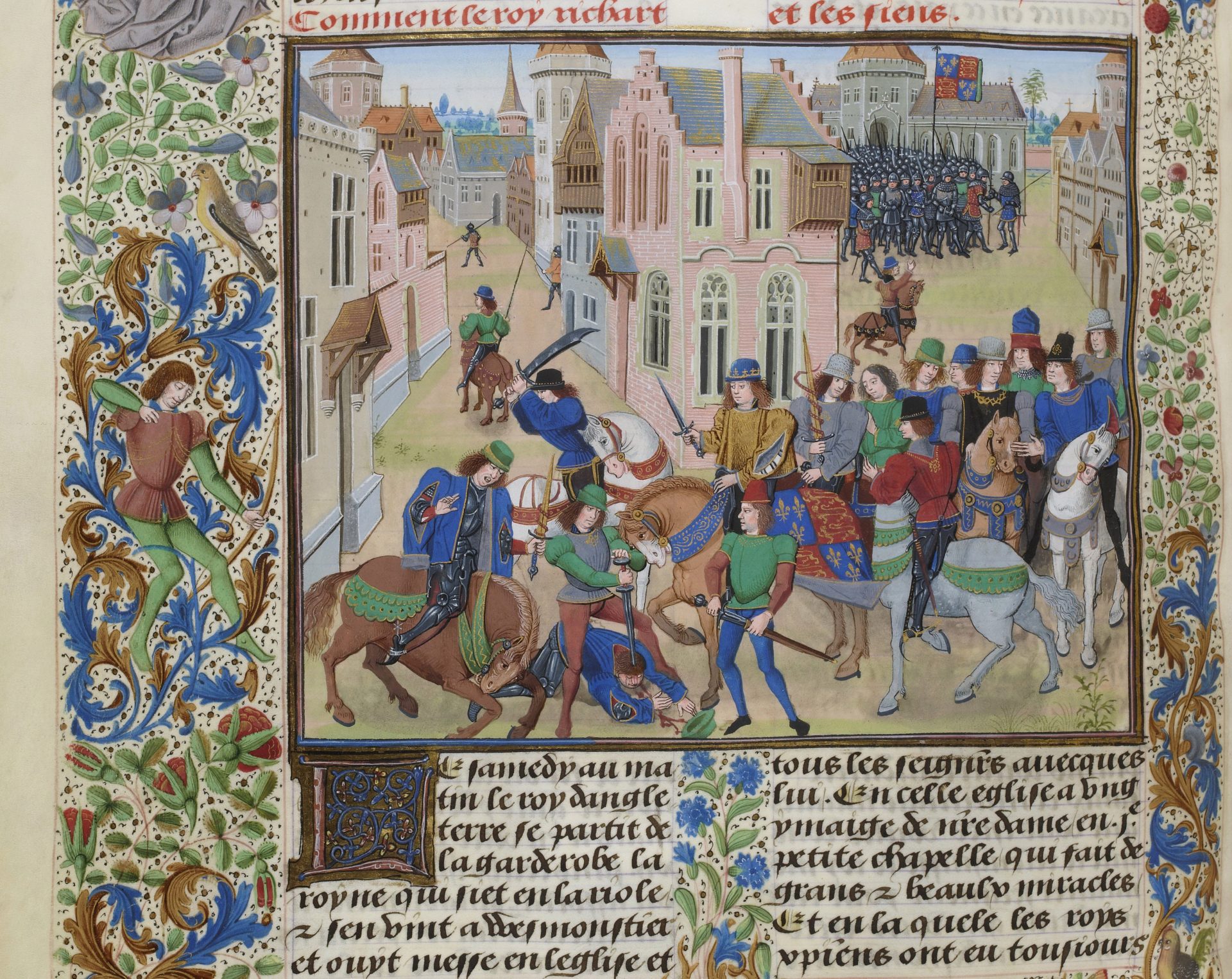
Tyler is so feted by the Left today because he is the best medieval hero they can hope for. What, after all, could they do with Alfred the Great or Richard the Lionheart? The fact they’re both monarchs is bad enough — but an “Anglo-Saxon” and a crusader? Such figures used to be harmlessly apolitical, but few things are allowed to be apolitical today. They represent a kind of Englishness that makes progressives feel uneasy. Tyler, about whom we know almost nothing, works better as an icon: a put-upon everyman, devoting himself to the class struggle. Tyler is a tragic figure, too, stabbed in the back by the Lord Mayor of London at Smithfield, a suitably bourgeois villain.
And so Thomas Paine exclaimed, in a footnote to The Rights of Man, that Wat Tyler’s fame will “outlive” the falsehoods spread by more disparaging historians. If the barons who obtained Magna Carta from King John “merited a monument to be erected at Runnymede”, Paine added, then “Tyler merited one in Smithfield”. Two centuries later, Tony Benn and Jeremy Corbyn unveiled a plaque commemorating the heroes of 1381 at the Highbury Barn pub — the site of the moated home of the Lord Treasurer Sir Robert Hales, “Hob the Robber”, which the rebels burned to the ground while delivering him to the same fate as Archbishop Sudbury.
And on it goes. The Uprising, Paul Greengrass’s new film on the Revolt, is a jumbled-up medley of English socialist themes. It was marketed briefly, in America but not in Britain, as a Robin Hood origin story, as if that is something anyone was asking for: The Death of Robin Hood, released earlier this year, was a box office bomb. Here Rodney Hilton’s hand is again at work: for Hilton famously argued that the fictional Robin Hood might have been a mascot of sorts of the rebels in 1381. It is tantalizing that the first surviving reference to him in English literature comes from only a few years earlier. The popular image of Robin Hood — that he “stole from the rich to give to the poor” — is, however, of a later vintage, and it has been convincingly claimed that the medieval audience for Robin Hood was most likely the well-to-do, rather than the resentful downtrodden.
The film’s politics are even messier than its history. Robin Hood is, of course, a symbol of Midland (or, in some versions of the story, Northern) disaffection. The Peasants’ Revolt, on the other hand, was really a south-eastern affair. There was, it is true, some tumult in York, but this was to do with local concerns. Greengrass is alert to this, and makes a strained modern parallel. It is, he says, a “very English rebellion story”, taking place in “all the big Brexit places”, chiefly today’s Reform UK heartlands of Kent and Essex. Tyler, this late-medieval Che Guevara, is also often presented as a forerunner to Nigel Farage. And though it was Thatcher’s enemies who, in an inspired bit of demagoguery, brought “poll tax” back into political discourse, there was, perhaps, a proto-Thatcherite complexion to the Rising of 1381: “Essex Man” telling the taxman to bugger off.
Andrew Garfield, the film’s star, describes The Uprising as a “Rorschach test”: and the same goes for the Peasants’ Revolt as a whole. There is no proto-Thatcherism in his version of the story: he wants billionaires to watch it and to be “scared shitless”. The closest to this type of politics in the film itself is a shouty John Ball, the radical preacher, played by Jamie Bell with hints of Gary Stevenson. “Surrender to the rage”, he says, “and it will set you free”. For one of the great heroes of English socialism — William Morris wrote a book about him — and utterer of the much-loved ditty, “When Adam delved and Eve span, who was then the gentleman?”, Ball in The Uprising is surprisingly unsympathetic. He appears as a religious fanatic. At one point during his rantings and ravings, Garfield’s laconic ploughman asks him, “Where’s God in any of this?”; it is reminiscent of “You ain’t no Muslim bruv”. And yet, by the film’s end, the ploughman seems to have come round to Ball’s (and indeed Garfield’s) way of thinking. Entirely fictitiously, the Lord Mayor of London, Tyler’s killer at Smithfield, gets his just desserts; and as the ploughman is roughing up the boy-king Richard II in the final scene, he drops his erstwhile royalism and says, “no kings”. Confusing the politics further, Tom Hollander’s oleaginous Hales at one point makes a Clintonian allusion to “deplorables”.
The Uprising isn’t the only piece of media to emerge lately about the Peasants’ Revolt. Fortunately, Doom Painting, a new novel that vividly fictionalizes the June days of 1381, is less anxious to find contemporary resonances in the late-medieval past. Its author, A.K. Blakemore, is more willing to let the story speak for itself, and so deals better with its many complexities. Her language recalls that of Langland and Chaucer, and is leavened with playful anachronisms. She has spent much time, as anyone should, playing around with the People of 1381 database, putting flesh on the bones of names which appear as lightning bolts in the records of 1381. There is a patriotic thread in her narrative; Thomas Baker, who sets off the whole Revolt early on, is a ruddy-faced Englishman and proud to be so, “volunteer[ing] himself as a synecdoche” for the whole country. “The angels come down blessing”, the book says, “not from heaven, but from Essex!” Tyler, for his part, is gruff and worldly, a manic-depressive charmer, tormented by his experiences fighting the French, and — what motivates him more than anything — that feeling that it was all for nothing.
Tyler is on a high for most of Doom Painting — he is “Christ re-fucking born” — and his sweaty, adrenaline frenzy is infectious. The novel captures the sheer fun of revolting, the kind of fun that teenagers seem to currently be having across France. There is a scene when Tyler and Ball peer outside the window and see a “gang of raw-boned youths” playing with an effigy of Archbishop Sudbury, “laughing as they take turns to grab hold of the noosed neck and mime fucking the limp dolly from behind”. “What could be holier”, says Ball, “than the laughter of children?” These are tragic words: we all know that the boys won’t get much more than these “few summer days of gaiety”. Unlike in The Uprising, where the rebellion is continued via a forest guerrilla, the historical Revolt was crushed almost immediately. John Ball was hung, drawn, and quartered at St Albans in July, in the presence of the king. When Richard II did at last get his comeuppance, it was at the hands of his nobles in 1399 — the sorts of people, court flatterers, schemers, and usurpers, whom the peasants had perceived as their main enemy all along. One of the reasons for the Peasants’ Revolt’s hold on the English socialist imagination is that it was an utter failure.
It’s fun until it isn’t, as Tyler and Ball learned the hard way. And if Hales, Sudbury, and the tax-collectors make the rebels easy to get behind, the socialist folk heroes are “problematic” in their own right. Contemporary chronicles make clear that the London rioting involved attacks on Flemish prostitutes and weavers. Chaucer, in “The Nun’s Priest Tale”, says that “Jakke Straw and his meynee. / Ne made nevere shoutes half so shrill / Whan that they wolden any Flemyng kille…” It is interesting that both Doom Painting and The Uprising, faced with this problem, adopt more or less the same strategy: to distinguish between their rebels, the good ones with pure motives, and the violent, unruly London mob. “They are of the belief” — Tyler seems to roll his eyes as he recites this hammy line in The Uprising — “that Flemish merchants are stealing their jobs”. He says this as though it is an uncouth and untrue notion: and all of a sudden our rebel is a bien pensant. In Doom Painting, meanwhile, one of the good guys is killed by Londoners while trying to intervene on behalf of a Flemish family. This, in a historical novel that is hardly light on fact, seems to be pure fiction. Is it too much to bear, for Wat Tyler’s latter-day admirers, that he probably didn’t care about London’s community of Flemish immigrants, and perhaps even thought that they had it coming? Our long memories are also selective. Like the St Albans rebels in 1381, we tend to know what we are looking for.
That leaves one more question: why now, in 2026, have two unconnected fictionalizations of 1381 appeared? The Uprising, as its confused politics suggest, doesn’t seem to know what connects us with the situation endured by 14th-century peasants. The epilogue to Doom Painting lamely offers up something about hereditary peers in the House of Lords — hastily conceding that, as of Spring 2026, there is not even any longer such a thing. The truth is that there is no obvious reason for the Peasants’ Revolt to be especially “timely” today. There is the specter of plague, on which both Doom Painting and The Uprising place great importance. But to compare Covid with the Black Death seems inapt.
I suspect it boils down to the fact that “Eat the Rich” stories are the flavor of the month, and the Peasants’ Revolt is England’s ultimate “eat the rich” story. Still, it is a propitious time for all things medieval, as the success of the Bayeux Tapestry exhibition at the British Museum makes clear. Nobody seriously tries to make that “timely”. And when they try — as Andy Burnham wanly did — they miserably fail. In both cases, 1066 and 1381, it’s the drama, not the politics, that’s timeless.
