




We’re all experiencing something approaching what the “blockers” themselves did. (Mathias Ocner/Getty)





Last year, I happened to be staying in Washington, DC, just as the DOGE boys moved into the 6th floor of the General Services Administration Building. The mood among the federal employees I talked to was feverish and strange. Everyone knew that something big was going on, even though nobody could quite tell just what that “something” was. People had lived through mass layoffs before, but this was something different. There was a mean edge to it all, a mood of sadism and paranoia — from the anonymous emails appearing in the middle of the night, to the supervisors unable to explain what was going on, because their superiors didn’t have any way of figuring out which one of the four contradictory messages they’d received that day they were supposed to be followed.
Donald Trump had entered office a second time promising “reform”: inoffensive, even desirable, to most workers in the federal bureaucracy. The US government, after all, is one of the biggest organizations in all of human history; the idea that nothing needed fixing was held by absolutely nobody. But as police tape went up around the GSA building, it soon became clear that this wasn’t really “reform”. It was more like an American version of China’s cultural revolution: a social frenzy, a moral panic, a bureaucratic power struggle — all rolled into one. Folk devils come and go, yet the advent of modernity has done very little to rid humanity of the witch-hunter’s instinct. China under Mao declared war on “reactionaries”, while Stalin’s USSR denounced “wreckers” of all kinds: the need to identify and then attack an internal scapegoat is as old as society itself. Now, the same drama was playing out in America.
It is in this context that Michael Lewis’ latest book is so useful. Dispensing with the historical sweep, Blockers: Rebels in the Deep State sets out to give a ground-level view of how the nine-or-so months of the DOGE revolution played out for the people cast as the ancien régime: the ordinary bureaucrats who suddenly found themselves part of the “deep state”, and who, like Mao’s “reactionaries” or Stalin’s “wreckers”, were accused of holding the country back from its destiny out of pure spite.
Blockers starts by covering the story of the man in charge of security at the US Peace Institute, and his doomed struggle to keep control of his building. From there, it profiles the people affected in more famous parts of the US bureaucratic machine, like the IRS and US state-directed research, areas which ended up seriously mangled by DOGE. If more analytical work is surely also needed, there’s an obvious benefit to Lewis’ bottom-up approach. The DOGE project — much like Mao’s call to “bombard the headquarters” of the Chinese state — was never some dry and analytical process. Rather, both phenomena were basically emotional explosions, in which the bottled-up contradictions and resentments of their respective societies were allowed completely free expression with no regard for whether the targets actually deserved it.
Unlike its Chinese analog, of course, DOGE wasn’t violent. But one should also remember that the massive violence of the Cultural Revolution was largely bottom up, rather than ordered from the top. The danger of these kinds of manias is that they are inherently hard to control. This is particularly true when the revolution’s hatchetmen are young and inexperienced, attacking bureaucrats and functionaries many decades their senior, usually without any real inkling of what their targets do or why their work is needed. Even in cases where nobody died, young Red Guards subjecting their professors or doctors to public “struggle sessions” led to lasting scars on Chinese society, ones that took decades to truly heal.
Indeed, what stands out in the American case is just how thoughtless much of the destruction really was. For the famous “what did you do last week?” email, sent out to every federal employee, there was actually no capacity at DOGE to read what was sent in. One bright person suggested simply having an AI read all the emails and decide for itself whether the employee in question had justified their own salary. Unfortunately, the mailbox people were supposed to send their reports to quickly became, and full and stopped accepting new emails.
In another case, the people deployed to “clean up” the government of waste and corruption were shocked to learn that the departments they had been sent to by and large worked quite well, while officials actually believed in public service. The IRS, despite still using faxes, actually managed to do its job with incredibly low overheads. The Department of Veterans Affairs, despite its various troubles, still offered cheap and competitive health care. There just wasn’t as much waste in the system as the DOGE people had imagined.
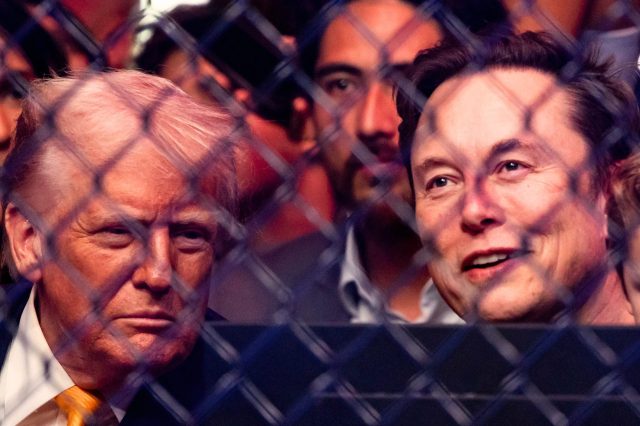
All the while, DOGE itself was soon swamped by graft, as Elon Musk himself seemed intent on using his new role in order to benefit his own companies, while lackeys in his orbit saw their chance to secure government jobs they would otherwise never have been qualified for. One man, Jeremy Lewin, had taken the lead on shutting down USAID, and then leveraged that into becoming an under secretary in the State Department. His only qualification was that he knew a guy who knew a guy at Tesla. As another ex-employee put it, DOGE was in practice just “a glorified temp agency for software engineers”.
For future historians trying to understand the fractious and chaotic era we’re living through today, Blockers is likely to become an invaluable source. The war that was unleashed on America’s own wreckers and reactionaries forms a part of a process of social and political erosion. Certainly, America is less attached to its small-r republican ideals today than it was before DOGE happened, and the situation is likely to only get worse over the years ahead.
What makes Lewis’ book even more interesting, though, is that the “DOGE moment” itself is so unquestionably over, with few today even willing to mention it. Musk himself has publicly forsworn any further desire to be a part of government — even if he’s spent $366 million on supporting Republican candidates and causes in this midterms cycle. As for Trump, he’s no longer speaking about government reform either; like the idea of balancing the budget, it has been shoved behind the proverbial sofa, as the White House focuses on fighting its new war with Iran. DOGE itself has been closed down with little fanfare, and it won’t be revived.
The organization’s flash-in-the-pan existence can probably be chalked up to the fact that political time is now moving so incredibly fast. In 2026, gas and diesel prices are now at record highs; the world is heading into a gargantuan economic crisis; the US military has seen its teeth broken and its bases destroyed in the Middle East; and Trump has gone on to destroy his legacy by starting the one war he promised voters he would prevent. In that context, the drama of a bunch of 20-something engineers subjecting people older than their parents to struggle sessions at the IRS now seems almost quaint. Even the graft that came with DOGE can feel like small fry. In the year since, Trump’s circle has outdone itself when it comes to corruption and self-dealing, with the President himself having tripled his income in just one year since returning to the White House.
But the speed at which things move today — the speed with which dramas like DOGE are so quickly forgotten — should counterintuitively push us to study these events more rather than less. When reading about previous periods of historical upheaval, whether the French Revolution or its Chinese equivalent, it’s tempting to imagine events as a compressed reel of dramatic set-pieces, a discrete rollercoaster people could feel themselves getting on then getting off. But, in reality, something like what happened in France at the end of the 18th century only makes sense as the “French Revolution” in retrospect. The people debating the royal finances in the late 1780s hardly knew they were part of a revolution; the delegates to the National Assembly a year or two later were equally ignorant about how history would come to view them.
Far larger dramas than DOGE have already transpired in the eight months since the start of the Iran war. Yet that strange summer of denunciations and struggle sessions, of blind firings and public humiliation rituals — all of it was a natural, and perhaps even required, stepping stone on the path of our own great upheaval. Yet unlike the Chinese Cultural Revolution, which was a purely internal affair, the great MAGA revolution looks eerily similar to the French Revolution, or else the lead-up to the First World War. The entire global order is now clearly collapsing, and the rules that governed our planet, militarily, socially, economically, politically, are being destroyed in front of our eyes, with no replacements visible on the horizon. Just like the French in 1792, none of us know where the rollercoaster will end. All we can do for the moment is hold on for dear life. In this sense, we’re all experiencing something approaching what the “blockers” themselves did.