




Time to leave? (Henry Marken/AFP/Getty)





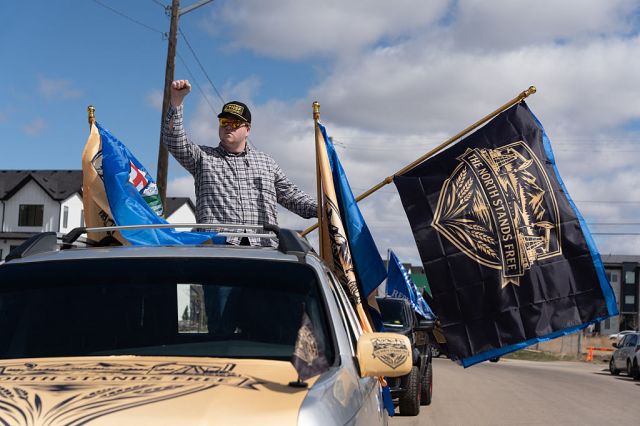
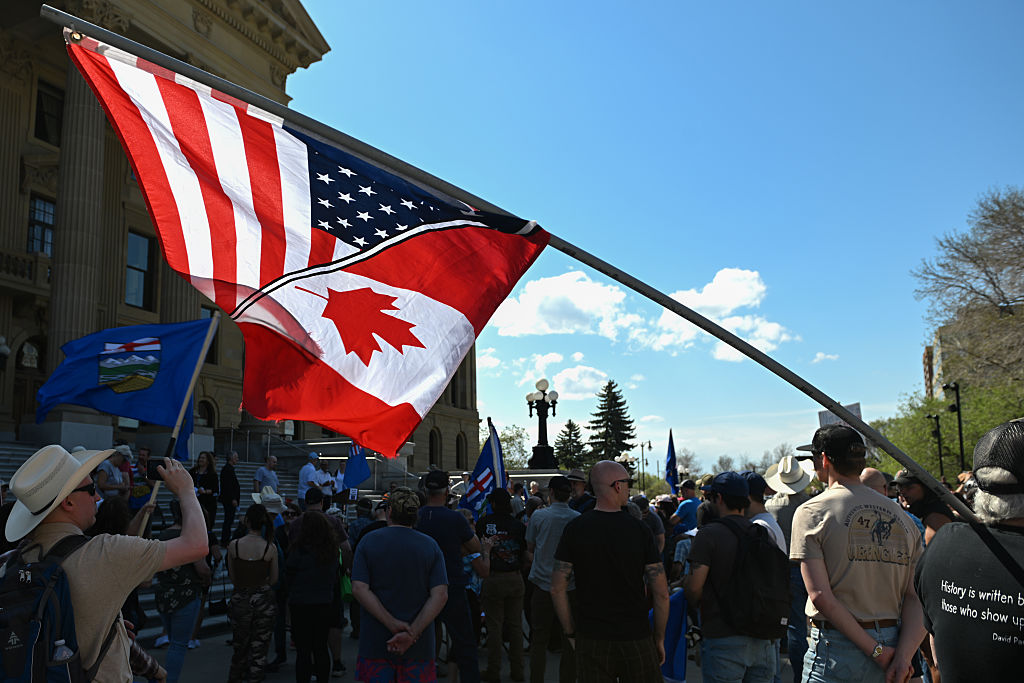
Scott Russell doesn’t much look like a revolutionary. A 40-something dad, he’s dressed like he’s headed to work. I meet him on a bridge overlooking an Edmonton freeway. Beneath us, drivers in 18-wheeler trucks zoom by, blasting their horns in support like motorized tubas. Russell waves an Alberta flag, alongside about a dozen other protesters doing the same. Like him, they seem less like rebels and more like archetypal working-class Albertans, with loose-fitting jeans, gritty ballcaps and pragmatic phrases like “git‘r’done”. Yet Russell tells me that, when the day comes, he’ll vote for his province to leave Canada. “I have sworn eternal resistance upon all forms of tyranny against men,” he says, “and the federal government is tyrannical.”
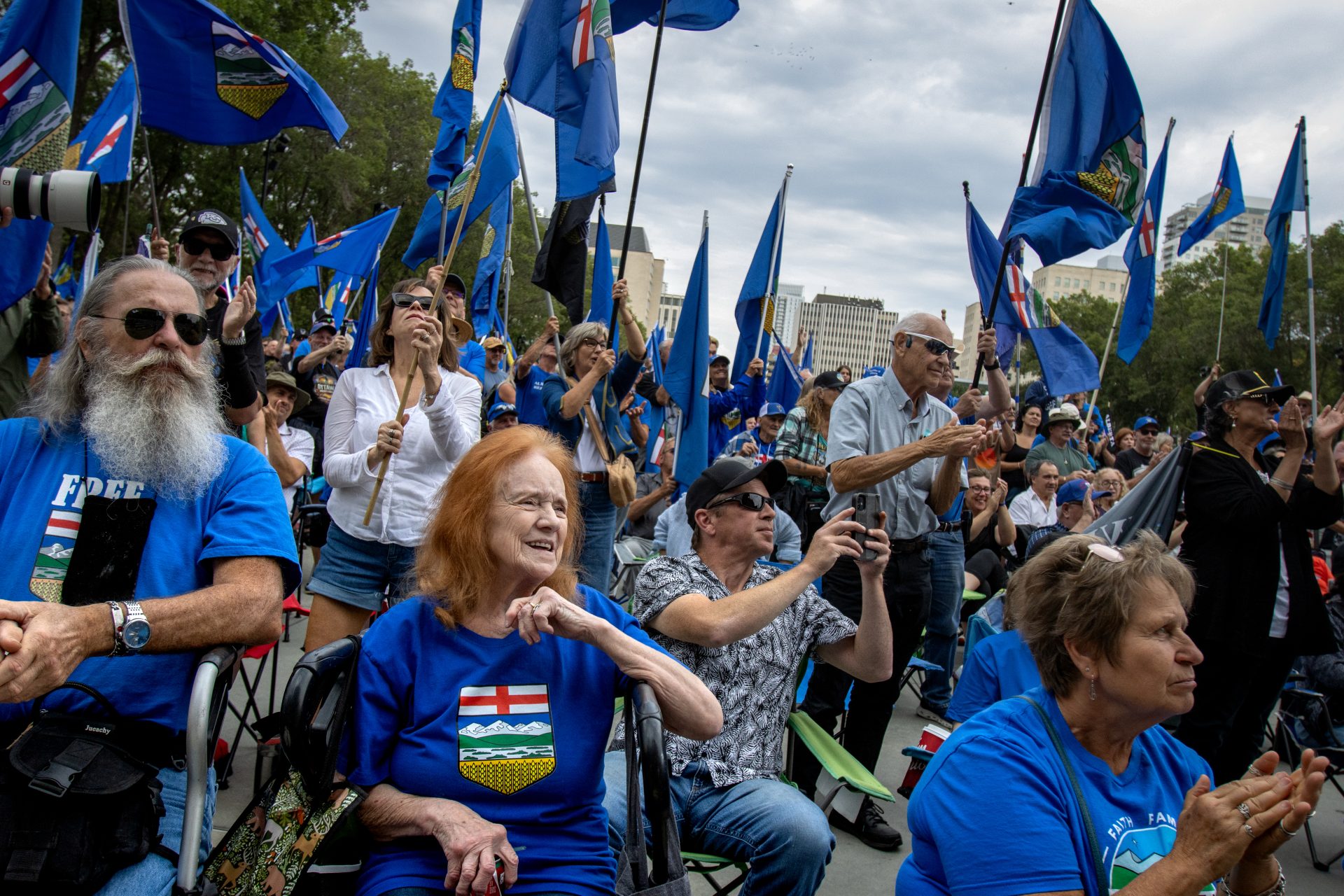
That day has now arrived. Alberta’s long-awaited independence referendum is happening on Monday, and if the polls are right, roughly 650,000 of Russell’s fellow Albertans intend to vote the same way as him. The province’s independence movement is not about language or culture, as separatism in Quebec has been for 60 years. Instead, as talking with the protesters on the Edmonton bridge reveals, it’s almost exclusively about populist outrage; a quixotic belief in cultural homogeneity; and naive-if-understandable economic hope.
For Russell, the inflection point came in early 2020, the first days of the Covid pandemic. That was when he lost his job as an industrial plumber in Edmonton, Alberta’s sub-Arctic, truck-clogged capital city of 1.2 million people. “We heard they canceled St Patrick’s Day in Ireland,” he recalls, “and then obviously the layoffs happened”. Having started his job just five weeks before, he says he was “first on the chopping block”. From that moment, Russell tells me his confidence in being able to make ends meet was shaken — as was his hope. Over the past six years, he has moved his family several times to find work; a business he launched ground to a halt; and his son was forced to be vaccinated against his wishes. As for Russell himself, he was called a Nazi for his anti-vaccination beliefs.
Yet if Russell’s is a personal tragedy, he feels his province has been wronged too — by the Canadian state. “The rug,” as he puts it, “has been pulled out from under us.” He’s far from alone. Freed from federal laws, indigenous land treaties, environmental reviews, and other barriers they feel Canada’s liberal-minded power brokers back East put up to thwart them, separatists believe their land of prairies and mountains might soon resemble petro-states like Qatar or the UAE.
If they get their way, Canada could be broken in two. The referendum is not binding, just like the 2016 Brexit referendum, but it’s still the first direct vote on Canadian unity in 30 years. And, just like Brexit, the aftermath of Alberta’s vote is likely to be protracted and damaging. If they don’t succeed, and polls suggest they won’t, separatists will feel hope has been snatched away from them — and that could somehow be worse than the chaos of secession. It’s the same challenge faced by countries right across the Western world: how do pluralist, liberal societies create hope that’s louder than the grudge, before the grudge breaks everything?
Alberta is Canada’s original grudgeland. There’s history you must know to make sense of that fact — though it doesn’t perfectly explain what’s happening now. Anthony Sayers, a political scientist at the University of Calgary who traces the history of party politics in Canada, explains Alberta was cut out of the country’s North-West Territories in 1905 to create a province “in the Roman sense” of the term. In other words: it existed to be extracted, while the local government wasn’t given control over its natural resources or tax base. For the politicians in Ottawa, Alberta was first there to be a cash-cow — its bounties exported to eager consumers in Europe.
The first resource Canada extracted was grain. But even before Alberta was formed, federal surveyors and prospectors believed it held vast reserves of oil. This was quickly proven, though industrialization in practice took decades (and it was actually Americans, not other Canadians, who first brought money and technology to help — another source of grudge). Today, Alberta has more than 160 billion barrels of proven reserves still left. That translates to the fourth largest stockpile in the world, and encompasses practically all of Canada’s share.
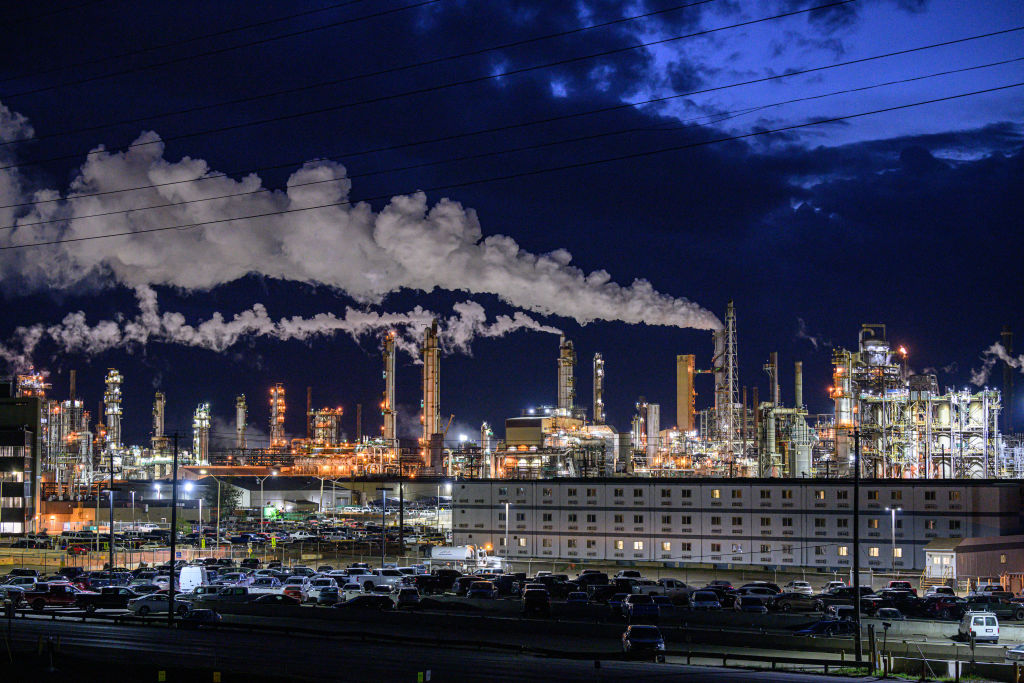
This created the grudgeland. For though Canada handed control of Alberta’s natural resources to the province in the Thirties, separatist discussions have rumbled for more than a century. Especially after 1979, the Iran revolution and resulting oil crisis, a Canadian policy to sell Alberta oil domestically at below-market prices spurred white-hot anger. Western Canada Concept, the province’s first separatist party, was born. “Let the Eastern Bastards Freeze In The Dark!” as one popular Albertan bumper sticker from the period put it.
Separatism’s newest wave doesn’t fit neatly into this history. The standard grudges remain, but they’re joined by more conspiratorial beliefs. Russell tells me he’s a separatist because Alberta’s wealth goes to Canada in the form of taxes, and Canada then sends these dollars to other less-wealthy provinces — the much-hated “equalization” policy. That’s mostly accurate, albeit with huge caveats. But what certainly isn’t accurate is Russell’s next claim. “For this fiscal year, we have budgeted, as Canadians, C$86 billion to send to King Charles for the administration of our country,” he tells me, with that figure coming out to about £45.5 billion. “Look that up. Don’t take my word for it.”
Mitch Sylvestre shares that fixation with the British Crown, and even told one reporter he believes King Charles wants him murdered. When I meet Sylvestre, leader of the pro-independence Stay Free Alberta organization, he describes the utopia that could unfold if his province became a country. Sylvestre is tall, athletically built, and has a blazing intensity that belies his 71 years. “Let’s get real here,” he tells me. “If we have a C$27 billion-to-C$50 billion fiscal surplus every year, multiply that by 20, that’s a trillion dollars,” or about £530 billion. Just the interest on that windfall, Sylvestre continues, will pay every cost in Alberta. “No income tax, no property tax, no federal tax, no debt. Does that appeal to anybody?”
Clearly it does. Given Alberta’s royalties from oil extraction, valued at C$19.3 billion in 2025 alone, you might see a glittering windfall to be split among the province’s 5.1 million residents. Still, economists at the University of Alberta have questioned Sylvestre’s sums. The academics warned that creating an entirely new government structure, from courts to the army, as well as paying a portion of Canada’s national debt, would prove costly — especially at first. Their most optimistic scenario suggests a 2% hit to Alberta’s overall GDP, while their pessimistic scenario suggests GDP could drop by 10% over five years, and by more than 15% over 20. While some counter that an independent Alberta would be able to sell more oil to compensate, it would still be landlocked, and dependent on its current main customer, the United States, for moving or buying its black gold. And the US, to put it mildly, has lately been indifferent to economic fairness.
For Jared Wesley, a political scientist who works on finding shared ground among Alberta’s polarized citizens, these economic dreams point to real pain for the working class. The fact is jobs in the much-feted oil and gas sector aren’t growing, peaking with 170,000 jobs in 2014 before falling through a mixture of automation and frozen investment. Another source of anxiety has been immigration, which the province cannot control. Nearly 150,000 non-permanent residents have moved to Alberta over the past decade, and this has been seized upon by separatists, including the currently provincial Premier Danielle Smith. When voters come to vote next week, after all, Smith has included nine other questions in their ballot papers, five of which are about the access to public services immigrants should have.
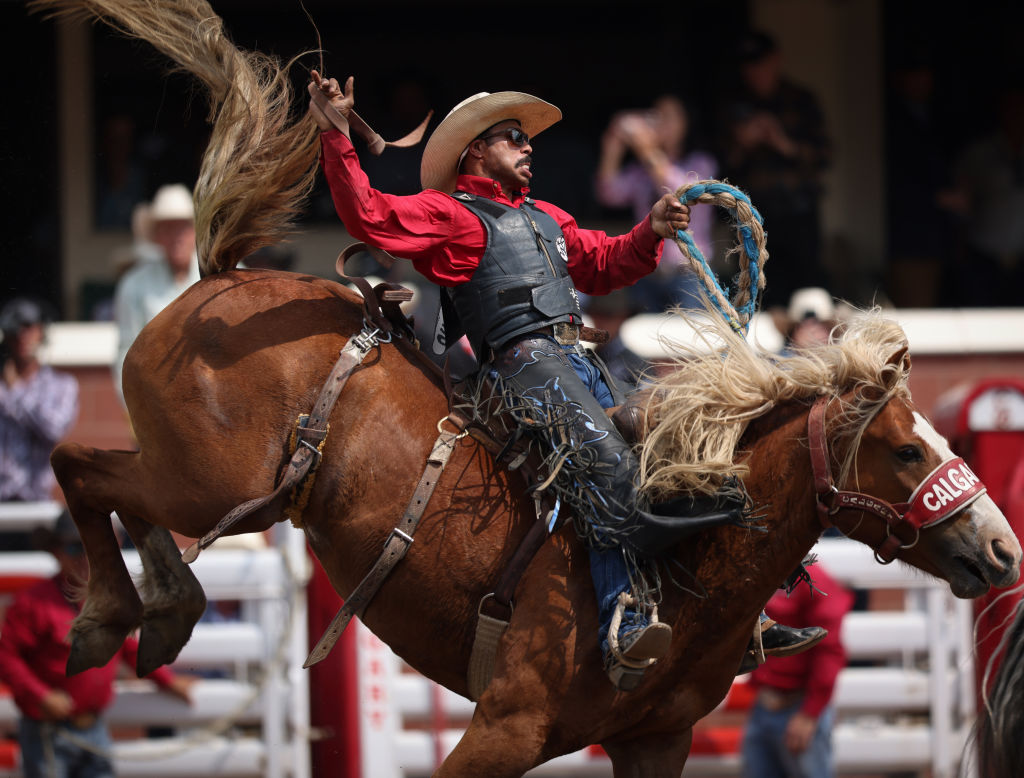
Culture matters here too. To be sure, Alberta doesn’t have a particularly unique identity within Canada — aside from perhaps a love of cosplaying as cowboys while actually living in the suburbs. The oft-cited culture of Albertans being “hard-working people”, who just want big government to leave them alone, is also present in rural parts of Ontario, where I’m originally from. Still, compared to other parts of the country, Alberta did see a strikingly large inflow of settlers from the American Midwest in its early days. These settlers brought with them a deep current of libertarianism, populism, and Christian conservatism. As far back as the Thirties, Albertans elected William Aberhart, a radio preacher, as their premier, with “Bible Bill” famous for taking on the Ottawa establishment. In the century since, business ties with the US have only deepened.
This blend of history, economics and frontier culture explains the referendum’s immediate political context. Former Alberta Premier Jason Kenney created the United Conservative Party (UCP) in 2017, patching up the province’s fragmented Right wing. Kenney won the 2019 election handily, heading a party he’d engineered with populist conservative ideals: including giving rank-and-file party members the ability to hold binding leadership reviews. As premier, Kenney then passed the Citizens Initiatives Act, allowing Albertans to gather enough signatures to push through policy changes and even constitutional referendums.
Both were key to what happened next. Kenney railed against the Canadian state, trading in outrage and even mild conspiratorialism. A 2019 public inquiry, which hoped to find evidence of foreign money being used to strangle Albertan oil and gas, spent millions and found little. Still, it was all part of Kenney’s broader theory of “ventilation”: of keeping separatists under control by throwing them hints that he shared their outrage.
But back in 2021, as Justin Trudeau, the antichrist for most Albertan conservatives because of his performative wokeness and policies that many Albertans believe shut in their resources, looked ready to win yet another federal election, separatist sympathizers pushed Kenney to consider a split. He refused. This is when Sylvestre evolved into one of Alberta’s most unelected people. He helped force Kenney out as leader (Sylvestre is also a constituency president in the party); helped replace her with Smith; and then, in 2026, organized the petition that, under Kenney’s law, gathered 220,000 signatures, passing the threshold for a province-wide vote.
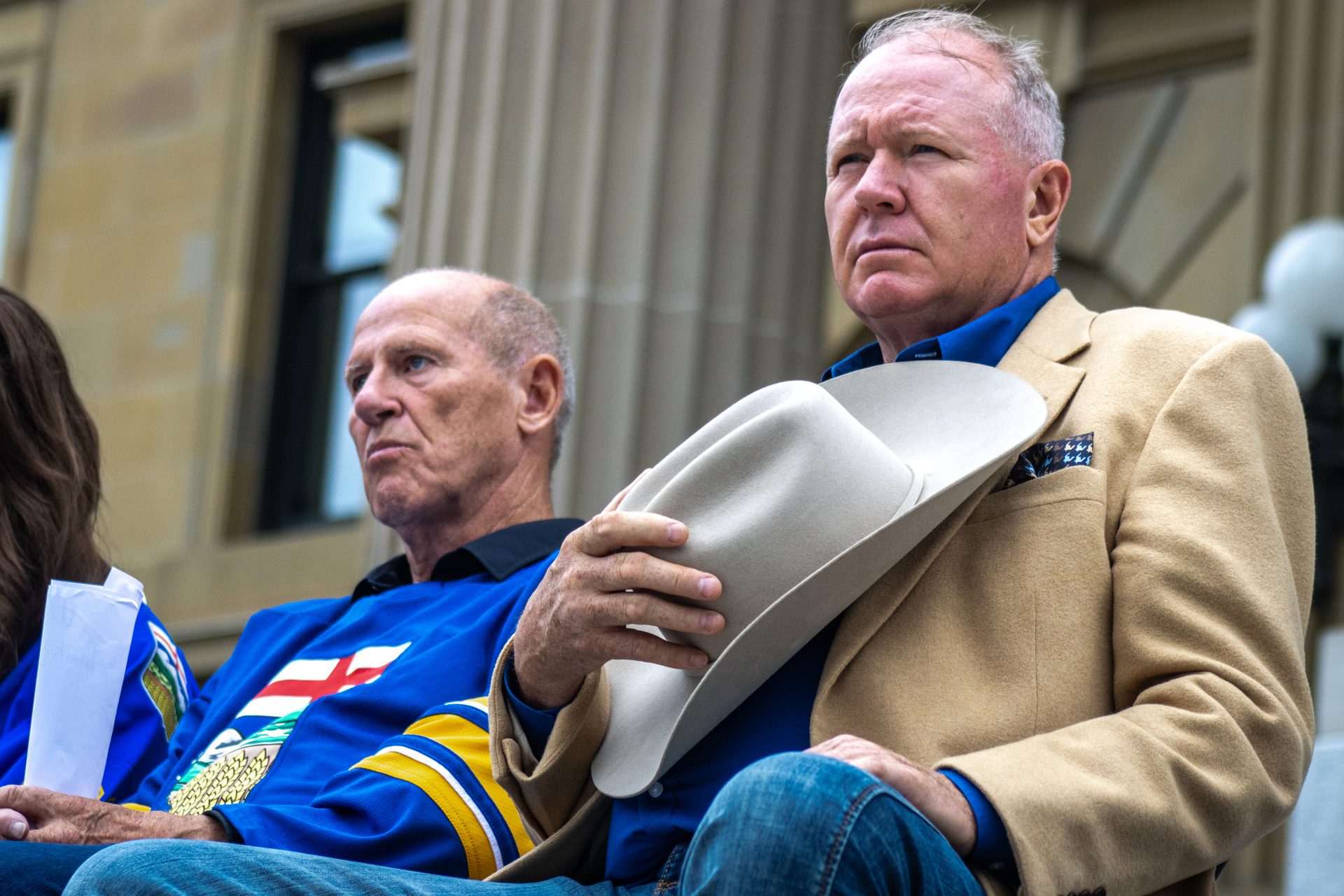
Smith is far more comfortable with the idea of secession. As for Sylvestre, he has visited the US to chat with officials about what might happen if Alberta left Canada. Among other things, that might potentially include a half-billion dollar loan, with the funds provided by Washington.
Sylvestre has also vowed that separatism won’t go away, whatever happens with the vote. If they lose, some secessionists have already threatened to oust Smith from within, one path to continued unrest. There are many others. For instance, over half of Alberta’s doctors say they’ll leave if the province separates. Rank-and-file separatists, people like Scott Russell, will be at risk of seeing the hope they’ve clung to evaporate. Where would they turn then? Based on the progress of other populist movements, from Britain to the Netherlands to Germany, the answer is likely to be messy.
Another parallel with populists elsewhere is that people like Russell arguably have the wrong target. Many of the problems he and others rightly flag are ultimately the responsibility of their own provincial administration — from healthcare to the royalties owed by oil giants. The federal Canadian government, under new Prime Minister Mark Carney, has actually declared a new pipeline to the Pacific Ocean in the national interest, thereby avoiding the many loopholes that stymied similar proposals in the past. But in Alberta’s political culture, the historical frame of reference is to blame outside forces, not those from within.
Little wonder Wesley is worried for the future. In the US, he notes, some on the populist Right have already turned to violence. “I just hope that that’s not going to be the overwhelming response here.” Separatists and their leaders are peaceful. But in 2022, far-Right activists mounted a border blockade in southern Alberta to oppose federal vaccine mandates. One man openly talked of preparing for what he saw as a war against tyranny, calling for federal leaders to be hanged. He had weapons, including a pipe bomb, and is now in prison.
Russell is hardly in that mold, but his words could make you think otherwise. “Canada — like the country, the land, the people — I love it.” he says. “But like the federal government and the system? You are darn right that I hate the guys who hate me and who literally want me dead, and have said so.”