









Last summer, a section of Justin Timberlake’s fans began to complain that the “SexyBack” singer wasn’t giving it his all on his Forget Tomorrow tour. At various shows he appeared less energetic than usual and at one particularly lackluster European date, he held out his microphone for the audience to sing “Can’t Stop the Feeling!” as if he couldn’t quite manage it himself. “Dude took a day off on stage…” one fan complained on TikTok.
When the tour finally ended, Timberlake took to Instagram to explain himself to his 69 million followers. He revealed that he had been diagnosed with Lyme disease, “which I don’t say so you feel bad for me but to shed some light on what I’ve been up against behind the scenes”. The tick-borne infection, he said, had been “relentlessly debilitating, both mentally and physically”. At times he had gone onstage “in a massive amount of nerve pain” or struggling with “crazy fatigue or sickness”. The response duly modulated from scorn to sympathy — though still mixed for some with skepticism.
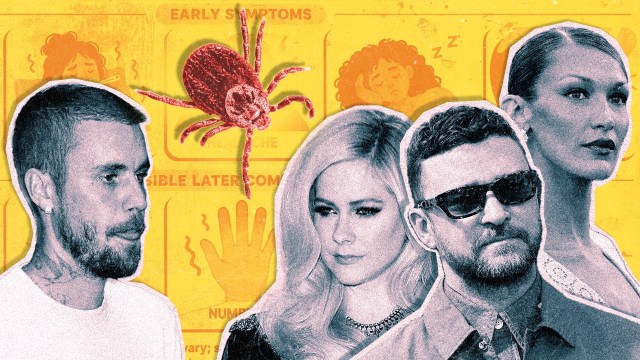
Timberlake is far from the only celebrity to share his Lyme story on social media in recent years. The Canadian singer Avril Lavigne revealed her diagnosis in 2015, describing how the disease had left her bedridden for two months, unable to move or even speak. She subsequently founded the Avril Lavigne Foundation to help combat the disease, which is thought to affect around half-a-million Americans each year — and in terms of raising awareness, she has been extraordinarily successful. Other celebrities who have reported having Lyme disease include Bella Hadid, Shania Twain, Alec Baldwin, Ben Stiller and Justin Bieber.
Some have described relatively straightforward infections, while others talk about years of unexplained illness, eventually attributed to Lyme and treated outside mainstream medicine. Yolanda Hadid, Bella’s mother, has documented an increasingly baroque range of treatments involving a “healing cave”, hyperbaric oxygen chambers, coffee enemas, various stem cell treatments, hundreds of supplements, plus a “parasite lab” in a guest bathroom, which she uses to scrutinize her own feces.
These celebrity accounts have brought Lyme disease to a huge audience. But they’ve also drawn attention to a question at the center of what has become a highly fractious debate. When someone has persistent, debilitating symptoms but no convincing evidence of an ongoing Borrelia infection, should Lyme still be considered the cause? Should it still be treated as an active infection? And there is a broader question too: what explains the increasing prominence of the disease in public discourse, given the relatively low overall number of confirmed cases?
Ixodes ticks tend to live in woodland and long grass, waiting for a passing animal or human to brush against them. Their numbers fluctuate from year to year, although the UK Health Security Agency (UKHSA) says that their geographical distribution across the UK has widened. If you are unfortunate enough to stray too close, the tick will attach itself to you, embed its mouthparts in your skin and feed for several days. If the tick is carrying Borrelia bacteria, there is a chance you will contract Lyme borreliosis, aka Lyme disease: days or weeks later a red or pink rash may spread from the site, sometimes forming the characteristic “bullseye” appearance associated with Lyme disease.
However, it is a fairly small chance. In Europe, fewer than 4% of ticks are infected, and only 1-5% of bites from infected ticks result in Lyme disease. Put simply, most ticks are not infected and even when they are, most bites do not lead to Lyme. If you do contract Lyme, doctors can prescribe antibiotics, usually doxycycline. If it’s left untreated, however, it can spread to other parts of the body and cause neurological, cardiac and joint problems.
The difficulty lies in establishing a Lyme diagnosis. The rash doesn’t always appear — meaning doctors must rely on symptoms and blood tests — and these often do not give a clear answer. In England, 1,168 acute cases of Lyme disease, including those with neurological symptoms, were confirmed by laboratory testing in 2025. That was up on 2024, but similar to 2023. Nevertheless, the true number is likely higher because many people are diagnosed and treated without a blood test.
This points to the difficulty of establishing who has Lyme disease and who doesn’t — and it’s partly this ambiguity that has led to what some have called the “Lyme wars”: a long-running dispute about the boundaries of the disease, how it should be diagnosed, and whether persistent symptoms represent the long aftermath of a tick-borne infection — or something else altogether.
At the center of the “Lyme wars” are two very different approaches to diagnosis and treatment. In the US, the Infectious Disease Society of America (IDSA) recommends defined courses of antibiotics and advises against further treatment for people with ongoing symptoms but no evidence of active infection; NHS guidance is broadly in line with this approach.
The International Lyme and Associated Diseases Society (ILADS), meanwhile, argues that Lyme can be difficult to diagnose and that conventional tests may miss infection. Its guidelines allow longer treatment and give doctors greater latitude to prescribe further antibiotics when symptoms continue. This is the framework often cited by private practitioners in the UK.
Supporters say that the ILADS approach helps patients failed by conventional medicine. However, it also makes Lyme extremely difficult to rule out. Any unexplained symptom — fatigue, pain, tinnitus, muscular aches, memory problems. heart palpitations, visual disturbances, problems with speech, mood and sleep — may be attributed to Lyme, when of course these symptoms can be caused by a very wide number of conditions, serious or otherwise. If such symptoms persist after treatment, it is not necessarily taken as a sign that Lyme is not the cause — and can instead be interpreted as evidence that more antibiotics are needed.
In the US, the dispute has even reached the courts. In 2006, Connecticut Attorney General Richard Blumenthal launched an antitrust investigation into the IDSA’s Lyme guidelines over alleged conflicts of interest and the exclusion of alternative views. IDSA agreed to an independent review, which ultimately left its recommendations essentially intact.
Then, in 2017, a group of patients sued the IDSA guideline authors and health insurers, alleging they had conspired to restrict chronic Lyme treatment to avoid paying for longer courses of antibiotics. The case, which included antitrust and racketeering claims, was eventually dismissed. But it encapsulated the way that the argument has become about more than how long to give antibiotics. It is also about how much evidence is sufficient to diagnose an infection and who gets to make that judgment.
For some, a diagnosis of Lyme disease explains years of multiple, debilitating symptoms. Many patients, however, say they have been dismissed or “gaslit” when doctors cannot find an explanation for their symptoms — a situation familiar from debates around myalgic encephalomyelitis, also called chronic fatigue syndrome (or ME/CFS) and, more recently, Long Covid.
The medical disagreement, however, is not over whether the symptoms are real. It is over whether an active, ongoing Borrelia infection provides an explanation for these symptoms. This is why many doctors are warning that people are being diagnosed using unproven tests and sold costly treatments that don’t work and can cause harm.
It’s no surprise that this disagreement has been amplified on social media, where there is a thriving community of Lyme influencers, podcasters and content creators — including many who will persuade people that their brain fog or low energy levels are the result of undiagnosed Lyme. A few share some fairly outlandish conspiracies. One viral post we found claimed that Lyme was, in fact, man-made — part of a Cold War-era “entomological warfare” program that went wrong.
Many Lyme support groups and charities are well aware of the poor science circulating and are trying to counter it. But alongside them are accounts promoting alternative tests and treatments, from prolonged courses of antibiotics and intravenous drugs to restrictive diets, hyperbaric oxygen and herbal remedies. Some promote bee-venom therapy, in which people deliberately sting themselves with bees.
In September 2025, Bella Hadid posted photographs that attracted more than two million likes. In one, she lies in a European clinic, pale and swollen, her blood running through tubes into what appears to be a filtering machine. In another post from two years earlier, an intravenous catheter protrudes from her arm beside blood-soaked swabs. “Thankful to my mommy for keeping all of my medical records, sticking by me , never leaving my side, protecting, supporting , but most of all, believing me through all of this,” she wrote.
***
Much of the controversy stems from the difficulty of testing for Lyme. The bacteria are hard to detect directly in the blood, so standard tests instead look for antibodies produced by the immune system in response to infection. Those antibodies can take time to appear. “Patients with a very early infection may not have detectable antibodies and therefore have a negative test,” says Dr Christina Petridou, an infectious diseases and microbiology consultant who works for the NHS and the UK Health Security Agency. She is also clinical lead for Lyme disease at its Rare and Imported Pathogens Laboratory.
There is nothing unusual about a diagnostic test having limitations. It is always possible to repeat antibody tests later and look for changes. The difficulty comes when people have symptoms they believe are caused by the infection — but in the absence of clear evidence this is the case. One Instagram post encapsulates the problem. Its author had repeatedly tested negative for Lyme but believed the infection had become dormant. Eventually, they found an “integrative” clinic offering “cellular testing” and intravenous vitamins as treatment.
There are many such private clinics in the UK, US and Germany; Petridou says she has seen patients who have spent large sums on tests that are not recommended for diagnosing Lyme disease. A 2022 study published in Lancet Infectious Diseases found that these tests were so poor at distinguishing people with Lyme from those without it that they were “unfit for clinical use”. This means that many people end up being told they have chronic Lyme in the private sector — but on the basis of a discredited test.
For Stella Huyshe-Shires, chair of the UK patient charity Lyme Disease Action, this is a familiar problem. Her organisation has “been countering misinformation for well over a decade”, she says. She is particularly wary of celebrities sharing their Lyme journeys. “In every country there are two sorts of group [sharing information about] Lyme — one who go on about evidence and the other who do better on social media. The poor charity that sticks to evidence doesn’t get the likes, or the coverage,” she says.
Getting the diagnosis wrong can have serious consequences, too. “We have come across patients who have developed significant side effects due to unconventional treatments,” says Petridou, citing protracted diarrhea from Clostridium difficile, infections from intravenous drips, and antibiotic-related side effects. Moreover what is taken to be chronic Lyme disease often turns out to be something else: sleep apnea, multiple sclerosis, fibromyalgia, lymphoma or even lung cancer.
A Royal Liverpool University Hospital study found that just 27 out of 115 patients referred with possible Lyme disease were eventually diagnosed with it. Many had already been treated for it, including at least 53 unnecessary courses of antibiotics prescribed outside the NHS. “As medicine advances, snake oil salesmen advance as well,” laments Dr Alastair Miller, one of the Liverpool study’s authors.
But he is sympathetic. When he treats an HIV patient, for example, he can show the patient their viral load and demonstrate that their treatment is working. Since there are no biomarkers for chronic Lyme disease, he has less to go on. He recalls telling patients: “I don’t understand why you’ve got your symptoms.” Those consultations could take 45 minutes compared with 15 minutes for HIV. “I think it is largely down to frustration and the lack of treatments and the lack of understanding,” he says of the hostility around chronic Lyme. Doctors, he acknowledges, “have been dismissive in the past”.
One of the few things Miller could offer was cognitive behavioral therapy (CBT) and graded exercise — which have often been prescribed for patients with ME/CFS, which often presents similar symptoms. However, those options have narrowed. NICE’s latest ME/CFS guidelines advise against graded exercise therapy and say CBT should not be presented as a cure. The review was bitterly contested, with accusations of lobbying by patient groups; many members of the guideline committee resigned in protest. Miller argues that the result has left NHS doctors with very little to offer people with chronic fatigue, which inevitably pushes them online where there are plenty of private clinics ready to take their money.
***
If you show up at your NHS GP in Britain with suspected Lyme disease, you will generally be treated according to NICE guidelines with a short course of antibiotics. However, some private clinics tend to be more informed by the broader ILADs guidelines. “The medical professional may find it hard to say, ‘We don’t have an answer’,” Huyshe-Shires says, “especially when the patient has to pay a fee.”
One private clinic offering Lyme treatment aligned with the ILADs guidelines is Breakspear Medical in Hemel Hempstead. Its website describes individual treatment plans that can include intravenous and combination antibiotics. Breakspear Medical is a regulated clinic employing GMC-registered doctors, and has previously been judged by the Care Quality Commission to provide safe, effective and evidence-based care. But that does not mean that every test or treatment it offers has been independently validated: the CQC assesses the safety and quality of medical services rather than adjudicating scientific disputes over Lyme diagnosis or prolonged antibiotic treatment. The distinction matters because the GMC has investigated doctors who used unvalidated Lyme tests and unconventional treatments — showing that professional regulation and scientific consensus are not necessarily the same thing.
Australia has an even more unusual situation. It has an active Lyme Disease Association and a lively online community of people who identify as having Lyme. However, it has no Lyme disease, at least officially. National surveys have found no Borrelia burgdorferi — the bacterium that causes classical Lyme disease — in Australian ticks.
Australian health authorities recognize that some Australians may acquire Lyme on their travel overseas, but say there is no evidence of local transmission. The Lyme Disease Association of Australia disputes this, pointing to people who became ill after local tick bites and later tested positive at overseas laboratories.
Miller thinks this helps explain why the argument has become so heated. “The conditions where you don’t have a biomedical explanation and an obvious pharmacologic treatment have a tendency to become even more polarized,” he says.
When Justin Timberlake says he has been suffering from Lyme, we don’t know how diagnosis was reached or what tests were used. Likewise, when Bella Hadid said on social media in 2023 that “the little me that suffered would be so proud of grown me for not giving up on myself”, having declared herself “finally healthy” after 100 days of intensive medical treatment — there is no real way of knowing what treatments she used or what worked and what didn’t. Indeed, only this summer, she announced that the Lyme had returned in the form of severe fatigue, pain, brain fog and anxiety.
It is completely understandable why people who have been ill for years without an explanation are drawn to the Lyme community. Finding others with similar experiences can bring validation and support when medicine has offered few answers. But uncertainty also creates opportunities for people who claim to have those answers. Private clinics offer tests of questionable value and treatments that may be unnecessary; influencers can spread compelling stories of illness and recovery to huge audiences.
In that sense, Lyme tells a much broader story about health in the social media age. Personal experience can travel further than scientific evidence, and uncertainty can quickly acquire a diagnosis, a community and a commercial market around it. For people who are genuinely suffering, false certainty may ultimately be no kinder than having no answer at all.