




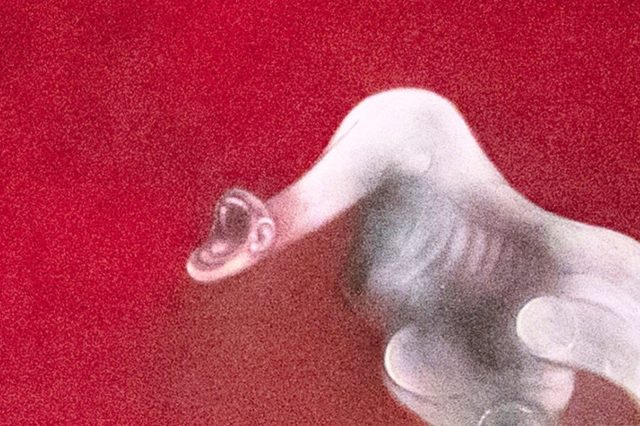
“Mental health was invented by the US military after the Second World War.” (“Three Studies for Figures at the Base of a Crucifixion,’ Francis Bacon. Getty)





Back in August, a chance remark from Alexandria Ocasio-Cortez sent the media scurrying. “Woke One was crazy,” the Representative said in an interview with ABC’s Jonathan Karl, as she walked back a few of her formerly-held ideas, including defunding the police. In the wake of that offhand comment, a flurry of think-pieces immediately appeared online, some castigating her for laughing away the worst excesses of the “Woke Era”, others vilifying her for diminishing what they felt remains an incomplete crusade. But like everything else in the online hellscape, the problem was the same as it always is with the culture war. By now, a term like “wokeness” is functionally meaningless, and can only be a momentarily convenient signpost in the constantly shifting tides of signaling and positioning within the internet commentariat. We may, as Justice Potter Stewart said about pornography, “know it when we see it” — but as soon as that “it” leaves our sight, entering into the semantic labyrinths of the World Wide Web, it inevitably takes on the same relationship to real meaning which Bitcoin has to money.
It is precisely this exhausting culture war which staked its apotheosis — mostly after the murder of George Floyd, though also over the decade prior — on so many endless rhetorical battles over “wokeness” and everything it ostensibly represented. For moderates and liberals, this mostly meant conformity and a new regime of manners, a sacrifice many media and university elites happily made, since it guaranteed full capture of the groundswell of social justice sentiment throughout the 2010s. For genuine social justice crusaders, this meant the morphing of a once-positive term (“stay woke”) into a self-righteous moralistic movement which few could admit had become something of a parody of itself. For many conservatives, this meant the absurdity of “woke” calls for everything from prison abolition to Thanksgiving abolition; the general censoriousness of online progressivism and Twitter mobs; and a general plague of “cultural Marxist” shibboleths, encompassing everything from a conspiratorial trans takeover to the tyranny of DEI, conflating lame liberal platitudes with the entire history of Western Socialism. This, of course, led immediately into the even more parodic and censorious “anti-woke” backlash, fueling Elon Musk’s buying of Twitter and Donald Trump’s tech-billionaire-assisted accession to a second term in the Oval Office.
In reality, of course, trans people have spent the last decade as a maligned hyper-minority in Western society (a position made all the worse by the insufferableness of so many self-selected “allies”); DEI is a consulting industry worth billions of dollars, which largely exists so employers can wield even more power over their employees; and whatever “peak woke” was, it was never even close to offering up the kinds of state-socialist nightmares keeping Ron DeSantis up at night. In fact, many Leftist intellectuals and commentators were from the beginning completely at odds with the usual rhetorical trappings of “wokeness”: the vitriolic racial pessimism, the refusal to debate or discuss, the tendency to dismiss real-world working-class economic concerns by insisting instead on the need for a kind of perpetual re-education campaign. With the 2016 and 2020 defeats of Bernie Sanders, they saw the first chance in modern American history to renew the New Deal and take real steps toward Nordic-style democratic socialism derailed again and again by activists and mainstream Democrats, neither of whom ever stopped maligning Bernie for focusing on class over identitarian grievance.
Yet AOC’s statement was perfect for our moment, as if all that furor was just a vague, silly dream anyway. Which in some ways, of course, it was. As a maximally adaptive cultural signifier, “wokeness” masked, through the blustering and repositioning of its rhetorical opponents and advocates, processes that have been going on in America for centuries. America has always been a country whose Puritan elite founded their power on the enforcement of prudish WASP politesse, as well as one undergoing a perennial religious revival since at least the 1740s. The “woke era” was, if anything, the digital and televisual spectacle version of these eternal American facts. Which is why the new book by Catherine Liu — professor of media studies at UC Irvine, and one of America’s few interesting Marxist intellectuals — is such a breath of fresh air. Whatever you think of its conclusions, the only really compelling analytical approach to the culture war of the last few decades is the old-school Marxist one; and whether or not you agree with her prescriptions, Liu’s book, Traumatized: The New Politics of Public Suffering, is the clearest and most compact look yet into the culture war’s obscurantist machinery.
To do so, Liu seizes on one of our society’s central myths: the myth which the elite classes of America have learned so well to deploy, to protect their power; the myth which underlies all our empty, narcissistic therapy-speak; the myth which binds millions of social media users into disturbing parasocial relationships with a manipulative culture of celebrity confessional — the myth of the “trauma script”. Interestingly, Liu begins her analysis of contemporary trauma culture with a different AOC scene. This example comes from the Representative’s Instagram Live confessional, following the January 6 attack on the US Capitol, during which Ocasio-Cortez was forced to hide in an office, fearing for her life. That February, she took to social media to share an hours-long, intimate confession about the ways in which her endangerment that day evoked memories of a former sexual assault. Liu is sympathetic, describing how she herself — at that point still marooned in the midst of isolation during the Covid pandemic — was genuinely moved by the narrative of trauma, recovery, and struggle AOC so personally laid out.
In retrospect, though, Liu is far less sympathetic. Here, after all, was an elected politician, taking to a media platform, performing a particular ritual script, and appealing for personal sympathy, much as celebrities and brand ambassadors alike are expected to do, in order to maintain an invested audience. Whatever truth there was in AOC’s confession could not possibly be separated from the ways such trauma scripts have been perfected to boost already-famous people’s apparent authenticity, nor from the simple fact that she was undermining her own responsibilities as an elected official, encouraging the people who elected her to see her not as a uniquely powerful person responsible to them — but as a wounded, healed, and ultimately virtuous everywoman.
Liu sees AOC’s stunt as the zenith of a project begun by — of all people — Oprah Winfrey. In fact, Oprah is something like the arch-villain of Traumatized, an entrepreneurial savant of media communication whose famous televised confession of her own childhood sexual abuse, on her daytime talk show in 1986, is for Liu the ultimate example of the trauma script, one which “forged an image of the ideal liberal subject for the end of history in the televisual era… a story that countersigns every aspect of the logic of our media age”. What AOC was up to on that livestream, and what so many of us are up to these days, when we talk on and on about our “trauma”, was perpetuating an easily-digestible narrative, first honed by Winfrey, in a late-20th century liberal environment that valued sentimental stories of empowerment above all else.
On political grounds alone, Liu is appalled by this “tightly choreographed, standardized script of survival and recovery”. But on her way to the final Oprah chapter — which is so thorough and eviscerating that one begins to wonder if Oprah really isn’t one of the most destructive figures in modern life — Liu winds her way through the expected kinds of historicizing that make books like Traumatized worthwhile. So, for instance, we learn that the origins of modern trauma actually stem from 19th-century railway companies’ attempts to promote the talking cure, to avoid being made liable for “railway spine”, the era’s term for the invisible signs of shock suffered by the (mostly bourgeois) victims of train accidents. We learn how “mental health” itself was only coined after the Second World War, as a measurement of the fitness of soldiers, by a military keen to research new treatments that would get them back to the front lines more quickly.
We also learn about the bitter fight over the 1980 publication of the controversial DSM-III, which forever abolished the inclusion of psychoanalytic ideas from mainstream American psychiatry, and first elevated PTSD to a real diagnosis. Under the direction of Robert Spitzer, the DSM-III eradicated Freudian terms like “neurosis” and “psychosis”, and enacted what Liu sees as “a massive redefinition of mental illness”, one that functionally “erased childhood history from diagnostic consideration as a possible origin or ‘etiology’ of disease”. The laudable desire to make psychiatry a more exact science turned the profession away from psychoanalytic ideas of inner conflict, and instead pursued diagnoses of mental illness as physical, medically-treatable diseases of the body. Liu remains suspicious of the ways in which the proliferating lists of symptoms in subsequent DSMs have opened up further chemical interventions, largely as a way of making treatment easier for insurance companies.
For Liu, the origins of this new psychology are bourgeois, through and through. In a chapter on the history of modern middle-class obsession with safety and risk during childhood, Liu draws a stark straight line from Victorian campaigns against “cruelty to children” all the way to the Satanic Panic of the Eighties. There, the era’s new theories of trauma and memory loss were deployed to outright falsify media spectacles and horrifying stories of mass child abuse at places like the McMartin Preschool. Liu reminds us that elite moral panics around childhood abuse were largely liberal, middle-class affairs, long before the advent of newer Right-wing conspiracy theories about pedophile rings in pizza parlors. The anxiety of the comfortable, wealthy professional classes is a major theme running throughout Traumatized — a key origin of what we would now call “wokeness”. Since the creation of the bourgeoisie in the 18th century, this anxiety has always manifested as “a savior complex that loves nothing more than moral panics and the spectacle of philanthropic activism”.
Yet the “personal-is-political” mantras of Second Wave Feminism are suspect, too, and Judith Herman’s 1992 book Trauma and Recovery comes under fire as the foremost example of the ways in which that feminism — in league with anti-Vietnam veteran advocates like Robert Jay Lifton — began to shape our current image of the holy victim of abuse (or war), which Liu calls “an ersatz New Age religion with Protestant characteristics”. Such at least was the ideal put forward in 1988 by Ellen Bass, in her monumentally influential self-help book The Courage to Heal — and this same vision forms the basis for the trauma script Oprah would turn into the vernacular of daytime talk shows, celebrity confessionals, and, eventually, social media.
Liu is ultimately unsparing in her condemnation of the chokehold trauma culture has on our society. Not only does it make actual mental therapy difficult, giving the client a ready-made script to perpetually avoid personal responsibility for their own suffering, trauma culture also feeds the pointless culture war. Ever the good Marxist, Liu’s real complaint is that trauma culture — like the nebulous “wokeness” which it undergirds — ultimately functions as a way of disguising elite power. “Trauma culture’s regressive class politics exposes us to the reaction of conservatives who are willing to channel working-class resentment into a politics of rage against liberal hypocrisies,” Liu writes in her conclusion. “Professional-class liberalism, especially in its pseudo-radical form, continues to foreclose the building of political organizations in which the struggle against capital and for the interests of wage workers takes precedence over fetishized forms of ‘seeing’ and ‘being seen.’”
What follows from this, unsurprisingly, is a straightforward prescription for more class politics. Liu earnestly believes in the Marxist dialectic, and insists that the pieties of the professional-managerial classes are the first real obstacle to enacting socialism. The reader is free to agree or disagree with her final prescriptions, but her analysis of the particular class character of our trauma culture seems to me inarguable. It is, by and large, a liberal, bourgeois phenomenon: sentimental, anxious, and neurotic. It obscures the material and economic causes of mass suffering, offering up only personalized narratives of trauma and triumph — narratives it can then use to filter out those marginalized people not “enlightened” enough to perform it correctly. This of course drives those people (regardless of race, gender, or religion) right into the arms of Right-wing politicians able to exploit popular anger at elite hypocrisy and censoriousness. Thus the two symbolic styles — elite prudery and proletarian rage — continue to feed into each other, just as the culture war feeds into itself, just as the endless cycles of “woke” and “anti-woke” only serve to perpetuate a meaningless spectacle.
What is most interesting, though, is something else which Liu suggests only briefly: that our current model of therapy — centered as it often is around the repetition of the trauma script and the rehearsal of a narcissistic ego — is a dead-end, leaving us the easy prey of expanding bureaucratic diagnosis and pharmacological control (though how a socialist state would avoid reinforcing such a medicalized bureaucracy, Liu never considers). One practical answer might be a partial to the psychoanalytical model — that Oedipal father whom modern psychiatry had to slay, to legitimize itself as a science. At points, Liu suggests that our obsession with particular ideals of “mental health” are doing real harm to us, since we’ve largely abandoned the idea of mental illness as an internal conflict requiring actual psychic resolution. Liu puts the issue neatly:
“In a real-life therapeutic setting, the path to recovery begins with giving up the ‘me’ that is demanding to be seen; in collaboration with a therapist who is able to resist regression into the mother/infant dyad, an ‘I’ can emerge as a subject responsible and guilty, but also capable of grasping troubling truths about an objective reality that cannot be bent to the fantasy of ‘me.’”
A society overflowing with “me” fantasies, stuck on the trauma script, has little defense against people who exploit that script for professional or economic gain — whether that’s celebrities like Oprah, politicians like AOC, or the professional managerial class itself. What Liu does so well in Traumatized is to lay out the ways media, celebrity, and contemporary psychiatry have collaborated to reinforce a vision of our own psyches that ultimately makes us ill. I myself don’t believe there’s anything like a political solution for what is essentially a tangle of persuasive and enticing symbols, which no one person has the wherewithal to untangle. But the psychoanalysts, in their naming of metaphors like the “unconscious” or “repression” or “the ego” (metaphors which we all still use on a daily basis), at least gave us ways of thinking and talking about those symbols that remain ripe for rediscovery. It’s time to see “mental health” and “trauma” for the metaphors they are, as well. Only by understanding where they come from — understanding them as recent inventions born of specific historical moments — can we begin to choose a better model for our lives.
Sam Jennings is an American writer and musician living in London. More of his writing can be found at his Substack, Vita Contemplativa.
 samueljennings9