









September 28 2026 - 5:45pm
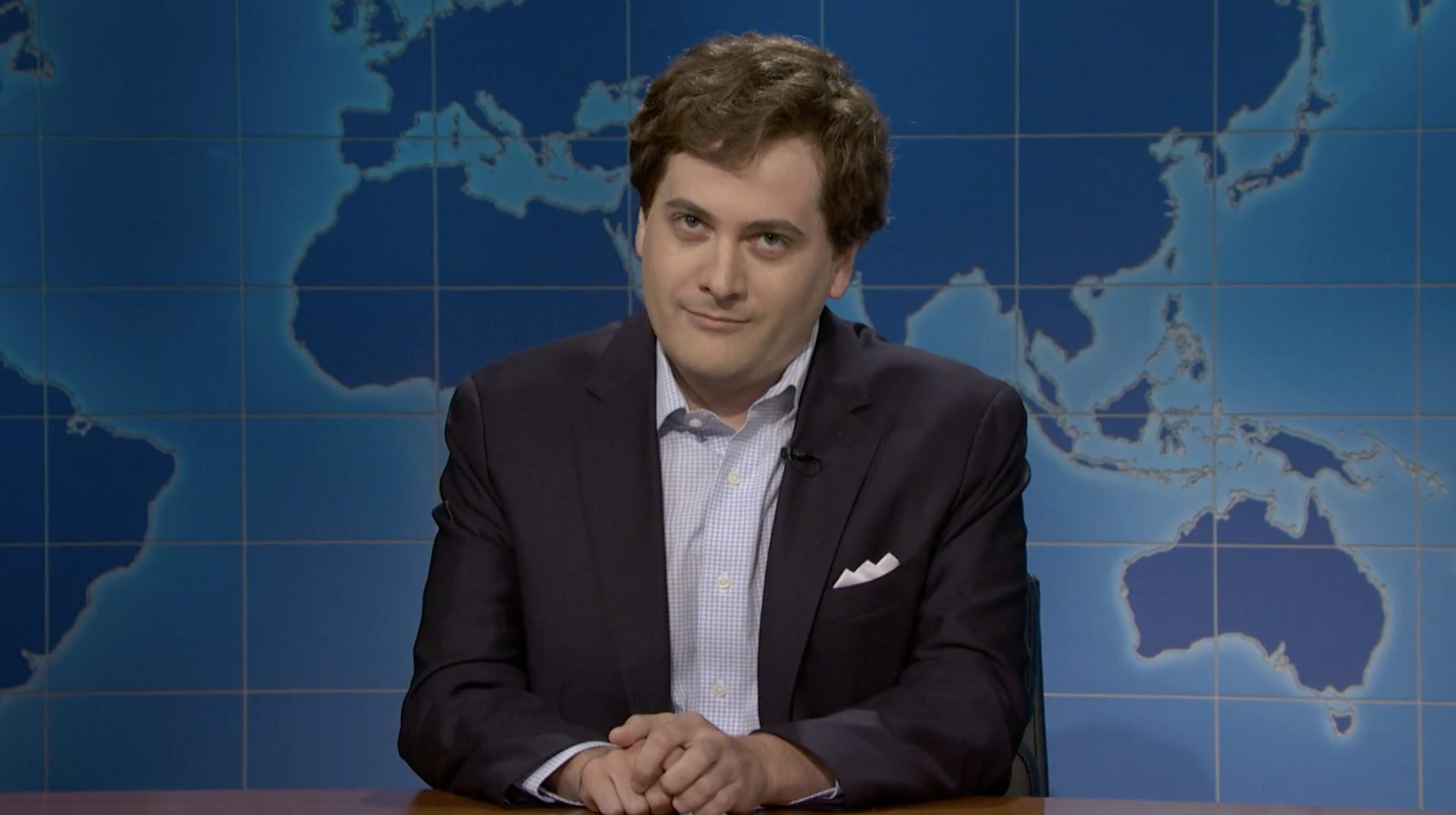
Saturday Night Live returned this weekend with impressions of two targets ripe for satire: Zohran Mamdani and Tucker Carlson. Unfortunately, both were strangely tone-deaf impersonations, raising broader questions about whether the show’s writers have a basic grip on the zeitgeist.
Mayor Mamdani was portrayed as an unserious TikTok teenager, doing dances to issue a warning about the impending Nor’easter. Carlson, meanwhile, was depicted as a country-club Republican obsessed with the culture-war issues of the late 2010s. Jeremy Culhane’s impression largely steered clear of Carlson’s newer (and more contentious) interests, such as Israel.
At times, it felt as though the impression had been lifted straight from Carlson’s Fox News segment on M&Ms — back when he was a loyal Trump supporter and long before his eventual break with much of the Republican establishment. Toward the end of the skit, Culhane’s Carlson acknowledges his “turn” on Trump in a throwaway line, then largely reverts to the familiar image of Carlson as a cable news host broadcasting to an older audience.
For Mamdani, it would have been funnier to mock the Mayor for taking social media too seriously rather than treating it too trivially. Anyone can watch the real video he posted on Instagram and TikTok. If anything, it errs on the side of being dry and boring, with Mamdani simply reciting information about where to find storm updates and when to expect the worst. The SNL version isn’t particularly funny because it isn’t built around a kernel of truth. Unless that kernel is simply: “Millennial mayor prioritizes social media.”
There’s plenty of good satire about Mamdani and Carlson to be found on any average American’s Instagram feed. But SNL didn’t even try. It essentially reduced Mamdani to a guy who likes TikTok and Carlson to a rich Christian conservative.
Maybe that would be fine if so many people didn’t expect SNL to function as a reasonably perceptive source of political comedy. The show certainly sees itself that way, taking pride in nailing impressions and skewering powerful politicians. And, at times, it has been very good at it: Chevy Chase’s Gerald Ford, Darrell Hammond’s Bill Clinton, and Will Ferrell’s George W. Bush all became indelible comic versions of their subjects. Ferrell’s Bush, in particular, is now almost fused with the public’s memory of the real one.
Missing these basic realities about two of the most prominent figures in American politics suggests that Saturday Night Live is not currently well positioned to produce sharp political satire. Conservatives have long complained, rightly, about SNL’s obvious sympathies for the Left. But that is not really the deeper problem here. Partisan bias can produce bad jokes, but it should not prevent a comedy show from understanding what makes its targets interesting in the first place.
What is perhaps more likely is that the show’s writers are simply too insulated from the culture they are supposed to be satirizing. They know the broad outlines: Mamdani is a social-media-savvy socialist; Carlson is a wealthy conservative provocateur. But political satire depends on knowing what lies beneath those shorthand descriptions. When SNL misses that, the show ends up commenting on a political culture it no longer quite understands.
