




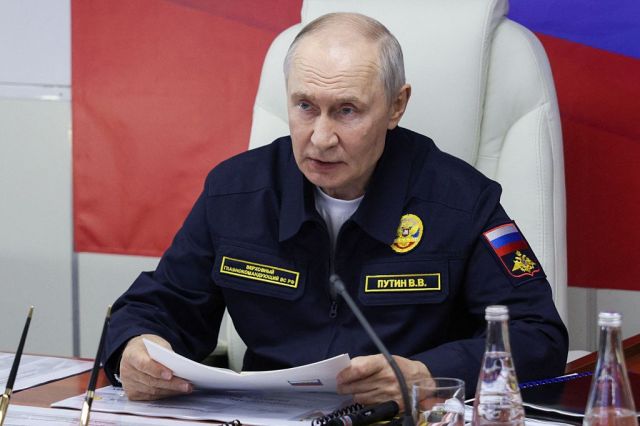
“Ignorance may be a form of bliss for Putin.” (Gavriil Grigorov/ Pool/AFP/Getty)





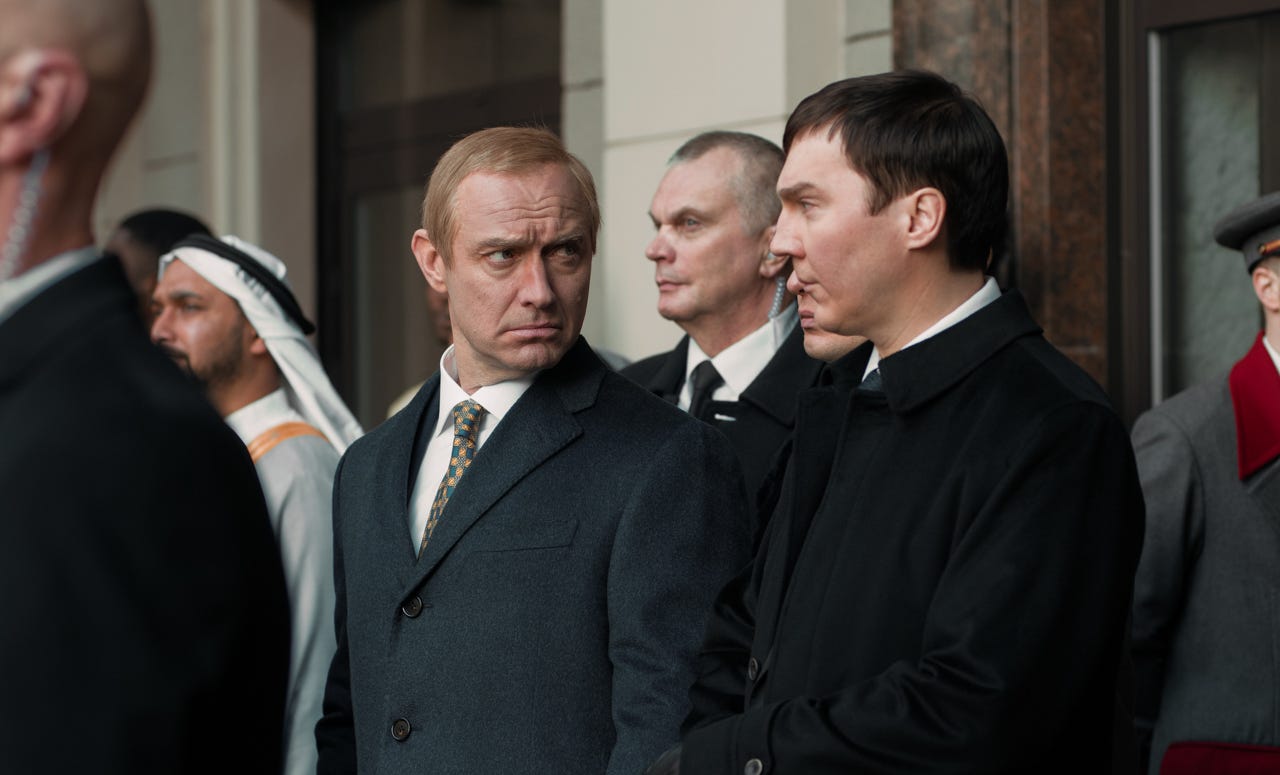
In The Wizard of the Kremlin, a movie whose most impressive achievement is making Russian history boring, Paul Dano plays a Kremlin PR hack tasked with building what Putin, played by Jude Law, calls “managed democracy”. In practice this means manufacturing the appearance of respectable dissent by bankrolling Russian nationalists and liberals alike, so that the regime’s opposition would be under the control of the Kremlin.
The film presents this as a feat of sinister brilliance, in which the Kremlin ruthlessly manages reality itself. In doing so the movie conforms to a well-established genre: the glamorization of autocracy by Western intellectuals. The sordid, boring, vulgar and power-hungry bureaucrat is transformed into a Machiavellian prince. The film uncritically adopts the regime’s narrative about itself: that the Kremlin is a machine of cold-blooded sophistication, with tentacles in every corner of political life, and the opposition existing only when the puppet-master wills it to.
What the movie cannot imagine is that the political machine it finds so intriguing might be a desiccated husk ravaged by decades of corruption. It gives us a Kremlin of great cunning even as the regime suffers the consequences of bad decisions by its purported wizards.
Take one such decision: the recent Yabloko fiasco. Yabloko is Russia’s oldest liberal party, founded in 1993. To call it anti-war would be an understatement. It is the only anti-war party. It opposed the 2014 annexation of Crimea and the 2022 invasion of Ukraine, and is the only legally registered party in Russia to call for a ceasefire. But the last time the party had a representative in the State Duma was 1999. It got 1% of the vote in the 2021 election and has been politically irrelevant for a generation.
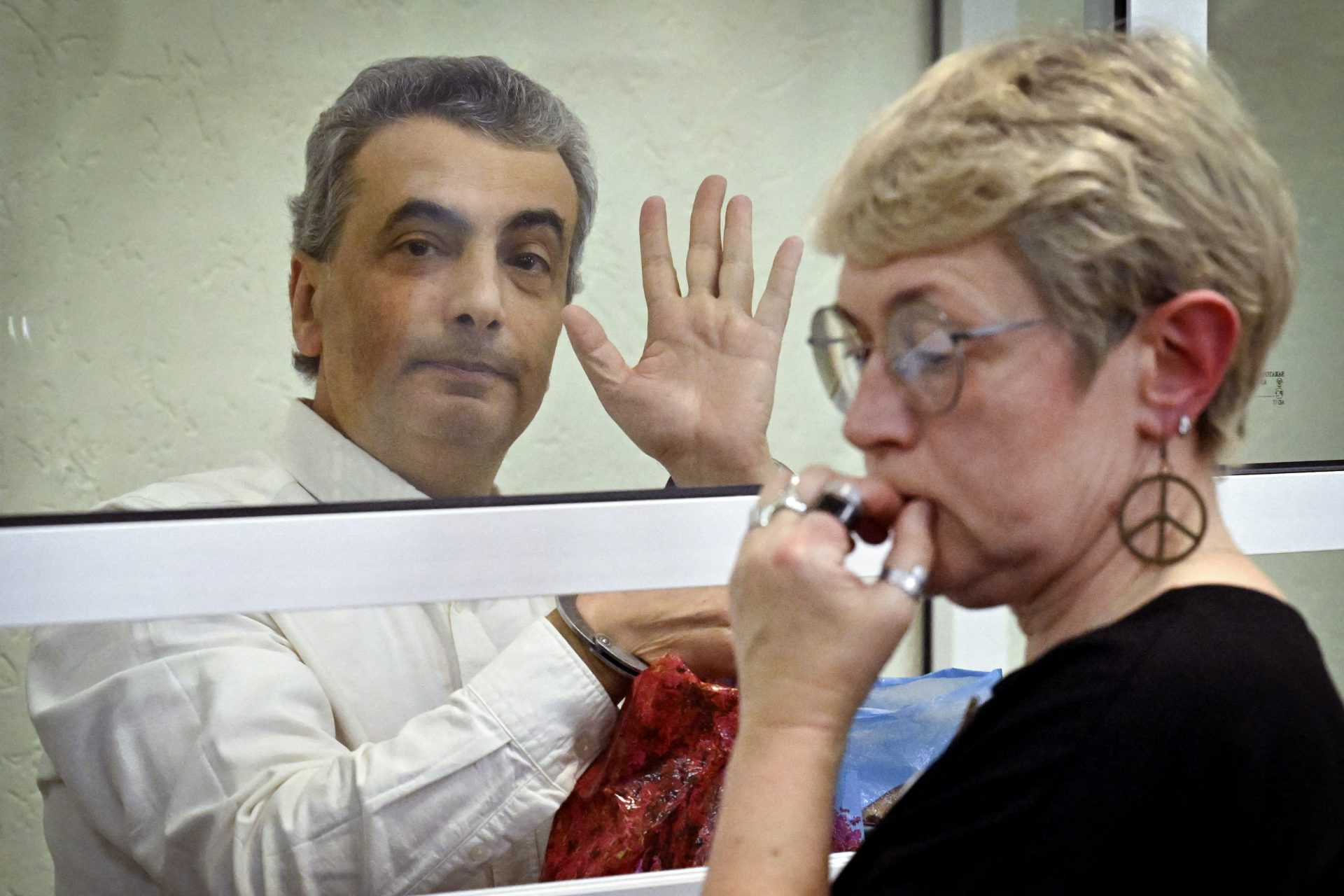
But in late July, Russia’s Election Commission approved Yabloko’s registration for the September elections. The party would run 269 candidates on its federal list and 135 in single-mandate districts under the slogan “For Peace and Freedom”. The Commission chair told reporters: “We treat everyone equally, and it’s up to voters to decide.” This was a startling claim to make when over the preceding months, authorities had fined 58 Yabloko members, raided five regional offices, detained 29 people, labeled 10 as foreign agents, and jailed six; 32 members had been barred from running under laws introduced after the invasion. The party had been harassed by every available instrument of the state, and then the state let it on the ballot anyway.
A source close to the Central Election Commission told a reporter that the logic behind the change was straightforward: give citizens a safe channel through which to express discontent. Better that unhappy voters mark a ballot for a small, manageable, long-neutered party than spoil their ballots or drift toward the Communists. The idea has a long pedigree in the study of autocratic regimes: semi-competitive elections serve as release valves and informational sources for rulers, a way to take the population’s temperature without loosening control over discourse.
But then something went wrong. Polls revealed Yabloko drawing real support, and some projections showed it could even win seats. A party that had been irrelevant since the last century had suddenly become a vehicle for anti-war sentiment that happened to be far greater than the Kremlin had anticipated. On 8 August, the nationalist party Rodina filed suit to have Yabloko removed from the ballot, and two days later, the Supreme Court agreed.
After more than four years of war, the managed opposition is no longer so easy to manage. Coverage of the ban has focused on what it tells us about the state of Russian civil liberties, but the more interesting question is what it says about the regime’s informational blinders. The Kremlin allowed an anti-war party onto the ballot, and the party turned out to be too popular. The regime built a pressure gauge, got a reading it did not expect, and smashed the gauge shut. This is not the behavior of an all-knowing puppeteer, but of someone increasingly ensconced in an informational bubble.
Why do autocrats even bother with allowing opposition parties or holding elections? Scholars who study the roles of elections in closed regimes have come up with several answers beyond “keeping up appearances”. Elections project strength and legitimacy to the population, co-opt elites, and provide a way to distribute patronage. Mexico’s PRI held elections for decades because the results told the party leadership which regional bosses were effective at delivering votes. In Mubarak’s Egypt, elections resolved internal conflicts over who got access to state rents.
But elections perform another key function for rulers: generating information about people’s actual preferences. Information is an artificially scarce resource for rulers, who face what scholars call the Dictator’s Dilemma. The same repression that keeps rulers in power cuts them off from honest information about what their people want. Fear induces silence, making it harder to anticipate unrest. Subordinates tell the ruler what he wants to hear. The security apparatus focuses on threats it has a bureaucratic interest in inflating. The ruler sits at the center of a system that keeps him ignorant of what’s really going on.
Elections are a way for rulers to manage the dilemma. By allowing a controlled opposition to contest seats, the regime creates a channel through which popular sentiment can register in a credible way. Yabloko’s registration was a textbook application of this logic. The Kremlin had a party that polled at 1% in the last election. It let the party run on an anti-war platform, expecting it to absorb a small, containable share of dissatisfied voters and produce a signal about public sentiment.
The irony is that the Kremlin did get a signal, just not the one it wanted. It learned that anti-war sentiment was far larger than it had assumed. But it learned it in the worst possible way: through a public result it did not anticipate and could not contain, forcing a ban that advertised the regime’s miscalculation to everyone watching. The September election will now feature only parties that support the war, guaranteeing an uninformative result.
The Kremlin’s informational problems do not stop with the Yabloko incident. Analysis by ISW and the Financial Times suggests Russian generals are showing Putin maps of victories that did not happen. US intelligence reached this conclusion as early as March 2022, when officials said that Putin’s advisors were “too afraid to tell him the truth” about his military performance and the economic impact of sanctions. This was true four years ago; today the problem of informational isolation has only gotten worse.
An autocrat stumbling around an increasingly darkened room is both good and bad news. On the one hand, an uninformed autocrat makes bad decisions, which hastens the regime’s demise. There is evidence for this: Putin’s belief that he can take the Donbas by autumn, based on maps his generals have fabricated, may lead to operational choices that squander forces Russia cannot replace. And the fuel crisis is already straining a social contract built on the promise that war would not touch ordinary life. Another mobilization based on bad information would compound these problems.
On the other hand, ignorance may be a form of bliss for Putin. The cinematic wizard of the Kremlin manufactures a false reality for others, but his real-life counterpart is increasingly manufacturing a false reality for himself. A leader who is only being told what he wants to hear does not become more cautious as real conditions get worse. If the intelligence reaching Putin about his military position, his economy, and his population’s tolerance is as skewed as the evidence suggests, then his behavior becomes only more difficult to predict from the outside. The room might be getting darker, but that makes it ever more difficult to peep through its window.