




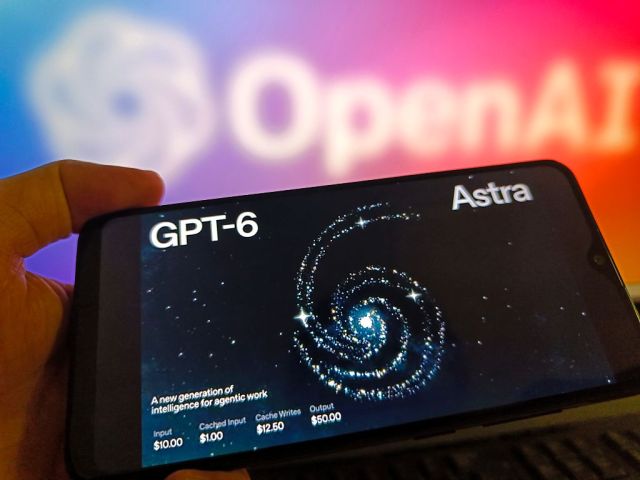
Jensen Huang believes that with OpenAI's latest model, artificial general intelligence is here.





On Sunday, Nvidia CEO Jensen Huang announced that artificial general intelligence — a computer that can cogitate like the human mind — is already here with OpenAI’s Astra model. If true, this has massive implications for human societies, ranging from national security to labor, surveillance to stock markets. But for my tribe of writers and editors, the development will likely only intensify the quest to smoke out cheaters: those who use AI platforms to generate prose.
Will the next wave of frontier large language models make it harder to detect AI writing by eliminating its current telltale signs (weird mixed metaphors, “not x but y” formulations, and the like)? One thing is certain: AI is writing, spreading, and now appears everywhere. AI prose is like the kudzu vine in the American South: a non-native species, in this case of linguistic operation, that spreads so quickly, and puts roots so deep, that one forgets it was ever not there.
Therefore, personal distaste, and aesthetic and moral reaction against AI writing, are less important than the larger questions: how did we get here? What is the contact with all of this generated text doing to our minds and, indeed, our souls? And how do we act sensibly and intelligently given the new facts of our information ecosystem?
It may not be productive to divide the world into camps, AI users and AI rejectors, not only because AI is a complex tool with many uses, but because the climate of persecution around AI use only incentivizes bad-faith dissimulation, likely to be made easier by models like Astra. Eloquent dissent and conscientious objection from AI is good, we might say, but running everything you read — or that your friends, colleagues, or peers write — through Pangram seems unproductive, likely to yield false-positive shame, and mimetic retribution.
You have a 38% Pangram score. I have a 42% Pangram score. She has a 10% score. Who’s better? What do the scores even mean? This kind of thinking only reflects how much AI already determines our life-world: we are now measuring quality by what something is not, rather than by what it is.
The Wall Street Journal’s recent defense of running an AI-generated opinion column by the investor Stanley Druckenmiller, therefore, offers a dose of productive realism; not because it is right, but because it draws clear terms for debate and analysis.
Paul Gigot, the Journal’s editorial-page editor, asserted that “the question for us is whether what we publish from contributors reflects an author’s original argument, and if the author has the standing and credibility to make it. In Stan Druckenmiller’s case, we have had a relationship with him for many years, and nobody can doubt that his op-ed is his genuine opinion.” Druckenmiller himself compared using AI to using a calculator.
Gigot’s and Druckenmiller’s two major claims are, first, that an essay is a verbalized form of an argument and, second, that LLMs are calculators for words. These are cogent claims. And they reflect most people’s view of LLMs, even if they don’t admit it, which is that LLMs make communication easier and more efficient in the same way digital calculators made doing long-form division easier and more efficient. Mass condemnation of AI writing in professional writing fields isn’t going to change what now amounts to folk belief: language communicates concrete information; writing is a chore.
Druckenmiller’s op-ed and the Journal’s strident defense of it force us to think about the cases in which AI use represents a difference of degree from uses of other generally accepted technological tools like Google searching or even calling a friend, and where it represents a difference of kind — a holistic, global, novel phenomenon that marks a point of no return for our species, insofar as we are Homo scriptor: man the writer.
Druckenmiller’s excuse was ultimately lame, but his distinctions were canny. In essence, he told his opponents: you’ve yet to make clear distinctions between writing and other important cognitive processes that are enriching when conducted by hand.
As Druckenmiller’s analogy suggests, we have already automated a lot of cognitive processes. I haven’t done math by hand, for instance, since grade school; I have always used GPS to drive. How many AI or LLM objectors have never used or would never use a calculator, GPS, Google search, banking apps, Yelp, Netflix, Amazon? Where actually is the line?
Western humanism, going back to Plato, has always placed a high value on math and geometry (the legendary inscription above the gates of Plato’s Academy read, “Let no one ignorant of geometry enter here”). Renaissance post-Platonic humanism required hand calculations; modern physics, beginning with Newton, involved working on pen and paper, turning metaphysical intuitions about space and time into testable formulas. Most contemporary humanists, by historical standards, have surrendered to machines everything humanistic except discursive writing.
This is why the Druckenmiller case is so important and interesting. It is not about letting the invasive species rip, because it already has, and it is not the first such species; it is about what it would mean to return to a native cognitive environment. Druckenmiller’s provocative example forces one to ask: which calculators allow me to be human, and which deprive me of my distinctly human characteristics?
Should we congratulate ourselves on not using Claude to write essays, if we are not also doing mathematics by hand, trading pen-and-paper epistles, keeping a physical diary, walking or driving around a city without a digital map, learning to talk to strangers rather than using dating apps, going to the library instead of opening a laptop? I think the answer, essentially, is no: if we keep AI out of writing, then we should keep computers out of almost everything.
If you accept that cognitive automation is deleterious for the soul, then you have to really start deleting automated steps, restoring them to your own control, in an effort to become someone capable of independent, deep, and flexible cognition, both for moral and aesthetic reasons. If automation in writing is bad, then it’s bad in a lot of places. We connect writing in language to identity and identity formation, so using AI to write feels and seems worse than not doing math by hand, but it may not be. You’re not learning how to play popular music on the piano as people often used to do. Remember songbooks?
In terms of culture and social policy, it’s hard to imagine the non-professional non-writers will return to pen and paper or even the typewriter in the absence of some larger civilization-level emphasis on the slow and the artisanal. There simply has to be a larger, internally consistent, collectively held belief that productivity isn’t always the point, that speed isn’t always desirable, and that efficiency isn’t the highest good of human life.
It is unclear how much Druckenmiller’s handwritten essay would have deviated in its argument from the auto-written version. But we can be certain that we, as readers, were deprived of Druckenmiller’s personality in the human context that frames his formal technical analysis, and this is why some readers and commenters canceled their subscriptions. As human beings, we crave and need human-supplied narratives, because we are narratives and characters, voices.
Druckenmiller is one of the greatest investors of all time, and there is an elusive genius in his brain composed of the totality of everything he’s ever thought and experienced. It’s more interesting, it’s intuitively richer. You can read about the battles of Ulysses S. Grant, both military and political, but Grant’s own memoirs activate the imagination and bring a whole lost world back to life. The subject of the Druckenmiller piece — the economic debate between the investor and his peer, Scott Bessent, now the secretary of the Treasury — is no doubt far richer in human interest and in intellectual content than whatever Druckenmiller’s calculator created for him.
But we are where we are. The models will only advance in sophistication. Just as most people won’t go back to long division by hand, so many kinds of writing will be automated and accepted as such. In some cases, this will be no great loss (news releases, weather and sports reports, company annual reports, a great deal of legal writing, and so on).
What must be preserved from the encroachments of the calculator are forms of writing in which excellence was always an uphill battle: the long-form essay, literary fiction, poetry, plays, memoir, as well as personal letters. But even this preservation must make room for reasonable carve-outs. There’s a difference between a journalist who prompts Claude to generate a sentence, a paragraph, or a whole article, on the one hand; and one who asks Claude a factual question, on the other. The latter is doing something no different from consulting Google (Google results now are AI-driven anyway).
Norms can and should be developed within these professions for certifying organic work, which will no doubt command higher prices, just as handmade furniture from a carpenter comes at a higher cost than a chair from IKEA. If this means fewer people will be thought of as true writers, is that really such a bad thing?
