









September 28 2026 - 7:00am
This weekend the Sunday Times reported that a former bodyguard of ex-Hamas leader Ismail Haniyeh was granted asylum and later British citizenship, despite his background being a matter of public record. Mr X, who can’t be named for legal reasons, has lived in Britain for more than a decade and allegedly plotted a terrorist attack on European Jews in the run-up to the second anniversary of the October 7 atrocities.
All of this ought to be shocking news. But in the asylum system, failure has long been tolerated, and acceptance of claims is the norm. In 2022, the grant rate reached 76%, its highest level in recent times, and a recent report from the Independent Chief Inspector of Borders and Immigration found that 37 of 47 asylum grants sampled — nearly four in five — contained insufficient evidence and were therefore likely to be incorrect. Official laziness may well play a part — the same report details staff using AI to assess applications without permission. But the Civil Service’s pro-asylum culture also bears a share of responsibility.
A 2025 survey found 34% of public-sector workers had no sympathy at all for Hamas, compared with 54% of the general population. In addition, only 35% thought those who entered the UK illegally should be removed. No matter how tough ministers talk on asylum and migration, these are the people making the decisions.
Current Civil Service employees speak to this problem. A contact who worked as an asylum assessor received a quiet talking-to from their superiors. Had they been accepting too many cases? Far from it. Apparently, their rejection rate was unusually high, and they were advised that it might be wise to grant more applications. The quality of their previous decisions, however, was not a matter for debate.
Asylum assessors are by no means senior civil servants, and the further down the ladder one goes, the less important political impartiality becomes. Even in “Private Office” — the small teams that serve ministers where I worked as a speechwriter — almost anything goes when the boss’s back is turned. So in the wake of the October 7 attacks, the atmosphere in the Department of Health and Social Care became increasingly febrile. Objections were raised to ministers’ decision to fly the Israeli flag outside the department, and as Israel’s counter-offensive against Hamas began, murmurs of discontent became outright hostility to Government policies.
Members of the department’s Muslim Network, in particular, lobbied against intranet posts and internal events sympathetic to Israel. A Keir Starmer speech supporting Israel was uploaded to communication channels and then flooded with comments branding it offensive to staff and demanding it be removed. Eventually, comments for these kinds of articles or events were turned off, a sorry indictment of the professionalism of Britain’s Civil Service.
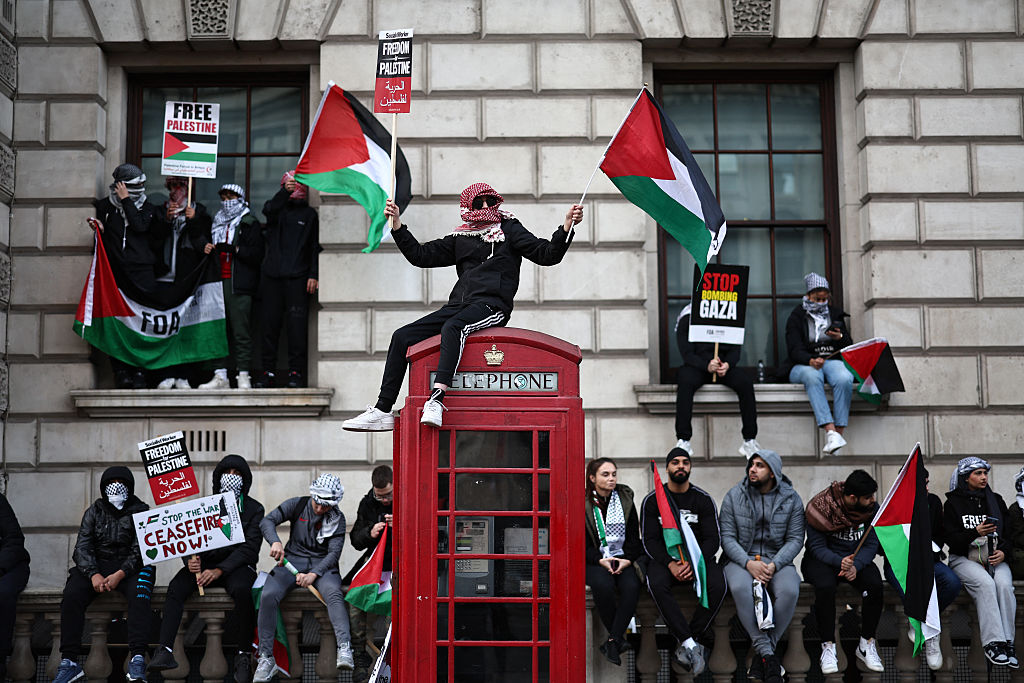
I have no doubt many of my colleagues marched through London in support of Palestine alongside unashamed supporters of Hamas. The Public and Commercial Services Union is even offering to subsidize some members’ travel to the National March for Palestine, scheduled for 10 October and organized to accuse the Government of complicity in genocide. It’s clear why the public questions Whitehall’s impartiality.
During my time in the Civil Service, I found that this loose approach to vetting who comes into the country bears at least some ideological motive. The real question, then, is not why Mr X was granted asylum; it is how many more like him are out there.
Arthur Reynolds is a journalist, and was formerly a civil servant and Government speechwriter.
 ReynoldsArthur