









August 3 2026 - 4:00pm
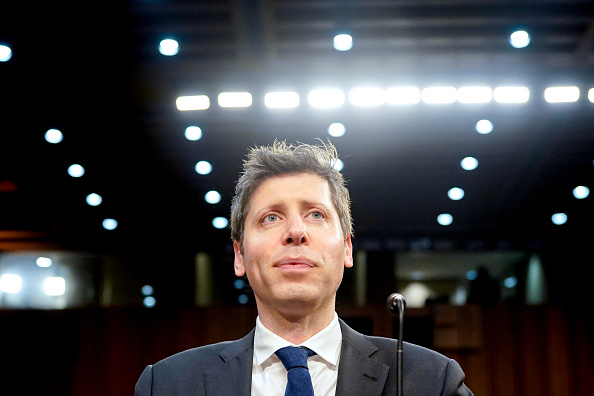
For OpenAI, 2026 has been a strange year. The company has lost ground to rivals while its CEO, Sam Altman, has shown a greater willingness to slow down development to seek greater cooperation with Washington. OpenAI’s latest unreleased model, Astra, has demonstrated, in controlled settings, that it can solve long-standing problems in mathematics and theoretical computer science.
And yet, even as models like Astra demonstrate that AI will drive scientific breakthroughs at a rapid pace, the role that AI plays in the lives of people outside of science and mathematics is unclear. The labs require more mass adoption to support the computing costs, so they will need widespread adoption. But for consumers, its role as a product is less clear than its potential as a tool for advanced research.
Thus, Sam Altman’s latest viral tweet, which suggests parents should feed their children’s itineraries into ChatGPT and have it produce podcasts about their lives, demonstrated how awkward the mass adoption of AI into non-scientific life would be. Even worse, the finances of AI will dictate that AI gets wedged into all sorts of areas of life that don’t need it.
Technology makes us do strange things; the behaviors and habits that come with a new technology are not necessarily natural. Today, the AI revolution is roughly where the iPhone was in 2012: several years removed from the initial launch and mania, still trying to find pathways for universal adoption. In this sense, AI companies are struggling to convince consumers — those outside highly technical domains like coding, math, and bioscience where the use cases are straightforward — that integrating their technology into everyday life makes those things better.
This does not mean that AI use is not increasing among the general population. It also doesn’t mean platforms like ChatGPT, Claude, and Gemini are not becoming household names. It indicates that adoption is not rising fast enough to keep up with development costs.
But we should also not assume that our collective immune system will hold out, or that future trial balloons will get shot down as quickly. All of these companies have every possible economic incentive to persuade us to inject AI into our lives in ways that displace our old habits. Parents and children could talk, for instance, instead of listening to a podcast about themselves.
We are not, by the way, in a zero-sum game with tools and technology. It is possible that having AI in the family minivan is more productive than using social media, and that families are finding useful ways to use AI to make life easier. What really matters, however, is what happens to the time we save. Currently, the time saved by iPhones typically gets dumped back into iPhones — call an Uber, sit in the backseat and scroll.
Altman’s tweet blew up because it was such a silly use of time; it should spook OpenAI investors more than it should spook the public, for now, as the public grows skeptical of the technology’s everyday use. More than anything, though, it should remind casual users of AI that if they don’t find intentional ways to use the technology, then it won’t be worth the effort.
