









August 27 2026 - 6:15pm
Democrats are in a language trap of their own making — but not for the reasons they seem to think. Today, Axios reported that “several Democrats eyeing 2028 runs for president say the party has a vocabulary problem as much as a messaging one” because they believe “the Left’s embrace of ‘woke’ buzzwords alienated working-class voters and drove many of them to Donald Trump.” This assessment is correct but profoundly incomplete. The shift in messaging was downstream of an ideological shift that will be almost impossible to shake.
This has been a long-running problem for the Democrats. During the 2020 Democratic primaries, Elizabeth Warren — a white septuagenarian woman from New England — referred to Hispanic Americans as “Latinx” to avoid the masculine “Latino” during the first Democratic debate. Her campaign adopted the term formally as well. Surveys ultimately found Hispanics rejected “Latinx,” with some even describing it as an offensive form of “linguistic imperialism”.
By 2021, arch strategist James Carville was leading the charge against the Democrats’ “faculty lounge politics”. “You ever get the sense that people in faculty lounges in fancy colleges use a different language than ordinary people?” he asked Vox. “They come up with a word like ‘Latinx’ that no one else uses. Or they use a phrase like ‘communities of color.’ I don’t know anyone who speaks like that.” Interestingly, though, Carville framed his criticism by arguing, “There’s nothing inherently wrong with these phrases. But this is not how people talk. This is not how voters talk.”
That sentiment was always incorrect. The phrases themselves are wrong because they represent what alienates and aggravates voters about “faculty lounge politics”. It’s telling that Carville’s class-based critique of linguistic shifts completely failed to identify the source of the problem, which was that elite Democrats’ language reflected elite Democrats’ cultural paternalism.
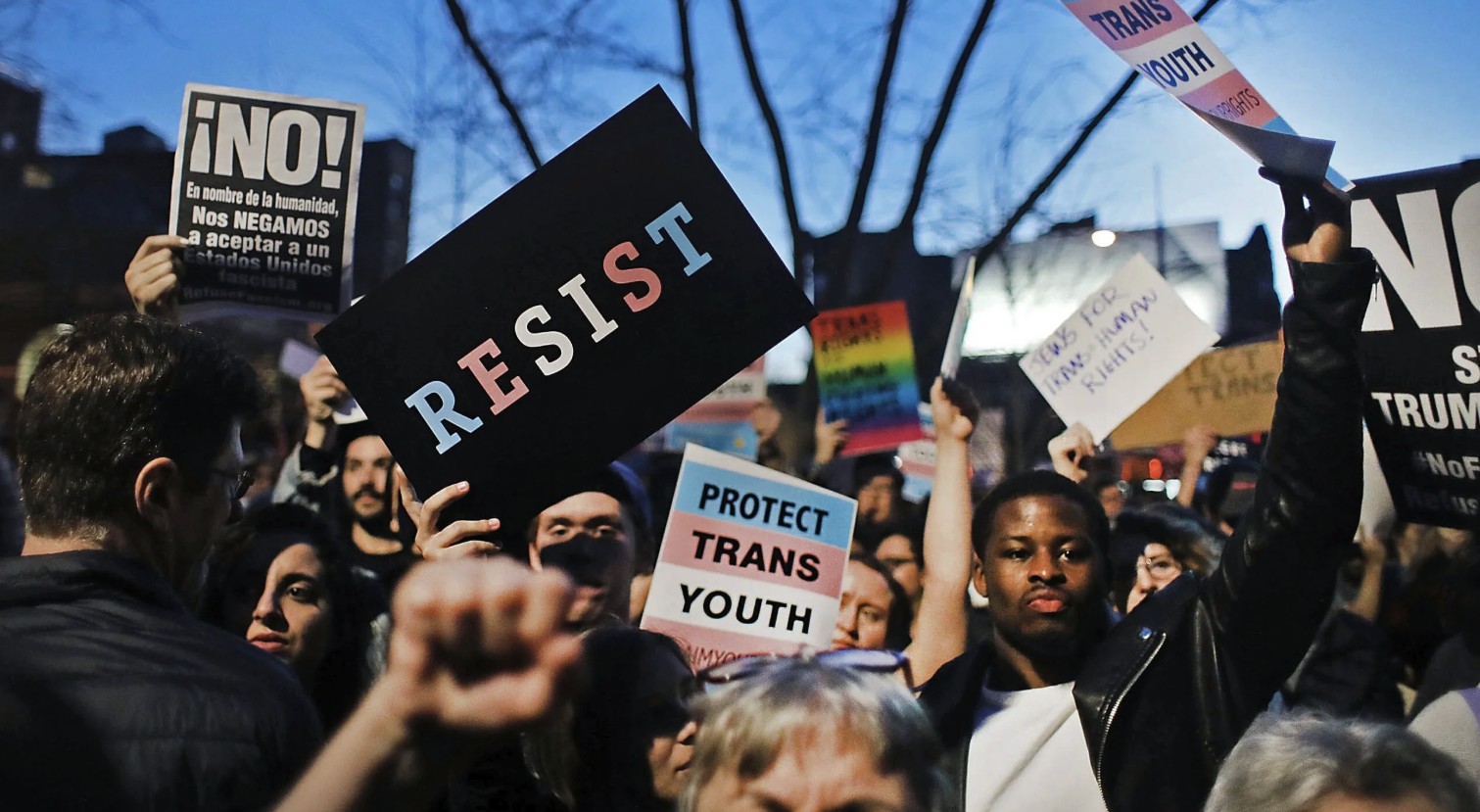
Donald Trump retook the White House in 2024 in no small part thanks to his famous “Kamala is for they/them” ad, which was not at all just about language. It was about Kamala Harris affirming her support for taxpayer-funded sex transitions for illegal immigrants. Sure, the questionnaire in which Harris made these commitments involved plenty of “faculty lounge” turns of phrase, like “non-binary” and “gender transition”. But all the language used was downstream of the ideological belief that it’s more important to see gender as a spectrum than a binary, and that it is necessary to treat gender dysphoria with surgical intervention while taxpayers foot the bill.
The language itself is not what is alienating. Instead, the language calls attention to what is alienating, and, fundamentally, regular Americans are turned off by luxury beliefs about race and sex that demand foundational cultural shifts. These beliefs change high school sports and bathrooms. They imply people were racist and sexist or unenlightened for not using terms like “Latinx” or “birthing person”.
In all likelihood, economic policies will be much more salient than cultural ones for the average voter in 2028. But for some voters, these are actually entangled. The candidate who says “birthing person” probably also has a hard time understanding what it’s like to fall behind on a mortgage payment.
This is the bigger problem for Democrats. The ideological shift that made it possible for candidates like Elizabeth Warren to eagerly embrace phrases like “Latinx” is very difficult to roll back because it’s tied up with the “coming apart” of American haves from have-nots.
That means the base’s activist class still firmly believes it’s essential to fund illegal immigrant sex transitions with the tax money of a Catholic welder whose parents immigrated from Mexico. Those activists will make it difficult to walk away from the language. But even if candidates get around the language problem, they won’t be able to unravel decades of class sorting that created the deeper ideological one.
