









August 19 2026 - 10:00am
Bill Rasmussen, the founder of ESPN, died yesterday at the age of 93. The origin story of how he thought up the idea for the sports network is typical Americana. One day while stuck in traffic on Interstate 84 with his son, Rasmussen thought: “Hey, why not create a network that’s devoted to sports 24/7?” Like the origin story of Steve Jobs and Steve Wozniak in the garage — which Wozniak has since admitted was mostly a myth — it’s likely half-true, half-contrived apocrypha.
However, what is not contrived is the scale of the success that followed. No doubt, Rasmussen’s creation of ESPN revolutionized not just the coverage of professional sports but the American news business itself. Consider the timeline. ESPN went on the air on 7 September 1979, before CNN followed less than nine months later. Ted Turner, who died in May, did not invent the 24-hour news channel so much as notice that a recently fired hockey executive from Connecticut had already proved a network could fill an entire day’s content with nothing but sport.
Unlike most media pioneers, Rasmussen didn’t invent any new medium. What he actually invented was a new format: the endless loop of highlights, standings and rankings, eventually evolving into “hot takes,” in which every event is instantly converted into commentary about who is winning. Soon after, Turner and Roger Ailes got a hold of this model.
Politics became sport, a “horse race” of who’s leading and who’s losing. Polls then took on the same effect as the box score. Debates occurred, but their substance mattered less than the scorecards of the commentariat that took place afterwards. Team red versus team blue, updated hourly with touch-screen monitors covering every county in the country. Then came the pundit panel, most gracefully put forward by Pardon the Interruption then bastardized by dozens of clumsy imitators. Men in tight-fitting suits, next to telegenic women, would disagree not only on schedule but with a countdown clock living above a chyron. Today, ESPN and Fox Sports aren’t all that different from any cable news political panel.
Even in the 21st century, sport’s shadow looms over politics. Consider ESPN’s ownership of FiveThirtyEight from 2013 to 2018. Nate Silver built his forecasting model on baseball sabermetrics before applying it to American elections, and his operation was literally housed inside the sports network. The horse-race treatment of elections didn’t simply seep in from sports coverage through cultural osmosis — though that’s true too. For five years, they shared a corporate parent, payroll and, in some cases, a cement foundation.
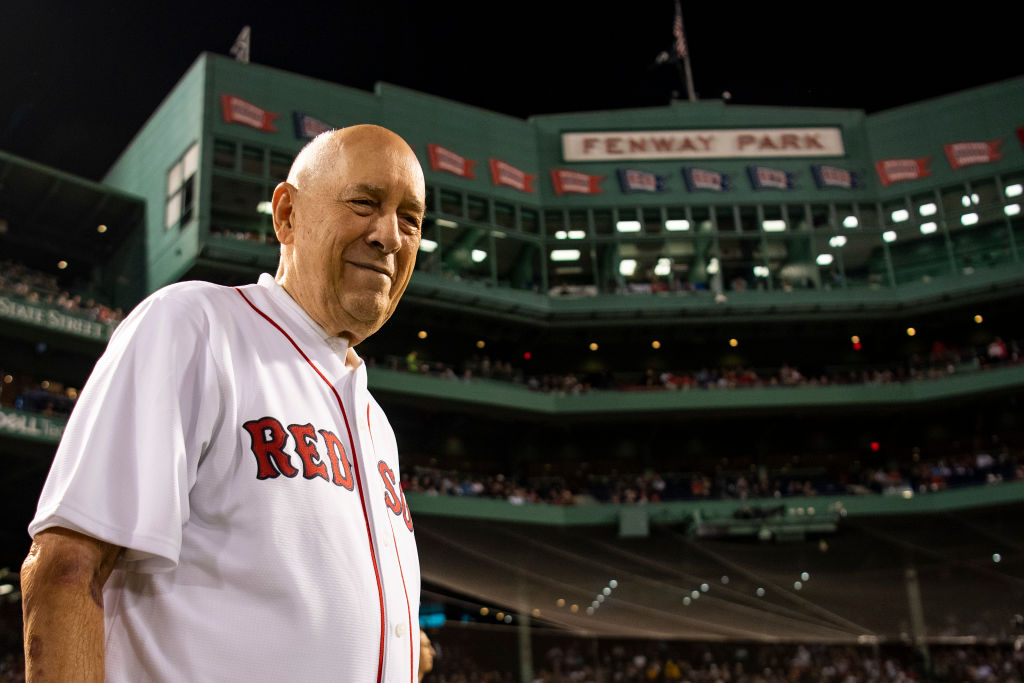
Rasmussen’s control of ESPN was short-lived. Getty Oil bought 85% of the network in February 1979 and within months cut his salary and stripped him of responsibilities. “I made Bill chairman,” Getty’s Stuart Evey later said, “but in no way did I want to give him any responsibility.” Rasmussen was out by the end of 1980, barely a year after ESPN launched. His family’s $39,000 stake was bought out for $3.4 million in 1984. Today, ESPN is worth roughly $24 billion. Rasmussen was eventually welcomed back for anniversaries, a plaque in Connecticut and, in 2019, a ceremonial first pitch at Fenway Park.
The ESPN founder can’t be blamed solely for the sportification of politics. But he accidentally built the telescope through which we now watch its twin obsessions: endless sports distraction and hyperpolitical commentary. Like most inventors, he had no say in how his invention was used. After losing his network almost as soon as he built it, he spent the rest of his life watching its evolution from the sidelines — no more responsible for what it became than a driver stuck behind him on I-84.
B. Duncan Moench is a writer and scholar of American political culture. He also writes the Producerist Substack.
 DuncanMoench