









July 26 2026 - 1:00pm
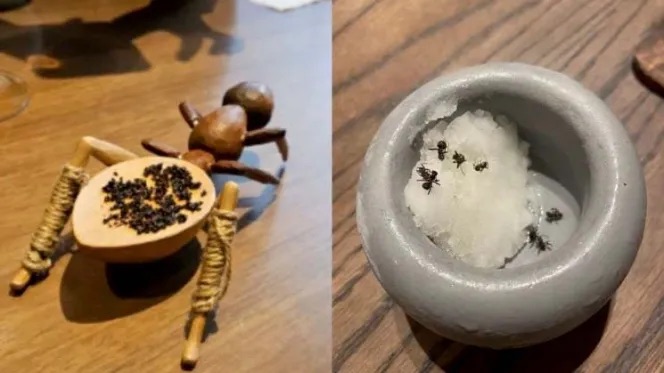
Would you enjoy it if someone slipped creepy crawlies into your meal without telling you? Well, that was part of the premise of Noma’s residency at Claridge’s during the 2012 Olympics. Tickets were priced at £195 and sold out in under three hours, while diners weren’t given a menu until after the meal. When a Kilner jar of lettuce and crème fraiche arrived, they found black dots crawling over its surface. The global gastronomist class wet themselves with joy over this “talking point” and daring bit of theater. One reviewer said it was “tickly on entry” and seemed to “take forever to journey down my throat”. Who cares if it’s disgusting when the performance is so good?
Now, 14 years on, Michelin-starred dining has taken this once-novel idea and squeezed it of all its value. On menus across the world you’ll find ants, alive and dead, dotted all over food. In South Korea, the restaurateur Joseph Lidgerwood was so driven for Michelin success and Netflix fame that he paired frozen ants with an apple and sansho leaf sorbet. He must have failed to notice that eating ants is illegal in the country. Seoul’s Ministry of Food and Drug Safety is seeking a £10,000 fine, and Lidgerwood may even face jail time.
As is typical of fine dining at this level, matching strange ingredients and their power to evoke strong emotion is what you’re paying the premium for. Black ants taste vinegary or citrusy, so naturally pair with a palate cleanser or crème fraiche. There’s a limit, though, given the relative size of insects. Crickets taste like chicken, which tells you how boring they must be, since chicken only becomes interesting through what you do to it: a KFC batter tomb for some, or black truffle slices slipped under the skin for others. Try doing that with a Madagascan hissing cockroach, which one “entovegan” blogger suggests are great fried in garlic.
Now that the elites have had their fun, the mass-market consumer advice arrives to convince the rest of us of insects’ virtues. We’re told they have more protein, that they require fewer resources, that they’re diverse in flavor, that a quarter of the world already eats them, and in any case it’s inevitable given climate change. Sadly, the world hasn’t quite caught on: the global insect market was worth $1.4 billion in 2024, compared to the $1.5 trillion at which the global meat market is valued.
The problem is that people find insects disgusting. When the BBC sought to explain this, it wheeled out David Pizarro, a psychology professor at Cornell. He says it’s tangled up with purity instincts, and that disgusted people have “a general wariness of novelty that tends to align with conservative attitudes”. It does make one wonder whether he considers the indigenous Brazilian custom of trekking through the rainforest, breaking open coconuts, and eating the wriggling gongo or beetle larvae nestled inside a novel or conservative practice.
While 91% of us may be willing to try meat alternatives, only 20% would consider eating insects — and even then, the reasons cited are either curiosity or survival. Meanwhile, academics are discussing mass “public exposure therapy” to help us little people overcome our instinctual feelings on the matter.
Great food, like great art, makes us feel something. But just as art has been stripped of beauty, food has been stripped of flavor. Now both want to shock us, or deliver a “message”, and so sacrifice depth for politics. Insects are indeed high in protein, but none of the elite chefs or academics seems concerned with whether we might actually like it, instead deceiving, break the law, or re-educate us into the change in diet. No longer is great food about the enjoyment of nature’s bounty. Now it’s just shock and slogans.