









July 27 2026 - 6:00pm
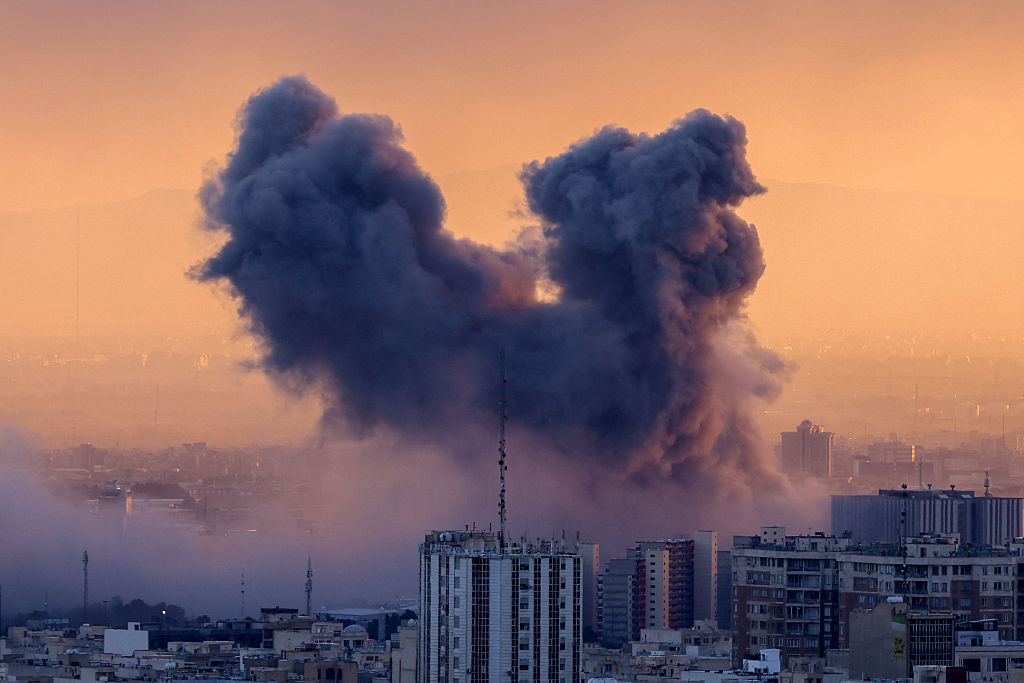
After warning of a major escalation in US attacks on Iran for days, President Donald Trump decided over the weekend to hold off on ordering a return to major combat operations. The official reason, according to his envoy to the United Nations, Mike Waltz, is to give ongoing peace talks “some space”. But leaks from administration officials suggest that concerns about US munitions stockpiles are the true driver of Trump’s restraint.
Such concerns, if accurate, are justified — but not because the US might soon run out of missiles to fight Iran. While America has plenty of munitions to continue the current war for months longer, it does not have the weapons to both extend its conflict in the Middle East and meet its global commitments elsewhere.
Trump must therefore make a choice. He can persist with his unnecessary war with Iran and accept that the United States will sit out any future conflict in Europe or Asia. Or he can preserve what remains of the US arsenal for a future crisis that does affect American interests by making a deal, no matter how painful, with Iran. Continuing the current war, in other words, will mortgage America’s future security.
That serious constraints exist on US munitions stockpiles is hardly breaking news. It has been a worry since at least the beginning of the war in Ukraine in 2022, when Kyiv’s high demand for US-made weapons underscored both the requirements of modern warfare and the likely insufficiency of American industrial production.
The war in Iran only exacerbated these fears, especially regarding air defense. Reports suggest that in the first six weeks of war, the United States burned through as much as 50% of its stockpiles of Patriot and THAAD missiles, along with large portions of its supply of high-end precision missiles used in offensive operations.
At current rates of production, it will take years to replace what has been expended. Starting under the Biden administration and continuing under Trump, the Pentagon has allocated tens of billions of dollars to projects intended to replenish munitions stockpiles, but money can only do so much. Structural limits to industrial capacity and the labor force will constrain the speed at which the US can expand production and refill its stockpiles.
Neither China nor Russia is going to move aggressively on a US ally simply because American missile supplies are under strain. They have their own readiness to consider, and even a limited US response could complicate Chinese efforts to seize Taiwan or impose costs on Russia if it attacked Europe.
But like Pentagon leaders, Beijing and Moscow understand that the US military is weaker after the war in Iran than it was before. They likely surmise — correctly — that Washington will be more cautious and accommodating toward military competitors in the near term, in the hope of avoiding or delaying conflicts until the US is more prepared. They will surely press this advantage, using the window of opportunity to normalize new orders in Europe and Asia that the United States will have to accept.
For instance, since the war in Iran began, China has already expanded its sea patrols to the east of Taiwan and increased military pressure toward Japan and its claims in the South China Sea. In Europe, Russia will escalate its hybrid operations knowing that the United States will be forced to calibrate its response.
These outcomes do not directly threaten American interests, and some degree of retrenchment would be good for the US, even if forced. But what is bad is the loss of strategic flexibility over the long term. In the future, if a threat does directly impinge on the country’s core interests, resource limitations may force Washington to measure and control its response in ways that sacrifice American security.
There is, unfortunately, not much that Trump can do quickly to change this uncomfortable reality. He can, however, take steps to lessen American strategic insolvency by getting the US out of the war in Iran and then out of the Middle East.
 jekavanagh