









July 18 2026 - 8:00am
Politics is never predictable, but it’s safe to say that few foresaw the remarkable collapse of support for Ukraine on the Polish Right. The nationalist Law and Justice (PiS) party previously established Warsaw as Kyiv’s staunchest ally following Russia’s 2022 invasion. Yet its move to a far more skeptical position is the most dramatic manifestation of a Europe-wide shift from bipartisan support for Ukraine to fierce tribal division.
Speaking to reporters on Wednesday, Przemysław Czarnek, the PiS prime ministerial candidate for next year’s Polish elections, declared: “I am anti-Zelensky, and anti-Banderite.” The latter is a reference to Zelensky’s recent move to name a military unit after an ultranationalist force which committed atrocities against Poles during the Second World War. Czarnek added: “We must force the European Union… to stop financing any kinds of armaments for Ukraine or reconstruction in Ukraine at this moment, until Ukraine returns to the path of pro-human values.”
On Thursday, he elaborated that “Poland’s interest is that Russia does not win the war in Ukraine, that Ukraine respects our interests, and above all, that it rid itself of the cult of genocidal Banderism,” which he said is “identical to German Nazism”. His arguments have sparked a fierce national debate, but they are not outlandish in a Polish context. A survey published on Thursday showed that only 52% of Poles agree with continuing to support Ukraine militarily. Out of the 45% who disagree, almost two-thirds are supporters of the nationalist opposition. And although Czarnek’s statements rest upon specific Polish grievances, this dramatic shift in perceptions reflects a wider continental polarization.
Support for Ukraine has become totemic in the divide between pro-EU and anti-establishment forces, with approval of Zelensky in particular now largely confined to mainstream progressive parties. As a result, Ukraine is losing allies: on Tuesday, Bulgarian Prime Minister Rumen Radev dramatically announced his country’s withdrawal from the Coalition of the Willing. Across the EU, support for Ukraine is a consistently divisive electoral topic. It defined this year’s Hungarian vote, and it is already influencing upcoming elections in Poland, France, Italy and Germany.
“War fatigue” is typically cited as the driving force for this polarization but, in reality, the erosion of bipartisan support stems from the EU’s fundamental battle of political narratives. A concerted effort from pro-EU progressive forces to claim ownership of the Ukrainian cause has seen populist parties and narratives relentlessly labeled “pro-Russian”. Progressives are portrayed as being on the right side of history, while nationalists are labeled as traitors.
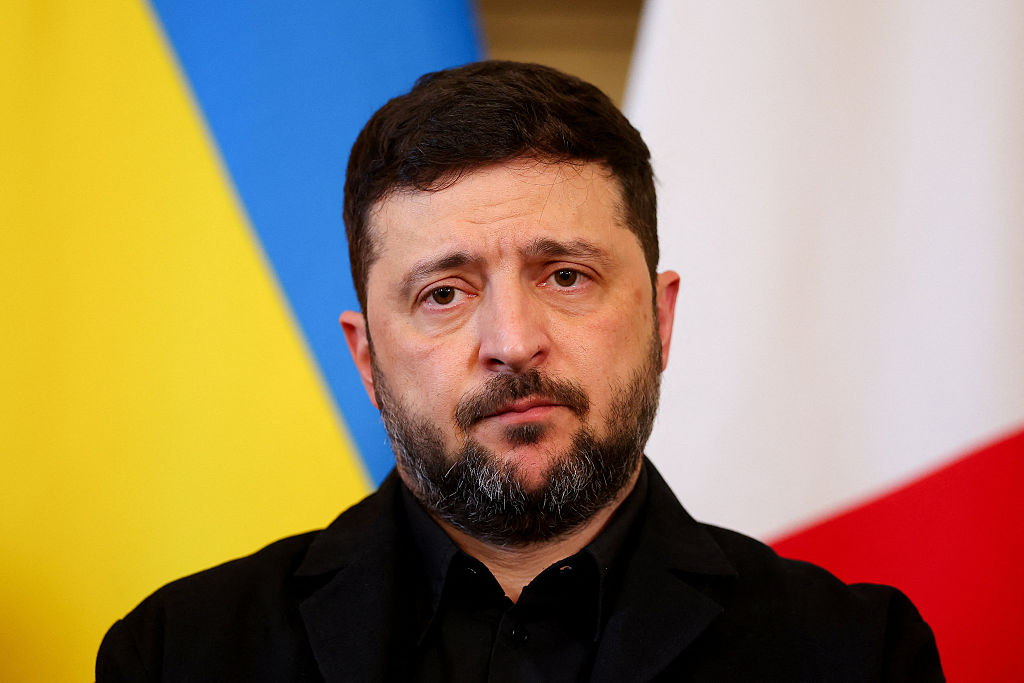
This is undeniably a powerful electoral narrative. It played a key role in dislodging Viktor Orbán from power in Hungary earlier this year, and Zelensky openly supports this portrayal to strengthen relations with EU leaders. On Wednesday in Kyiv, he made European Commission President Ursula von der Leyen the first recipient of Ukraine’s new “Order of Europe” prize, awarded to those who further the nation’s path to EU membership. Such actions, needless to say, are key to the alienation of the European nationalist Right.
A feedback loop is in effect. Progressive ownership of the Ukrainian cause in opposition to “pro-Russian” nationalists brings Zelensky ever further into the orbit of Brussels. Right-wing nationalists come to distrust Zelensky over his perceived political alignment with loathed establishment figures such as von der Leyen. The ensuing nationalist hostility to Zelensky then lends credence to the “pro-Russia” accusations from mainstream parties.
Poland was, until recently, one of the last bastions of bipartisan support for Ukraine. Yet the EU’s internecine political warfare has stoked divisions, rather than a fundamental shift in attitudes to Russia’s invasion. Nothing — not even Poland’s once-unbreakable solidarity with its embattled neighbor — rises above the existential struggle between the EU establishment and its opponents.