




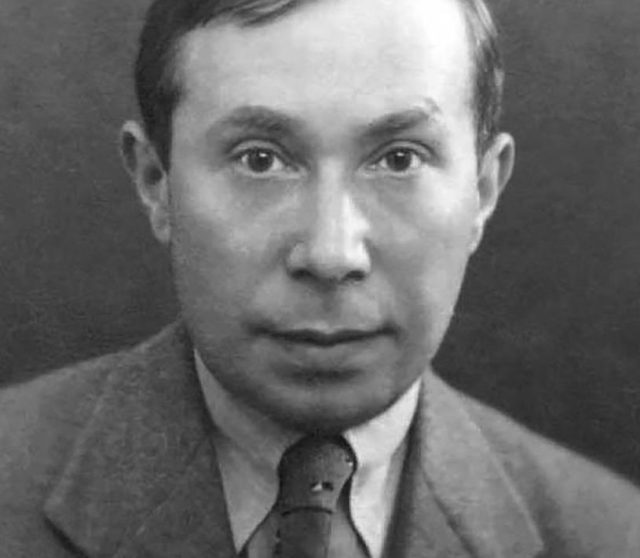
'Have you ever noticed that there seems to be something shadowy at the heart of American conservatism?' (Monozigote/Wikipedia Creative Commons)





Have you ever noticed that there seems to be something shadowy at the heart of American conservatism? A secret club that has infiltrated Ivy League lecture halls and the corridors of government, that meets on private islands and the smoky rooms above Manhattan restaurants to discuss the coups d’état and the apocalypse over a nice glass of claret.
The conspiracy-theorizing wing of the US media has offered plenty of possible explanations about what this shadowy entity might be over the years: Skull and Bones, Bohemian Grove, the Council for National Policy — or perhaps even “Dialog”, the secret club founded by Peter Thiel and Auren Hoffman that was recently exposed by a Swiss hacker. But those who have really done their research, who have brushed shoulders with high-ranking government officials and walked in the corridors of power, know that if there is a secret guild steering the American Right, then it is almost certainly made up of the students and acolytes of a dead German-Jewish political scientist named Leo Strauss.
If all you know about Leo Strauss are the bare facts of his life, it is hard to work out why anyone would consider him all that influential, let alone the originator of a cult. After fleeing the Nazis in 1937, Strauss spent most of his life locked away in the Political Science department of the University of Chicago, scribbling out heavy, prolix books with titles like On Tyranny: An Interpretation of Xenophon’s Hiero and Philosophy and Law: Essays Toward the Understanding of Maimonides and His Predecessors. Yet for some reason, in the years since his death in 1973, he has managed to send wave after wave of conspiratorial panic crashing through the political establishment. In the Eighties, Myles Burnyeat argued that most of the American Right had been colonized by the disciples of this “Sphinx without a secret”; in the 2000s, noting the influence of Strauss among Republican neocons, Seymour Hersh went so far as to allege that “We’ve been taken over basically by a cult”. These days, everyone on the American Right gets linked to Strauss: Peter Thiel, JD Vance, Bill Kristol, Curtis Yarvin. The Strauss-panics even come freighted with strange sexual rumors: there are whispers of a homoerotic initiation rituals, intercrural orgies, a long lineage of Greek-style pedagogical techniques linking Right-wing figures as diverse as Allan Bloom and Bronze Age Pervert.
What do Straussians actually believe? If you ask a certain kind of respectable, tenured academic, the answer you tend to receive is pretty banal. In the words of Steven Smith (who actually advised Bronze Age Pervert, aka. Costin Alamariu, for his thesis at Yale), “Straussianism is characterized above all by what its practitioners often call the art of ‘careful reading’.” A Straussian education, in other words, basically just means spending hours and hours trawling through an idiosyncratic canon of “greats” comprising Plato, Xenophon, Maimonides, Machiavelli, Hobbes, and Locke; this, all the Straussians seem to agree, is the single best career-preparation a would-be statesman, or professor, or world-shaping businessman, could hope for. It is certainly in the spirit of the master himself — who, when asked by colleagues what he taught, liked to reply “old books”.
Why, then, are Straussians so widely mistrusted? The clearest indication comes in Strauss’s 1952 book Persecution and the Art of Writing, which looks, at first glance, to be just another vast tome of commentaries on several Straussian favorites: Plato, Maimonides, Judah Halevi, Spinoza. Over the course of Strauss’s analysis, however, some curious claims are made about the way in which philosophers ought to write. Specifically, Strauss argues that ever since the leaders of Athens put Socrates to death, Western thinkers have needed to temper the destructive potential of philosophy on “the city” — which is Strauss’s favored synecdoche for all types of public and civic life. As a result, the only proper way for the philosopher to write is esoterically; he must hide his true opinions from the rank and file, only signaling his true intentions to his brightest, most alert readers. Secret codes, odd turns of phrase, weird lacunae in the index: these are methods by which the great philosophers’ works reveal their true meaning to the elect, without upsetting everyone else. Read this way, even a text as great as Plato’s Republic will start to yield. Far from agreeing with Socrates, in fact, Plato reveals his sympathies to lie with Sophists like Thrasymachus; deep down, he knows that all the lofty talk of “justice” is just a “noble lie” told by the powerful to keep the rabble in check.
There were, of course, many other facets to Strauss’s teaching, a number of which soften the rather brutal message of Persecution and the Art of Writing. There was Strauss’s critique of modern technocracy for instance, in which he argued that the politicians of today ought to rediscover ancient, holistic notions of “the good life” rather than blindly pursuing what “works”; and his work on Natural Right, in which he defended a trans-historical standard of right and wrong grounded in human needs. But for some reason, the Straussians who reach the highest echelons of US government always seem to place Persecution and the Art of Writing at the front and center of their thinking, and wave away everything else.
This was certainly the case in the late Nineties and early 2000s, when, under George W. Bush, a crop of explicit admirers of Strauss set about expanding the United States government’s secretive, constitution-spurning underbelly. In 2001, Paul Wolfowitz, one of Strauss’s protégés at Chicago, was promoted to Under Secretary of Defense, and quickly set about urging his fellow members of the National Security Council to “take proper advantage” of the 9/11 attacks with little regard for federal and international law. Wolfowitz never publicly endorsed Straussianism while in office, but there were plenty of winks and nods: as his friend Christopher Hitchens put it, “Since Paul Wolfowitz is from the intellectual school of Leo Strauss … one may even suppose that he enjoys [the] arcane and occluded aspect of the debate.” Abram Shulsky, who headed the Pentagon Office of Special Plans that eventually produced the notorious “intelligence” about Iraqi WMDs, went one better, co-writing an essay called “Leo Strauss and the World of Intelligence (By Which We Do Not Mean Nous)”, in which he explicitly argued that Strauss’s ideas endorse the modern security state. The core of Strauss’s teaching, wrote Shulsky, was the insight “that political life may be closely linked to deception”; every exoteric system of laws, rights, constitutions was invariably underpinned by its illiberal counterpart: “enhanced interrogation”, Guantánamo, the NSA.
It was in response to the Straussian fervor of the Bush era that Peter Thiel — at that point best known for his relatively apolitical involvement in PayPal and Facebook — wrote perhaps the single most influential treatment of Strauss this century: “A Straussian Moment.” At first glance, this 2007 essay seems to be a gentle critique of the administration’s neoconservative excesses. If you read it carefully, however, it is hard not to interpret it as a kind of covert endorsement of the Straussian project — particularly in Thiel’s approving citations of the fact that “The most just society cannot survive without intelligence, i.e., espionage” — even in cases where “[e]spionage is impossible without a suspension of certain rules of natural right”. Given the trajectory of some of Thiel’s companies since — particularly the steady takeover of international intelligence-gathering capabilities by Palantir — it doesn’t seem too outlandish to read “A Straussian Moment” as an important development within the Straussian tradition. It is perhaps the first major Straussian consideration of the fact that the custodians of the “noble lie” might come from outside government, too.
The most energetic Straussians of the last two decades have been those who took this idea seriously. Most of them seem to have been concentrated on America’s free-wheeling West Coast — specifically, the Claremont Institute, where one of Strauss’s most distinguished students, Harry Jaffa, set about rearing a new brood of Straussians who would completely change the legacy of the great man in the new millennium. The “Claremonsters”, as their detractors in the US political establishment liked to call them, took Thiel’s reasoning to its most extreme conclusions: the traditional political classes had quite obviously fallen short of their forebears, they argued; they had begun to believe the “noble lie”, and as a result had spent the last 50 years getting bogged down in law and procedure. A new kind of leader was needed, to restore the ideals of classical statesmanship once and for all.
In 2016, a Claremont Straussian named Michael Anton published “The Flight 93 Election”, in which he argued that the perfect man to perform this salvific miracle was Donald Trump. Within five years, John Eastman, another Claremont senior fellow and a former student of Jaffa’s, was urging Mike Pence to reject the electoral college count on January 6 on the grounds that the true, esoteric constitutional order superseded the Electoral Count Act of 1887. At a time when most of the American Right was scandalized by Trump’s disdain for law and custom and procedure, the Claremont Institute was tirelessly propagating the idea that this unscrupulousness was a strength. Nowadays, everyone involved in MAGA professes their disdain for the old myths and noble lies in favor of “just doing things”: domestically, the administration seems serenely comfortable with flouting Supreme Court orders to prevent the deportation of Kilmar Abrego Garcia or the mass-firing of civil servants; internationally, its saber-rattling about Greenland and Canada shows what it thinks about defense treaties and international law.
What would Leo Strauss have made of all of this? I can’t help but suspect he would have seen the past 10 years of Straussianism as a monstrous vulgarization of his project. The core of his thought, after all, was a commitment to minoritarianism and secrecy — and though MAGA officials like to talk about their willingness to do shadowy, disreputable things with little regard for public opinion, they tend to do so in the most public, forthright, non-secretive way imaginable. In 2018, Steve Bannon spoke openly about the Trump campaign’s Machiavellian electoral strategy of “flood[ing] the zone with shit”; in 2024, JD Vance defended the administration’s propagation of stories about cat-roasting Haitian migrants with the line, “If I have to create stories so that the American media actually pays attention to the suffering of the American people, then that’s what I’m going to do.” Esotericism, in other words, seems to have become a remarkably exoteric doctrine. Which begs the question: if everyone is a Straussian, convinced of his own unique ability to glimpse the eternal esoteric truths of philosophy beneath the tangle of contingent lies we call politics, then is anyone really a Straussian at all?
In the end, I suspect, there is something slightly self-defeating about Straussianism. It is the paradox of all esoteric doctrines: the more successful and influential they are, the more people read and understand and propagate them, the less esoteric they become. In the good old days of broad public faith in American institutions, Straussians could still derive a secretive frisson by imagining themselves to be the custodians of the kind of nihilistic wisdom they found in Thrasymachus, or Machiavelli, or Hobbes. But political nihilism is mainstream now; if Straussians have any hope of inducting a new generation into their fraternity, they will need to find a new secret to guard. Indeed, if the conspiracy-theory-baiting mode of discourse that has begun to predominate on the American Right is anything to go by, they might have found it already. It is the secret that has animated the greatest secret societies and mystery cults in history, from the Rosicrucians to the Freemasons to the purple-robed hierophants of Eleusis: the knowledge that, beneath all the candlelit rituals and grandiose mutterings about esoteric wisdom, there is absolutely no secret at all.