









July 26 2026 - 4:00pm
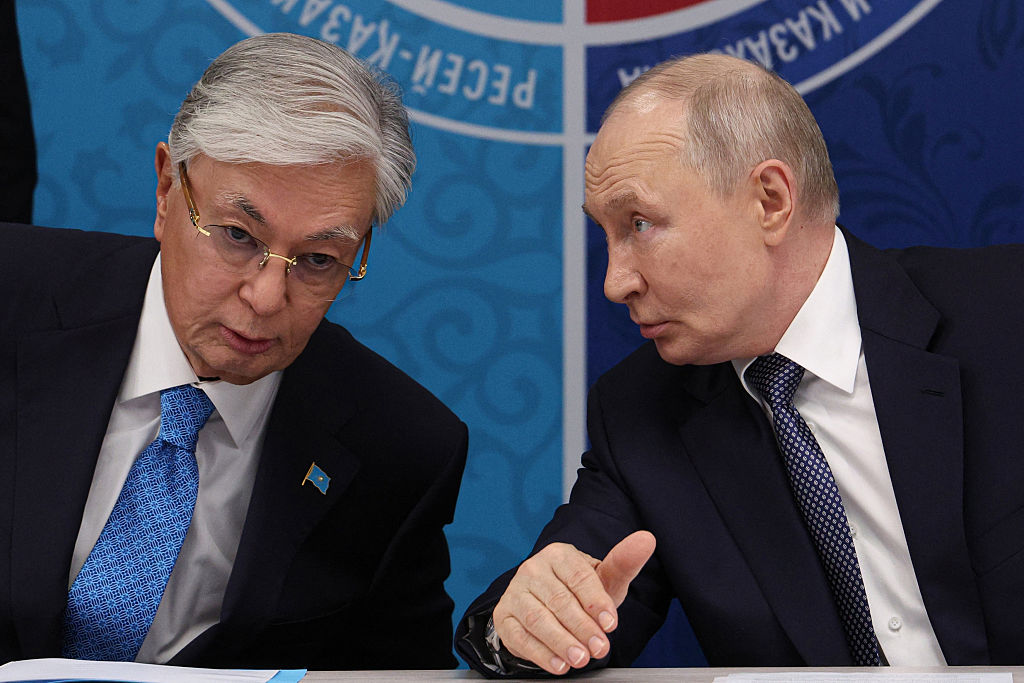
War should be the art of disposing of enemies rather than friends. But yesterday Kazakhstan’s President Kassym-Jomart Tokayev publicly called on Russian leader Vladimir Putin to “freeze” the war in Ukraine, arguing that “it is a shame, young people are dying” and that “all this has to be stopped.” He contested Moscow’s narrative of the conflict, saying that the roots “are not completely understandable for many, including for us”, and suggested a return to the 2022 Istanbul negotiating framework.
Although a close ally of Moscow, Kazakhstan has never been a full-throated supporter of Putin’s war. It refused to recognize the Russian-backed breakaway republics in Ukraine’s Donbas, has abstained on UN votes, and even sent humanitarian aid to Ukraine. Yet such a public and unusually direct intervention is unprecedented — a sign not only that private entreaties have fallen on deaf ears, but that anxiety is mounting across the region.
Ukraine’s highly successful drone campaign against Russia’s oil infrastructure has reverberated through Central Asia, triggering fuel shortages, rushed efforts to diversify away from Russia and cuts to crude oil production. Kyiv has also hit tankers transporting Kazakh oil. Astana has even tightened its border controls to stop Russians smuggling supplies out of the country and offsetting shortfalls of their own. Beyond the immediate economic fallout, sustained disruption to businesses and consumers risks fueling public discontent, creating a potential source of instability for authoritarian governments whose legitimacy rests, in part, on their capacity to deliver stability for their people.
That is not the only pressure Tokayev faces. The Kazakh President admitted that he expressed his position on the war after being asked to convey a message, although he did not disclose the identity of the party behind the request. He did, however, say that he had received “many signals” from the US and Europe “regarding the current state of the conflict”, suggesting that Western governments are leveraging Central Asia’s energy vulnerabilities to encourage the region to put pressure on Putin.
While Tokayev himself rejected the possibility of acting as a mediator, he has previously offered to furnish a “platform for negotiations”. Western nations have upped their regional engagement since Russia invaded Ukraine, and Azerbaijan has been serving as a site for unofficial talks between Russian and German ex-officials. Though Azerbaijani President Ilham Aliyev stressed that he had been unaware of the discussions at the time, and Berlin views them as a Russian influence operation, the episode nonetheless demonstrates that Central Asia can serve as a useful arena for backchannel engagement. Aliyev himself added that “if this meeting serves to end the Ukrainian-Russian war, we, of course, welcome it.”
Will this willingness translate into any tangible impact? The Kremlin has, predictably, rejected Tokayev’s call to freeze the war. After four years and hundreds of thousands of Russian deaths, it was something of a stretch to imagine that Putin was waiting on Kazakhstan to demand he end the conflict. Privately, however, he will be embarrassed and concerned about appearing diplomatically isolated.
As Russian businesses and motorists feel the impact of Ukrainian drone strikes, while US Republicans seek a foreign policy breakthrough to tout ahead of the November midterms, Putin may find himself under mounting pressure on multiple fronts. Despite Kazakhstan’s limited leverage over Russia, its balanced foreign policy means a possible move further toward the West or China could capture the Kremlin’s attention.
Kazakhstan’s response to the war reveals significant unease, now amplified by Ukraine’s drone strikes. For Putin, such open criticism from an ally is an uncomfortable departure from the norm. Yet it also demonstrates the impact of patient Western diplomacy behind the scenes, exploiting fractures and vulnerabilities within Russia’s regional relationships. In focusing on keeping enemies at bay, the Kremlin seems to have forgotten that friends require just as much attention.
