









July 1 2026 - 1:15pm
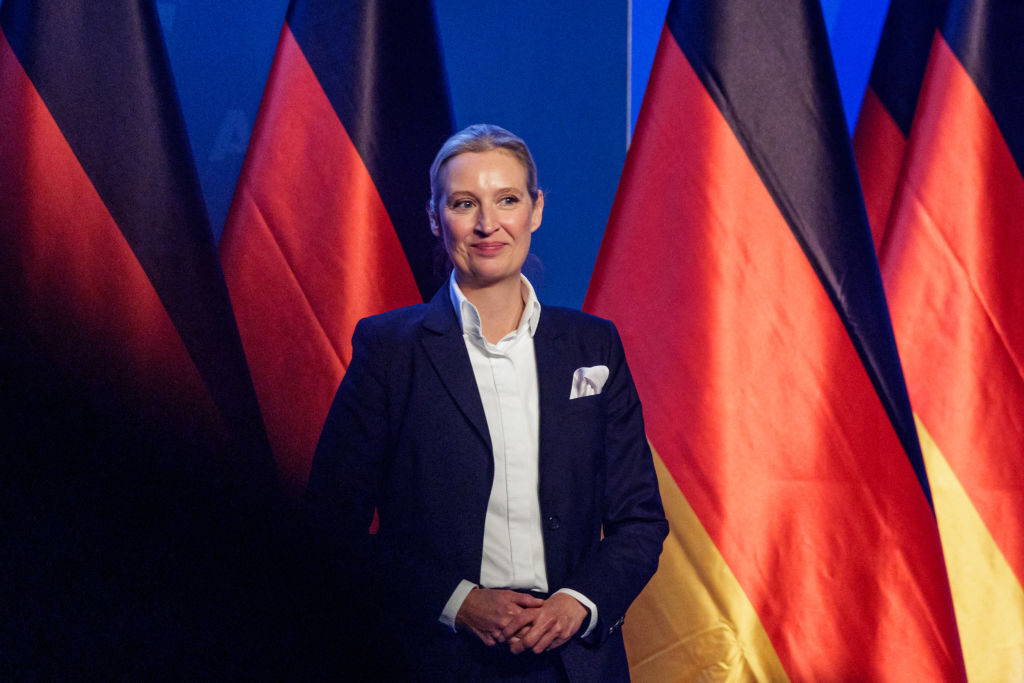
In an interview with Reuters this week, Alternative für Deutschland (AfD) co-leader Alice Weidel made it clear that in a government run by her party, restoring energy ties with Russia would be a priority. “Cheap energy from Russia was the secret of the success of ‘Made in Germany’,” she claimed, referring to the nation’s famed industrial strength. “We need it back.” Weidel added that “the loss of this energy has set us back years. Hundreds of thousands of jobs have been lost. It has made us dependent on the United States, which sells us energy at far higher prices.”
Although the latter claim is demonstrably true — Russian pipeline gas has been replaced by liquefied natural gas, mostly from the USA, with far higher transportation costs — Weidel has been accused of the “romanticization of Russia”. The criticism sticks; although Weidel is right about the harmful short-term effects on Germany of cutting off Russian energy, Europe’s nationalists are increasingly gripped by a Russia nostalgia that threatens to blind them to the true causes of the continent’s industrial malaise.
Weidel’s characterization of Russian energy as the secret of German success before the Ukraine war only tells half the story. The nation got hooked on cheap Russian gas as a “bridge fuel” on the road to Net Zero, amid the shuttering of European coal production and Germany’s remarkable act of national self-harm in phasing out nuclear energy. Cheap Russian gas did not birth Germany’s industrial miracle, as Weidel’s claim suggests; it kept German industry on life support amid a climate of continuous political sabotage.
Now that the safety net of Russian gas has vanished, the effects are plain to see. Having imported 55% of its natural gas and over 30% of its crude oil from Russia before the war, average wholesale electricity prices remain at least twice as high as those seen during the previous decade, driving inflation and redundancies, with 124,000 German industrial sector job losses reported in 2025. And it’s not just heavy industry that’s in trouble; German households pay around a third more for electricity than the EU average.
The fact that Germany generates more wind and solar power than any other EU nation will be of cold comfort to businesses struggling to make ends meet. Heavy manufacturers, in particular, aren’t just saddled with higher energy prices; they must also pay hefty sums for emissions allowances, or if they want to escape those fees, upgrade to ruinously expensive low-carbon equipment.
Dependency on Russia was, then, the result of a wider attitude to energy which continues to pose systemic obstacles to growth. Given this context, Weidel’s portrayal of Russian energy imports as a silver bullet for industrial woes is overly simplistic. It’s even arguable that Europe’s hostile energy climate, devastating though it may be, isn’t the biggest problem facing manufacturers. Equally serious are an uncompetitive labor market and a regulatory burden that stifles growth, leaving Europe unable to compete with the USA and China on developing innovative technologies, as the Draghi report attests. It’s therefore unsurprising that Volkswagen last week shocked Germany with plans for an astounding 100,000 redundancies — roughly 15% of its workforce — and the closure of four German factories.
Europe has deep structural competitiveness issues to fix on energy, labor markets and regulation, but Russian energy has become the forbidden fruit of EU politics: the more tempting to anti-establishment forces for the fact that it is banned. An out-of-touch elite can be portrayed as having cruelly outlawed an obvious cure for the bloc’s industrial woes. Every furious backlash from EU leaders against suggestions that ties with the Kremlin should be restored only lends this misleading message further potency, and the deeper Europe descends into economic malaise, the louder the siren song of Russian energy will sound to European ears.