









July 1 2026 - 4:00pm
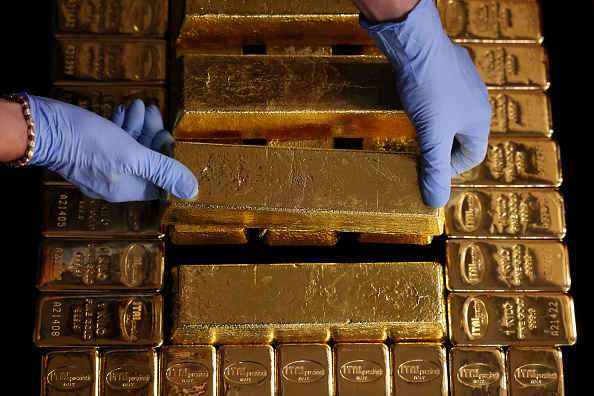
After gold’s decades-long bull run — a gentle rise which then turned sharply skyward during the pandemic — the precious metal peaked above $5,000 an ounce earlier this year. But now that high has come crashing back down. Yesterday, it was reported that gold was heading for its worst quarterly performance in almost a decade and that the price had hit just below $4,000.
This dramatic fall could just be the warm-up act for the start of a range of asset plunges. Bitcoin, which peaked last year at over $125,000, has since lost more than half its value and is down more than 30% in 2026. How much further could we see the price of assets drop?
Just as they rose together, gold and crypto are falling together for the same reason: the debasement trade is waning. Debasement occurs when the supply of money rises much faster than the supply of goods and services, causing its purchasing power to decline. Last year, the rise in bond yields seemed to suggest that the assumption whereby central banks would endlessly inflate away debts by printing money and, in turn, reduce the value of currencies, driving investors to other assets, was no longer assured. But Donald Trump’s determination to secure control of the Federal Reserve, by firing one of its board members and installing a new chairman who he hoped would do his bidding, kept alive the hope that the Fed would slash interest rates and reopen the money hose.
Recent events halted that. After taking the helm of the Federal Reserve, Kevin Warsh made clear he was in no rush to reduce interest rates and that, moreover, he was prepared to join his colleagues in raising them if inflation didn’t come down. Then this week, the Supreme Court ruled that Trump could not fire Fed governors at will, leaving Lisa Cook, the governor he wanted to remove, in place.
Together, these two events caused Treasury bonds to rally as investors bet that the Federal Reserve would defend the value of the currency. With the dollar rising in value, gold and crypto fell.
A debasement trade could still return, should circumstances change. If, say, the crash in corners of the market like Bitcoin were to cause a broader correction, with investors selling other assets to cover their losses and thereby triggering a chain reaction, central banks might be tempted to ease the money supply to ensure the market has abundant liquidity.
Nevertheless, the bar for cutting interest rates has been raised by a couple of developments. One is that consumer price inflation has shot up, making central banks more hesitant to cut interest rates. Another concern is that governments have racked up huge debts in recent years. At the time of the 2008 global financial crisis, most Western governments still had scope to borrow comfortably. Central banks had less reason to worry that making credit cheap for governments wouldn’t crowd out private investment. Today, in contrast, central banks are more reluctant to underwrite further government borrowing.
Thus, it increasingly looks like the era of easy money, which began after the 2008 crash and was extended during the pandemic recession, may now be coming to an end. The most speculative parts of the market, like Bitcoin and gold, will be the first to feel it. But it may also be an omen of tougher times ahead for the broader market.
Unlike crypto, which may well have no floor for its price, gold may well level off, since central banks have their own reasons for parking some of their reserves in gold, including their desire to reduce their dependence on the dollar. But we may be entering a new regime in which investors can’t count on central banks to always rescue them.
John Rapley is an author and academic who divides his time between London, Johannesburg and Ottawa. His books include Why Empires Fall: Rome, America and the Future of the West (with Peter Heather, Penguin, 2023) and Twilight of the Money Gods: Economics as a Religion (Simon & Schuster, 2017).
 jarapley