









July 2 2026 - 12:00pm
On Tuesday night, a political earthquake hit Colorado, as 29-year-old democratic socialist Melat Kiros ousted longtime Democratic Congresswoman Diana DeGette, herself a staunch progressive.
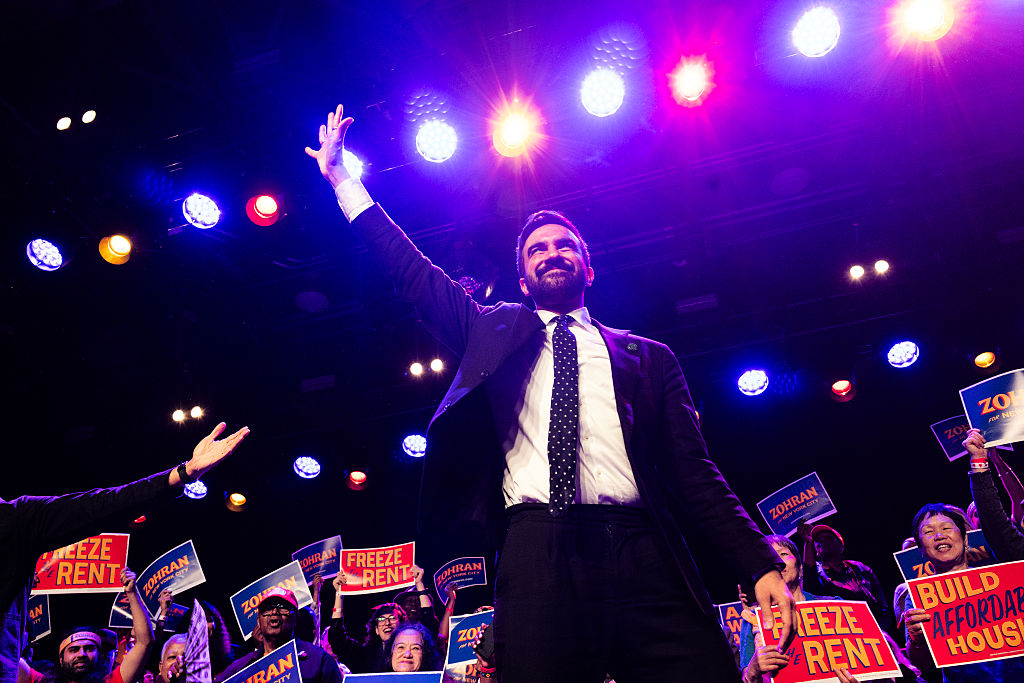
Kiros is the latest in a wave of Democratic Socialists of America (DSA)-aligned candidates to secure primary victories. Last week, two DSA-backed candidates won Democratic congressional primaries in New York City, both of whom were endorsed by the city’s mayor, Zohran Mamdani, who also identifies as a democratic socialist. The trend follows a broader run of recent DSA successes in mayoral politics, including Katie Wilson in Seattle and Nithya Raman in Los Angeles.
The DSA’s success so far has come in deep-blue cities where Kamala Harris won by huge margins in 2024. These are places that will not determine which party has power at the federal level come November. However, the organization’s growing influence in the Democratic Party wouldn’t be possible without a broader shift in attitudes in favor of socialism among Democratic voters. According to Gallup, two-thirds of Democrats today have a positive view of socialism, while just 42% have a positive view of capitalism — an imbalance that has existed for nearly a decade. Moreover, one-third (32%) of Democrats today say they like democratic socialist leaders while another 56% say they “neither like nor dislike” them.
Few others agree, however. The same Gallup poll found that independents and Republicans maintain poor views of socialism. And in a recent survey from Marquette University, just 21% of Americans said they viewed the DSA favorably (compared to nearly half — 48% — who viewed them unfavorably).
Some center-left commentators have attempted to downplay these developments, but the growing embrace of socialism and socialist candidates in the Democratic Party is readily apparent. What is also apparent is that many establishment Democrats not only aren’t in the mood to pick an ideological fight, but are instead shifting with the prevailing winds. It was reported this week that Kamala Harris, appearing to lay the groundwork for a 2028 presidential run, held meetings with Mamdani as well as pro-Palestine activists. These moves, likely borne of political expediency, could jeopardize the party’s political prospects moving forward for several reasons.
First, as American politics has grown increasingly nationalized, it has become harder for down-ballot candidates to differentiate themselves from their national party brand. This means that if Democrats are defined as the party that not only tolerates but embraces socialism, their “majority-maker” candidates running in places like Texas, Ohio, or Iowa could struggle to earn enough support from more moderate or even conservative-leaning voters. Indeed, new surveys this week from the New York Times found that despite the favorable midterm environment, Democrats’ candidates in key battlegrounds still face uphill battles.
One of the lessons of the 2024 election was that many voters believed Democrats were too liberal. The Times’s battleground state surveys also suggested this perception has persisted — and that it could be hindering the ability of Democratic candidates to expand their appeal in red-leaning states.
Democrats’ path back to power nationally requires rebounding with non-white voters and making gains with working-class and rural Americans. Yet it’s not clear how the DSA helps them do this. Though the organization casts itself as a champion of the working class, its coalition is conspicuously devoid of actual working-class people: just 4% have blue-collar jobs, according to a 2021 survey. Moreover, its support base is also concentrated in big cities, and its members are 85% white. So how, exactly, are they qualified to speak on behalf of the non-white working-class?
Finally, much of the DSA’s membership possesses extreme views that are wildly out of step with the vast majority of voters, and that the GOP will gladly hang as an albatross around the necks of Democrats trying to win competitive races. For example, Darializa Avila Chevalier, who ousted a longtime congressman in New York City, has previously said she would not support deporting someone convicted of serious crimes but has expressed support for the abolition of prisons, police, and borders. For her part, Kiros seemed to justify the rationale for the 9/11 attacks on America, calling them “inevitable”. In a recent survey of New Jersey DSA members, “nearly four out of 10 (39.3 percent) identified as anarchists, followed by Marxists at 35.7 percent and 10.7 percent as democratic socialists.”
To be sure, Democrats have nominated relatively moderate candidates in other places, including in several battleground Senate contests. But those candidates need all the help they can get to win, and the party’s embrace of candidates who are aligned with the DSA and espouse extremist views will likely do them no favors.
