









July 29 2026 - 12:30pm
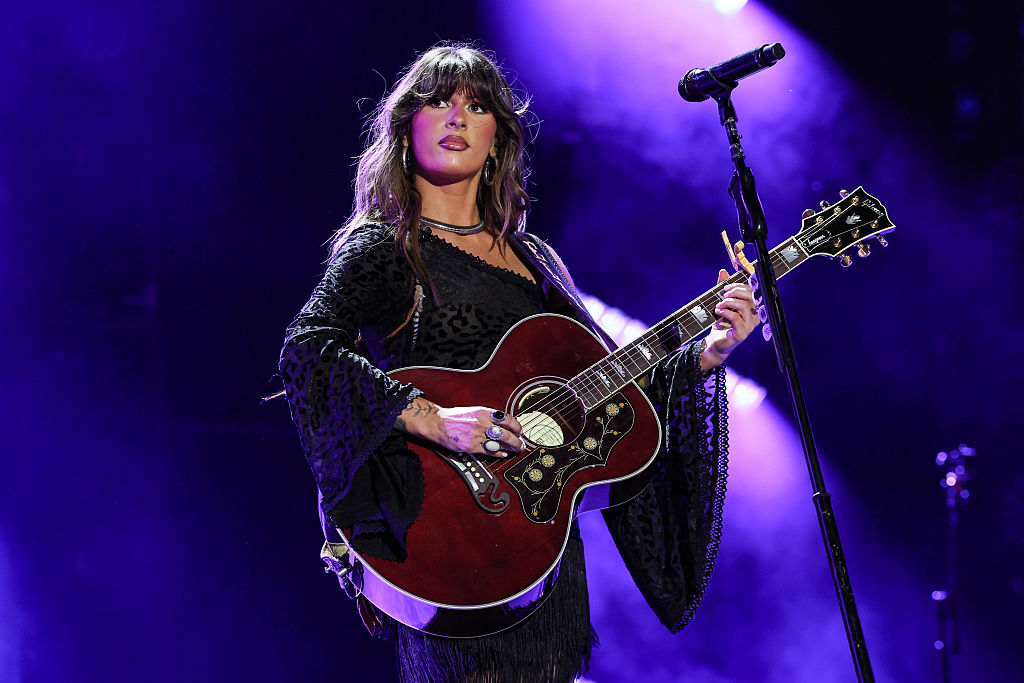
Last week, a 26-year-old from Hope Hull, Alabama, did something Mariah Carey and Whitney Houston never managed to accomplish. Ella Langley’s “Choosin’ Texas” — a country song about a woman who won’t give up her home state for a man — spent its 15th week atop the Billboard Hot 100, making it the longest-running No. 1 by a solo woman.
On its own, a hit is just a hit. But the massive success of Langley’s twangy single is more proof that the long 2010s — that bloated, streaming-era decade of poptimist consensus, when hip-hop and female-driven pop were the default soundtrack — has finally flatlined.
This was shown in October, when Billboard reported that, for the first time since February 1990, there wasn’t a single rap song in the top 40 of the Hot 100. That meant no Drake, no Kendrick Lamar, no Jay-Z or Kanye West, not even a viral newcomer sneaking into the lower reaches of the charts. Rappers who once seemed capable of bending the entire music industry around a new release were simply absent. Meanwhile, artists such as Chance the Rapper, who a decade ago looked destined to become hip-hop’s civic ambassador, have faded into obscurity.
Predictably, many journalists and commentators have reflexively mapped rap’s decline and country’s rise as another data point in the endless Left vs. Right culture war. Rolling Stone went as far as proclaiming that country music was “the red flag flapping in the wind” that predicted a second Trump term. There’s a reason the culture-war read runs close to the truth. Nashville has spent decades marketing itself as America’s last repository of traditional values using the visual language of boots, flags, church pews, pickup trucks and hard-drinking small-town virtue. Meanwhile, a DJ opened Kamala Harris rallies in 2024 blaring hip-hop and Charli xcx’s Brat album.
But the less exciting explanation is probably the more convincing one. Hip-hop and R&B were ascendant for a very long time; every other genre gradually absorbed their innovations; and eventually the music industry squeezed the life out of them through repetition. The culture industry survives by waiting until an old style has been uncool for exactly long enough that young people can rediscover it without feeling as though they are dressing like their parents. The Seventies returned in the Nineties, the Eighties snuck into the 2010s, and now the country, rock and roots music of the Nineties and early 2000s are being polished, distressed and sold back to a new generation.
Nor is the country boom as politically or demographically tidy as its imagery suggests. Cowboy culture isn’t fenced in: Beyoncé put on a 10-gallon hat in Cowboy Carter, Shaboozey fused a J-Kwon drinking anthem with barroom country in his megahit “A Bar Song (Tipsy)”, and Post Malone wandered into Nashville without having to surrender either his tattoos or his pop audience. Willow Avalon may be the ideal mascot for this less coherent new country coalition. Rolling Stone has described the young Georgia singer as a “gun-totin’ liberal”. She can sing about Southern women, pistols and home without putting on a red hat, just as Beyoncé could put on a Stetson without becoming a Republican.
This isn’t just a country music story. Rock has been quietly clawing its way back from a decade of obituaries. For a moment, the NYC indie rock band Geese were everywhere, and thanks to England’s World Cup run, Oasis’ “Wonderwall” is back on Billboard’s Top 40. Meanwhile, there’s a revival of shoegaze, nu-metal, pop-punk, indie sleaze and guitar-driven pop, much of it excavated by listeners too young to remember when critics first declared those forms exhausted. The clearest sign may be Charli xcx, who announced that “the dance floor is dead” and staged a knowingly ambiguous rock makeover on her post-Brat album out earlier this week: Music, Fashion, Film.
Taken together, these shifts do not amount to some great popular revolt against liberalism, but they do suggest that the 2010s are dead and buried. Listeners seem weary of the frictionless, placeless music that dominated the streaming age and are instead reaching for sounds that promise guitars, regional accents and the faint impression that several human beings once occupied the same room.
