









July 16 2026 - 7:00pm
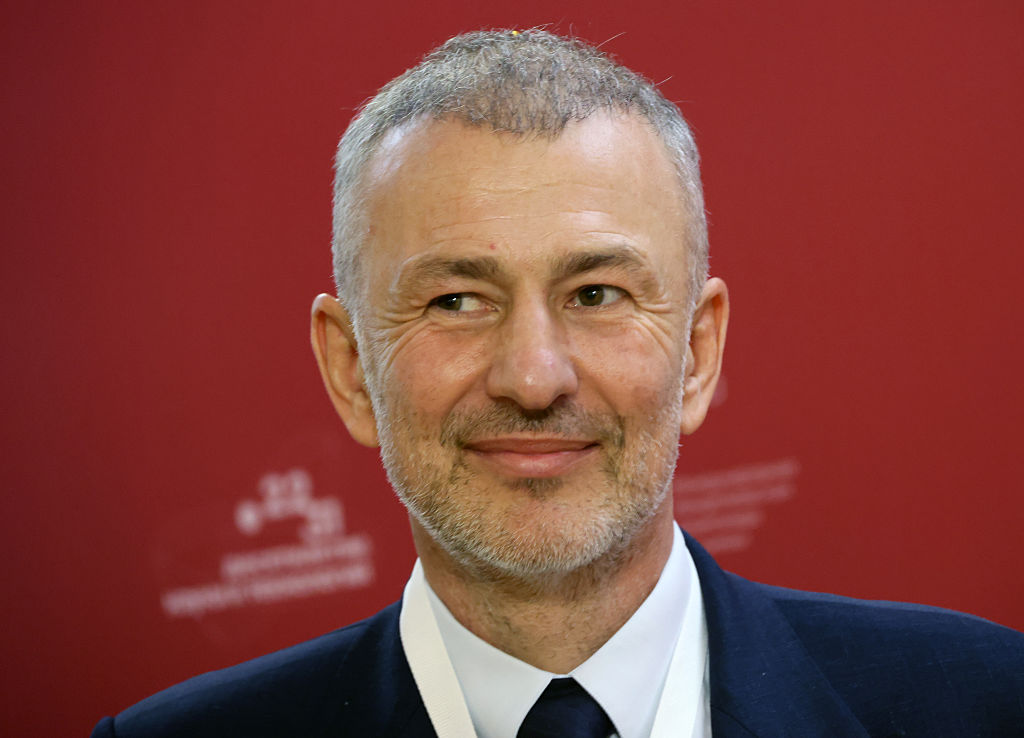
Last week, The Economist published a particularly interesting essay by Andrey Melnichenko, a leading Russian industrialist who has been sanctioned by the West. In it, he calls for patriotic Russian businesses to play a key role in shaping the country’s future.
Though the magazine frames his intervention as a revolt against Vladimir Putin and the war in Ukraine, this is far from accurate. In his piece, Melnichenko places blame for the conflict on the West and stresses the need for Russia to defend its “sovereignty” as a great power. He also promotes a “national” business class economically rooted in — and loyal to — Russia, which has been a key aim of Putin’s since he first took power. Melnichenko’s essay should be read as an appeal to Putin to have confidence in this class.
Still, this is the first time in several years that a Russian private business magnate has spoken out on wider issues of state policy. “Large Russian businesses that invest in a sovereign Russia will, in time, become an integral part of it,” Melnichenko writes. “As a consequence, Russia itself will become different. If we strive for a sovereignty that creates unity between citizens and institutions, I hope that in time we will correct all the internal imbalances for which we too bear responsibility.”
These “internal imbalances” can plausibly be read as including the excessive state influence of oligarchs linked to the security services, as opposed to self-made entrepreneurs like Melnichenko. In my own conversations with Russian businessmen, I have found considerable dissatisfaction with the siloviki, including among figures who in other respects were committed to the Putin system and terrified of the chaos that could follow if it collapses.
As part of his advocacy of the central role of private business, Melnichenko’s essay seemingly draws a firm line of opposition between him and hardliners who are advising Putin to try and win the Ukraine war by creating a fortress Russia, “closed, mobilized, in permanent siege”. Instead, he suggests a business sphere centered on Russia but at the same time open to cooperation with the rest of the world.
To this extent — but only to this extent — Melnichenko’s essay can be taken as a sign of growing unease within the Moscow business elite. In its introduction to the essay, however, The Economist frames it as a sign of Russia’s “rot” and widespread opposition to the war.
This is more than a little ironic, as most of Melnichenko’s essay is really a stern critique of The Economist’s entire line on Russia since the fall of the Soviet Union. He condemns the globalization of Moscow as a Western strategy to serve Western interests, and criticizes those Russians — including by implication himself — who fell for it. He warns the West against seeking to weaken or destroy his country, and argues that only a strong sovereign Russia can have a stable and predictable relationship with the outside world.
Melnichenko therefore calls for a settlement between Russia and the West based on mutual recognition of each side’s sovereign interests. “The choice before the world is not between love for Russia and hatred of it, between punishment and forgiveness, between moral clarity and political cynicism,” he writes. “It is between two kinds of future: one in which major powers again learn to respect each other’s sovereignty, and one in which each attempts to reduce the others to objects of management. The second path has already brought us here.” It is not clear, from the way it has publicized Melnichenko’s essay, that The Economist understands this.
Anatol Lieven is a former war correspondent and Director of the Eurasia Program at the Quincy Institute for Responsible Statecraft in Washington DC.
 lieven_anatol