









July 27 2026 - 10:00am
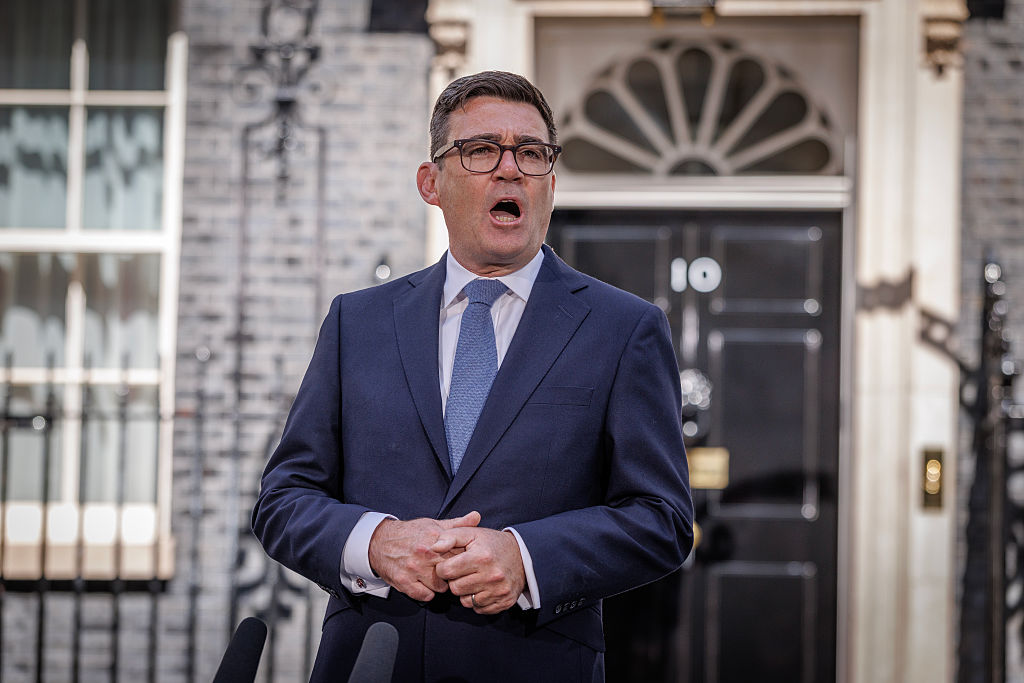
In an interview by Laura Kuenssberg released in full this morning, Prime Minister Andy Burnham was asked whether he would rule out an early election. “There is no early election,” he replied, before reminding us that the UK has a parliamentary system and that the party he leads already has an electoral mandate. Kuenssberg interrupted him mid-distraction: “Rule it out?”
“Well, yeah, I’m going to rule it out,” he said, prompting a series of seemingly conclusive headlines from the BBC, Financial Times, Daily Mail and i Paper. The Metro even went so far as to state: “Andy Burnham vows no early general election before 2029.”
But take note of what he actually said. In particular, his odd choice of grammatical tense: “There is no early election” not “There will be no early election.” Burnham has got away with stating the obvious here. There is, clearly, no election underway because he hasn’t called one. But that’s not the same thing as saying that he won’t call one in the next 12 months.
If the new PM were a poor communicator like Keir Starmer, there’d be no need to rake over his choice of words. But in terms of comms, Burnham is the most capable Labour leader since Tony Blair. So when, as he did in the interview, the PM repeats the same phrase — “There is no early election” — it’s a reasonable assumption that this is a carefully prepared soundbite. But to what purpose?
Burnham needs to reconcile two contradictory objectives: killing the anticipation that a snap election is imminent while leaving himself with the option of calling one. He was, don’t forget, a Cabinet minister under Gordon Brown. In autumn 2007, there was mounting media speculation that a snap election was about to be called. Brown, still a new prime minister at the time, did nothing to dampen the excitement. At least he didn’t until it had reached fever pitch, whereupon he reacted to a discouraging opinion poll by announcing there’d be no snap election after all. It is now looked back on as a strategic mistake. The perception that Brown had bottled it never really went away and, just to make sure, the Tories sent a group of volunteers dressed up as bottles of brown ale to troll Labour.
Burnham had a front-row view of the debacle, so it is no wonder he wants to avoid the same mistake. But that’s precisely why his failure to definitively rule out an early general election is so significant. Quite clearly, he views the option of calling an election either this year or next as worth keeping.
Right now, several factors are moving in his favor. Take, for instance, the Reform UK funding row, the Green Party’s loss of momentum, the SNP’s troubles in Scotland, a downward net migration trend, and the beguiling experience of a prime minister who can talk. In the longer term, however, multiple sources of trouble are brewing. There’s the ever-present risk of a crisis of market confidence in the UK’s public finances, as well as the ongoing need for welfare cuts and/or tax rises. Labour backbench resistance to Shabana Mahmood’s immigration reforms hasn’t gone away either, and nor have the small boats. And before too long, Burnham’s Manchesterism could become a cause of resentment.
This all indicates why the PM needs the freedom to choose his moment: the point at which the chances of a Labour majority — or at least a Labour-Lib Dem majority — top out. At present, the media is still willing to leave him with that wiggle room. He’d better hope the next interviewer doesn’t press him for a straight answer to the question.
Peter Franklin is Associate Editor of UnHerd. He was previously a policy advisor and speechwriter on environmental and social issues.
 peterfranklin_