








June 25 2026 - 7:00am
In 2023, Emily Maitlis asked Keir Starmer the question that revealed more about his failed premiership than any other: which does he prefer, Davos or Westminster? For most politicians, the choice between plutocrats in the Swiss Alps and the home of our national democracy would be obvious — at least when the cameras are rolling. But not for Starmer, who said he preferred the après-ski to spending time with fellow MPs.
Starmer’s answer revealed that Labour had a leader, and we would soon have a Prime Minister, who was almost uniquely ill at ease with Westminster politics. After he announced that he would step down as Prime Minister earlier this week, it will at least soon become clear that he will be relieved of the burden of pretending otherwise.
So what next for Starmer? According to the Guardian, he will remain as an MP until the end of his term, but we’d be wise to take that with a pinch of salt. David Cameron, who actually appeared to enjoy being an MP and prime minister, said the same when he resigned in 2016. He lasted just a few months before triggering a by-election. An early contest in Holborn & St Pancras could still prove, for Starmer’s successor, a condition of the lease for N0. 10.
Were he to stay in Parliament, of the eight other members of the no-longer-very-exclusive club of former prime ministers, he will only be joined on the House of Commons benches by Rishi Sunak. Former prime ministers are pretty thin in the House of Lords too, their historic retirement home, as only David Cameron and Theresa May have taken peerages, and few expect Starmer to join them.
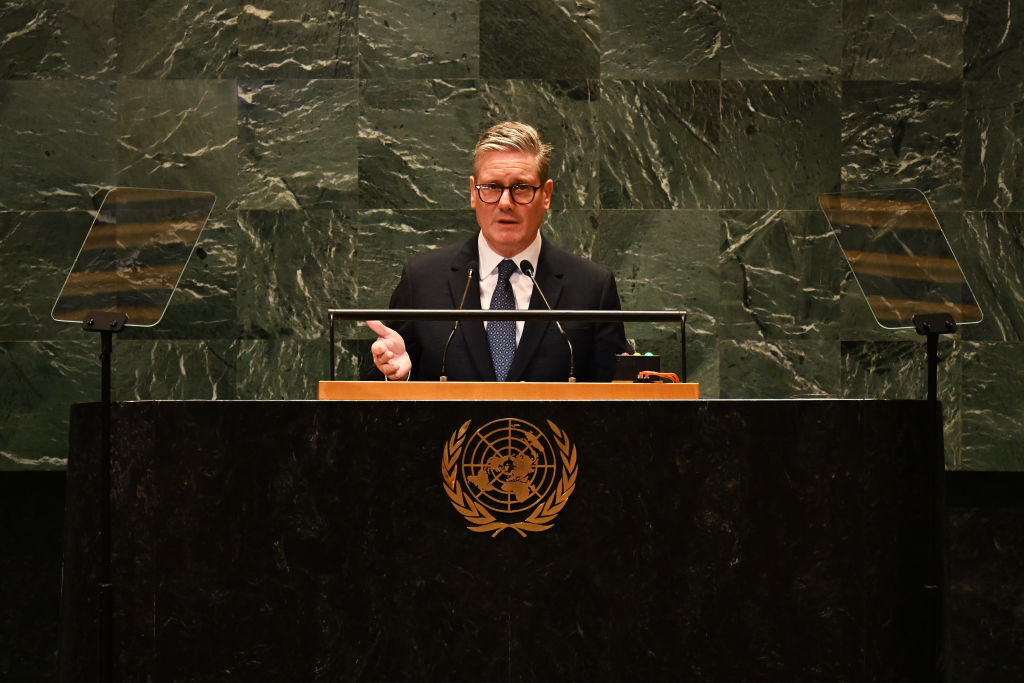
If he wishes to keep the grander aspects of office, however, Starmer might transition from domestic politics to the international scene. Already, it is being reported that he could be the next secretary general of the United Nations. He would be the first British holder of that office since the role was properly formed. And if that sounds a remarkable over-promotion for our defenestrated prime minister, he’s got form for rising to the top with breathtaking ease.
If the decision-makers at the UN feel towards him as Labour MPs do, however, then more junior roles — like chief prosecutor at the International Criminal Court — could attract the former Director of Public Prosecutions. This might suit both Starmer’s unpolitical instincts as well as his successor, who will be keen to leave behind the shadow of the past two years. In either role, Starmer would be out of the country, no more than an intermittent figure on the fringes of British politics.
While some former prime ministers have chosen to appoint themselves troublemaker-in-chief for their successors, Starmer seems less likely to do so. Gordon Brown agitated for the scrapping of the two-child benefit cap while Starmer was removing the whip from Labour MPs who voted to do so. Starmer subsequently changed his mind and now lists the move as one of the proudest achievements. And as the vultures prepared to swoop after this year’s local elections, Tony Blair penned an essay diagnosing the ills of the government — and effectively triggered the debate about what Labour, post-Starmer, should do.
Labour’s next prime minister will almost certainly still need to wrestle with Blair and Brown (for Burnham, two former bosses), but it is hard to imagine Starmer being such a boisterous ex-PM. After all, what ideas would he advocate for? If anybody knew — if he knew — then he may not have just resigned as prime minister. So whether Starmer’s post-premiership is spent in Parliament, or on the outer reaches of international technocracy, his departure from No. 10 and from the frontlines of Britain’s political life are likely to be the same. A man without vision, strategy, or panache will make for an underwhelming elder statesman.
Lee David Evans is an historian of the Conservative Party and the John Ramsden Fellow at the Mile End Institute at Queen Mary, University of London.
 LeeDavidEvansUK
Join the discussion
Join like minded readers that support our journalism by becoming a paid subscriber
To join the discussion in the comments, become a paid subscriber.
Join like minded readers that support our journalism, read unlimited articles and enjoy other subscriber-only benefits.
Subscribe