




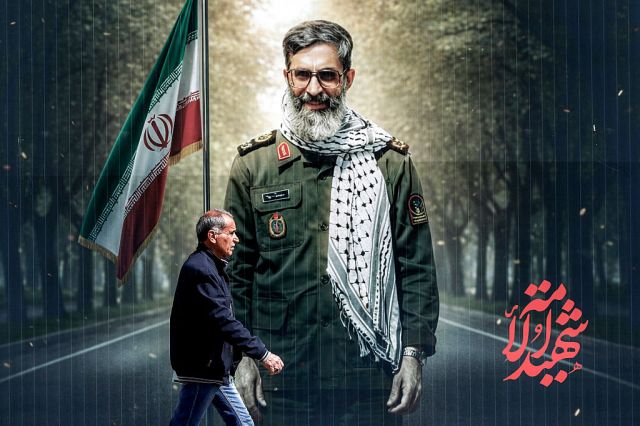
'Iranian counterintelligence outfits are undoubtedly working overtime.' (Ahmad Al-Runaye/AFP/ Getty)





After four months of war, Israel still has targets to hit. The latest IDF raids, in this increasingly fictional ceasefire, smashed Iranian missile-defense systems and a petrochemical plant in the south of the country. Yet looming behind these physical symbols of the Islamic Republic are human targets too. Israeli officials give the impression that they could still kill senior IRGC leaders and even Mojtaba Khamenei, the new supreme leader. If true, it’s an unrivaled ongoing intelligence operation.
Demands on American and Israeli intelligence will increase regardless of whether the war stays cold or heats up once more. Donald Trump obviously doesn’t want to fight the battle to open the Strait of Hormuz. This means that Tehran, sensing victory, will probably be emboldened elsewhere, perhaps even trying to reactivate terrorist operations against American and Israeli targets. Iranian terrorist operations, which have ebbed and flowed through the years, haven’t been well run for some time. Some recent assassination attempts against Iranian expatriates have been awkwardly if not incompetently planned and executed. But when there is a will, ways improve.
Beyond protecting against this possible resurgence, US and Israeli satellite surveillance of the bombed sites with buried enriched uranium will obviously continue. Ditto the bombed underground military facilities and factories involved in missile and drone production. According to Israeli intelligence officials, the Iranian regime is using the current ceasefire to clear access to crucial conventional weaponry. After the 12-Day War, and up to the start of the current conflict, Israel didn’t seem particularly worried by the state of Iran’s bombed nuclear plants. That may be because their long-distance assessment of the damage done was severe, or because they had reliable intelligence assets providing them with reassuring information.
In either case, it’s doubtful that Tehran can now sprint to the bomb: the damage is far too great, both to personnel and the country’s uranium-enrichment facilities. The same may also be true of the stockpiles of centrifuge parts unaccounted for by Barack Obama’s nuclear deal. Counterintelligence concerns alone may well paralyze Iran’s ambitions for some time, as the intelligence ministry and IRGC try to figure out if Israel penetrated their nuclear inner sanctum. The conspiracy-addled nature of Iranian officials will incline them towards taking a counterespionage buzzsaw to a lot of innocent people, further convulsing what’s left of the country’s nuclear establishment.
The Iranian regime, if it lasts, will eventually get around to testing Israeli and American intelligence. It wouldn’t be surprising to see it do this slowly through a small reconstituted nuclear program, perhaps by building another facility for turning uranium hexafluoride into metal, or by building new, advanced centrifuge cascades: then see whether anyone notices. If the regime managed to actually detonate a crude nuclear device inside Iran, the blast would likely guarantee the Islamic Republic’s immunity from further attacks. For Mossad and Aman, Israel’s military intelligence wing, the need to penetrate and report on what’s left of Iran’s nuclear program remains paramount.
There are other focuses too. Assessing how many and what kind of missiles and drones the Islamic Republic will be able to build — and how quickly, given the damage to factories and supply lines — will surely consume a lot of Israeli attention. Another question will be whether the Russians and Chinese are meaningfully supporting these efforts. An Iranian victory at Hormuz might well have a decisive impact on Beijing, which could become far less circumspect in how it supports Tehran. If, months from now, the United States is still dueling with Iran over the Strait, then the CIA and other initialisms of US intelligence certainly won’t redirect resources to other foreign challenges. Surging intelligence capabilities on a target rarely produce a bonanza — unless information can be gleaned through technical means.
Fortunately for the US, satellites and intercept are two strong suits, while the Islamic Republic’s chatty ruling elites often have a hard time being disciplined about secure communications. Before the current war, Israel obviously had a network of local agents, all of whom aided military operations. Maintaining secure communication with these agents after all hell has broken loose and the internet has gone down could be hard, especially if timely communications are still needed for active operations. Another challenge is that information in wartime can degrade quickly, not least if it’s needed for assassinations. On this, Iranian counterintelligence outfits are undoubtingly working overtime, trying to figure out what Israel did and block its future actions. For the moment, it’s a good bet Israel is using some form of encrypted satellite-based system to reach its spies — and Iranian counter-intelligence officers are surely doing their best to locate those transmissions.
That hints at broader challenges. Future recruitment efforts by either Israel or America will likely be more challenging; contacting IRGC officers will simply be harder than before. Both Americans and Israelis “cold pitch” Iranian officials: that is, walk up to a target and, with little chit-chat, ask him to work for them. Such pitches don’t have a great track record and IRGC officers don’t usually travel to places where either American or Israeli operatives can safely reach them.
It’s possible that Israel’s recruitment of so-called “covert-action” agents — whose primary task would be to give logistical or tactical intelligence support to an Israeli military operation (imagine Iranian Kurds or Azeris helping Israel launch drones) — has also allowed some access to important Iranian officials. Really talented agents can occasionally recruit others without having direct contact with their foreign case officers.
But developing these contacts indirectly would be devilishly risky. As a rule, intelligence services don’t like mixing covert-action agents — who in Iran would be easier to recruit given the disgruntled minorities living on the country’s borders — with “foreign-intelligence” assets who report on government policy and suchlike. Covert-action agents often work in teams; foreign-intelligence agents almost never do. If Israel has been able to mix the two successfully, these operations would be serendipitous.
Developing new assets in Iran with Iranian counterintelligence services on high alert will be daunting — unless internal dissent leads to waves of Iranians, especially ethnic Persians, eagerly ratting on the theocracy and the Revolutionary Guards. Israeli officials sometimes give the impression that this is exactly what has happened, with average Iranians somehow getting information out to the Israelis about the whereabouts and movements of senior Iranian officials, allowing the IDF to target them. If this is happening in the way Israeli officials suggest, then untrained Iranians and Israeli intelligence have found a means of communication that allows for almost real-time targeting irrespective of whether the internet is working.
A sign that the Iranian regime might be cracking would be more IRGC volunteers to Western intelligence services. Mass defections don’t appear likely — the regime’s spiritual and financial hold on its hardcore supporters has always been impressive. As average Iranians have fallen away from the regime by the tens of millions, loyalists, seeing themselves as the guardians of Islam and a nation besieged by disbelief, depravity, and Satan’s paladins, have only grown more determined. Throughout this war, we’ve seen the IDF or Mossad attempt to intimidate or turn senior military commanders and officials via threatening telephone calls. It’s still too soon to have a scorecard on what happened, but it appears Israel hasn’t so far reaped the desired results. Even so, we might yet see more senior officials having serious doubts. Iranian memoirs, leaked conversations, and intrepid Western scholarship conducted inside Iran over the last 30 years suggest that doubt is infecting ruling families.
Intelligence success is inevitably tied to how much risk clandestine services and their political overlords are willing to endure. The Islamic Republic is an existential threat to the Jewish state; to the United States, the clerical regime is surely not. Despite murderous Iranian machinations, since 1979, Washington has been reaching out to Tehran, under both Democrats and Republicans, both openly and secretly. This quintessentially American disposition to say “Hi!”, hoping for a reset of the regime’s enmity towards the United States, has affected, sometimes seriously, how the White House, and therefore the CIA and the Pentagon, have approached Iran policy. No such hope has ever altered the fundamental Israeli analysis of the Islamic Republic. The regime’s lethal antisemitism, present since its birth, is tightly tied to how it sees and reacts to the world.
These differences help explain why the Israelis have had the patience and fortitude to work the Iranian target in ways that have been impossible for American or European intelligence services. Even today, after numerous deadly Iran-orchestrated terrorist strikes against Americans; after kidnapping plots against US citizens; after planned assassinations against senior US officials; after the deadly Iranian covert action in Iraq, which cost hundreds of lives — Americans who didn’t have doubts about assassinating members of Al-Qaeda or the Islamic State can still feel a bit squeamish when Washington helps Israel off Iranian officials. To that extent, the clerical regime has always benefited from Iran’s cultural magnetism and historical preeminence.
Besides, major American intelligence operations against the Islamic Republic will require bipartisan support in both the House and Senate intelligence committees. That seems unlikely. Democrats have been trying to find a less hostile modus vivendi with the Islamic Republic since Bill Clinton. With Obama and the nuclear negotiations, it became a passion. This passion has since been deflated, especially in January when the theocracy savagely attacked its own people. But the reflex to engage, and to feel guilty about American actions — especially the now-mythologized coup in 1953 against Mohammad Mosaddegh, and basically everything Trump has done since 2017 — seems set in stone.
The intelligence war against Islamic Republic will therefore likely remain overwhelmingly an Israeli mission, with the US in a supporting role. Mossad now has an Iran regime-change desk. The Israelis hadn’t traditionally been fond of regime change in the Islamic world, primarily because they had such a low regard for the possibility of salubrious political evolution among Muslims. Tehran’s pursuit of nuclear weapons and ballistic missiles altered this calculation. So too did the realization that “mowing the lawn” in Iran isn’t the same as cutting the grass in Lebanon and Gaza. It requires US approval from the get go, which even under Trump may not be forthcoming.
In a long-term clandestine campaign, Mossad and Aman don’t have many options available to them beyond continuing assassinations and sabotage. These actions can possibly fly under the American radar — that really depends on their size, targets, and whether Washington could envision blowback. Israel could also try to feed Iran’s simmering ethnic tensions, where violence is already common, especially among the Kurds and Baluch. Both have established armed opposition groups, making weapons deliveries easier and less of a counterintelligence headache; these groups internally police themselves and, as they are often tied together by blood, are less open to Iranian intelligence penetration. Netanyahu supported, likely drove, a joint Israeli-American operation to support an armed Kurdish uprising in Iran during the current conflict; it appears that Turkish president Recep Tayyip Erdoğan learned of the plan and called Trump, who aborted the operation.
These actions cannot bring the regime down — and the Israelis know it. But they could be seriously annoying to Tehran. Especially if armed with shoulder-fired missiles or heavy machine guns, these groups certainly could harass the IRGC more effectively. And if Israeli-aided ethnic irruptions happened while larger protests occurred elsewhere in Iran, this might seriously strain the regime’s mobile internal-security forces. Certainly, this ethnic route, operationally, seems like a better option than trying to get significant quantities of weaponry to the confused, leaderless Persian opposition, which could take years to organize and risks simply giving supplies to the IRGC.
Minority-targeted operations do run the risk of alienating Persians, who whatever their views of the Islamic Republic almost universally believe that minorities don’t have the right to secession and must not challenge the supremacy of Iran’s Persian identity. Iranians who want to topple the Islamic Republic could cheer, or anyway be apathetic towards, rebellious minorities being crushed by the theocracy.
Despite all the difficulties involved, the Israelis still may try to arm, or protect from the air, an Azeri or Persian insurrection. Rebellions within these two groups would give the regime pause. Given their numbers and how important they are within the regime, Azeris are the only ethnic minority, if they were to rebel en masse, that could collapse the Islamic Republic. The Israelis may recall, however, that while armed opposition to the Shah by the late Seventies was certainly frustrating for his SAVAK intelligence service, it didn’t ultimately challenge the monarchy’s survival. In 1979, the army collapsed for entirely unrelated reasons.
The key then was the ability of Ruhollah Khomeini’s people to piggy-back on and guide the anger of what eventually became a widespread revolutionary movement, where the military and civilian elites no longer supported the monarchy. When it mattered, Mohammad Pahlavi was unwilling to kill his countrymen in large numbers; the theocracy has shown no such hesitation. Any armed struggle against the Islamic Republic would have to defeat a far more determined foe.
For the Israelis, getting payback against the Islamic Republic may nonetheless make the ethnic card compelling, overcoming the objections of Persian expatriates and internal dissidents who worry about Persians losing their primacy in the country — to say nothing of the ugly internecine strife that could result. Meanwhile, the Israelis will certainly keep collecting intelligence on all Iranian personnel involved with the nuclear and missile programs, with the aim of eventually eliminating them. Knocking off the occasional Iranian politician could also become standard practice, regardless of possible American objections, since such operations would continue to convulse Tehran’s counterintelligence establishment, cast doubt on the integrity of Iranian communications, and discombobulate the daily life of the ruling elite.
Though many Americans and Europeans might want to believe that only diplomacy offers a solution to the current conflict, Mossad, Aman, and the IRGC know better. For them, it’s a duel to the death.
Reuel Marc Gerecht is a Resident Scholar at the Foundation for Defense of Democracies and a former Iranian-targets officer in the Central Intelligence Agency.
 ReuelMGerecht