




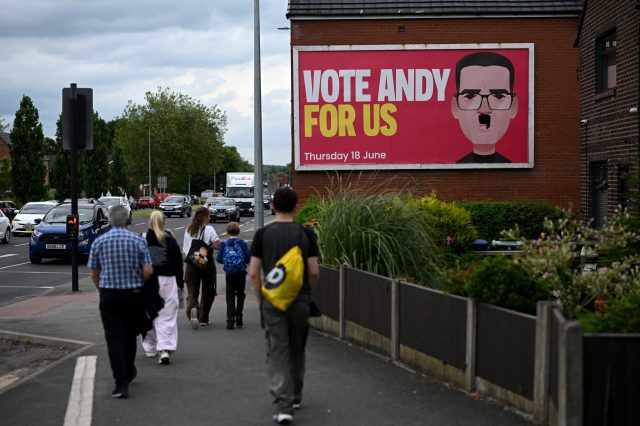
Who do you think you’re kidding? (Credit: Oli Scarff/AFP/ Getty)





“I don’t understand how politics work,” says the girl. “Nobody used to talk about politics here until two weeks ago”. She gets her information from YouTube, she will not vote, and she talks about politics as if it frightens her. Makerfield is important this week, and only this week, and it knows it. On Friday, the circus will leave town, and it will take no one’s anxiety with it.
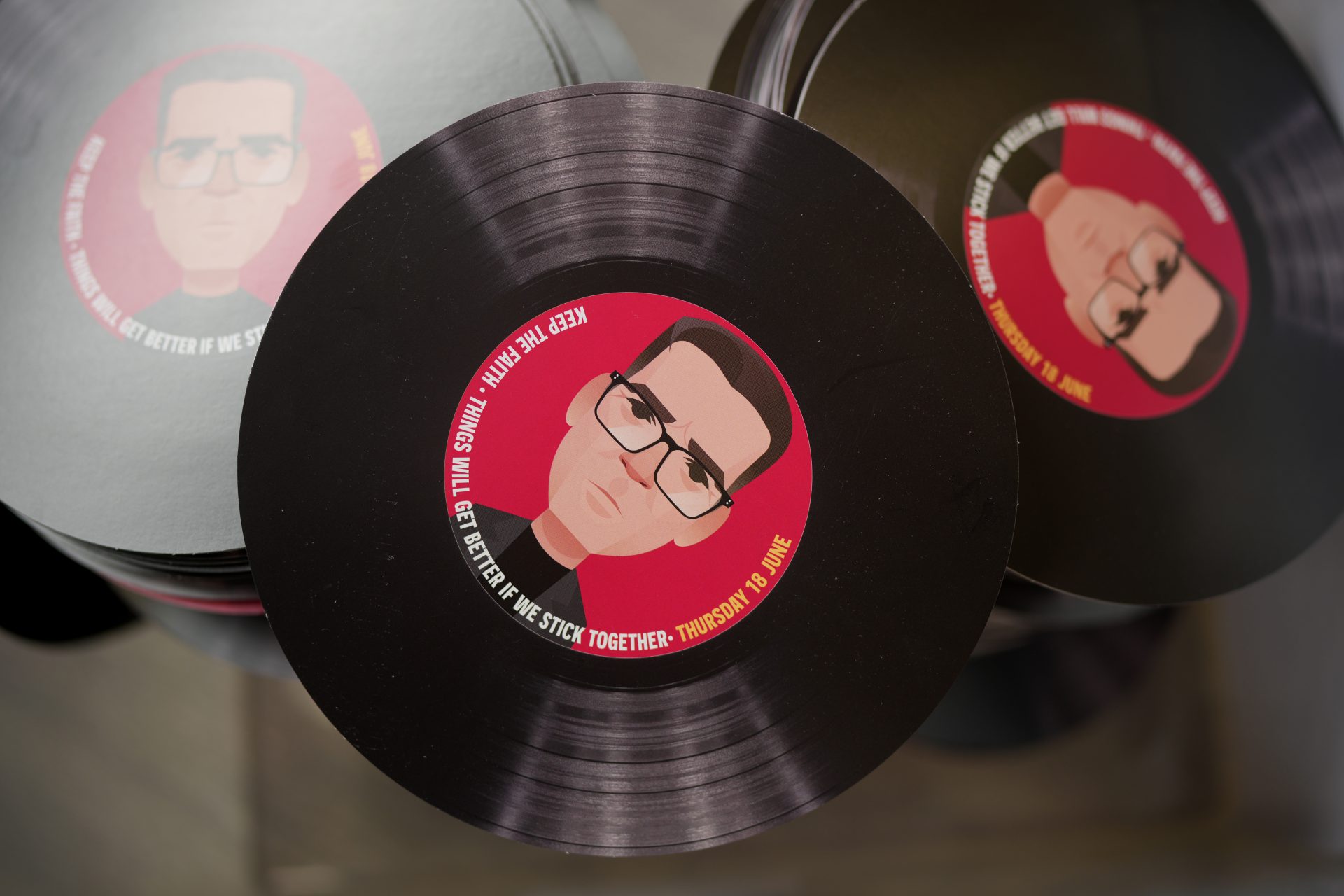
Andy Burnham is an oppressive presence in Makerfield: he hovers. Posters of the current mayor of Manchester, who will parlay a win here into a bid for party leadership, fill the streets. They block the windows of a derelict pub in Ashton. He looks like a New Yorker byline cartoon, and I wonder if AI made the image; he is buffed and smoothed. His election leaflet comes in the shape of a vinyl single: a 45, for those who dread the future, which is everyone here. It says: “Keep the Faith”. Few have.
Ashton is a town of amazing intensity — and bleakness. It used to be a coal town with a famous hinge factory. Now there is a KFC, a job centre, a betting shop and a wedding dress shop, which looks faintly aggrieved: between them, people traipse like furious ghosts. This is a by-election for the raging and the indifferent (half will not vote) and, in tribute to Makerfield’s temporary importance, the council have dug up the road. My taxi driver, once a lawyer in Pakistan, says white boys throw stones at his car. He shows me the cracks in the window. He blames Elon Musk and says things have never been so bad. I have never met voters — or non-voters — who talk so much about social media. They ask me if I am from YouTube.
This could have been another Runcorn and Helsby, which Reform took from Labour by six votes last year. But all by-elections are different; they are fables of resentment, and the most thrilling narrative usually wins. In Makerfield, that is Burnham’s: his promise to topple Starmer if elected makes him, not Reform, the insurgent here. Burnham also benefits from the growth of the disconnect, at least this time. Reform, which usually manifests that disconnect, is threatened by its dissident ex-MP Rupert Lowe, who has founded Restore. The disconnect disconnected. Restore’s branch in Norfolk, Great Yarmouth First, won the 10 seats it contested in the local elections on a promise to ban the burka, defund the BBC, begin mass deportations and have a referendum on the death penalty. Restore will welcome Tommy Robinson if he chooses to join, though Reform will not. The revolution eats its children.
Burnham HQ is a sports hall filled with activists from all over Britain: it is like a Liberal Democrat campaign. They exude the excitement and the entitlement of the day-tripper. I see a southern Labour MP in a bright Range Rover, which reminds me of Boris Johnson’s motorcade in Hartlepool in 2021, when Labour lost, because its ownership of the North had gone. I also see John McDonnell, Jeremy Corbyn’s shadow chancellor, drinking in the bar: a sign that Burnham, if he wins, will take the party to the Left.
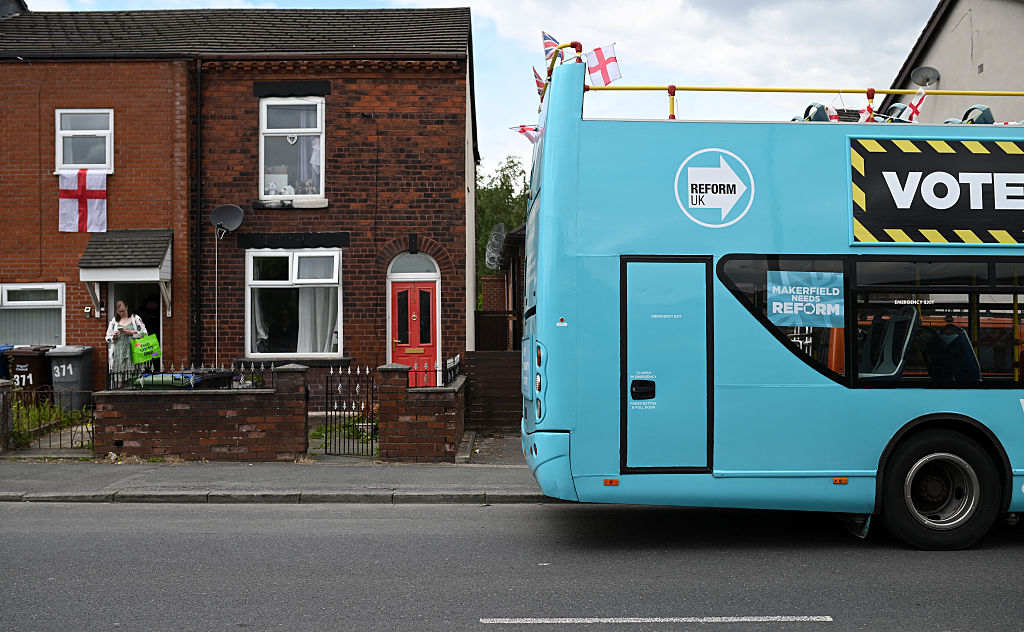
Some talk about this election in terms of legend: Labour’s last stand and, in Burnham, the only chance to beat Reform in the next general election. “The future of the country is at stake,” I am told by a young activist. “I think Andy is probably the only person who could make a real difference. He’s got the mentality of an insurgent. We live in a populist world, and we’ve got to fight fire with fire”. Or they say that Starmer is not relatable. “He doesn’t connect well with people,” says a woman from Devon, who is here because she loved Corbyn, and she thinks she sees some of him in Burnham. Or, from a young woman in Manchester: “You could look at him [Starmer] and his style and think that’s just another Tory.” They report that former Reform voters are returning to Labour because of Burnham: because he is from the North.
Outside, in real Makerfield, politics is mostly taboo: people are not only afraid of what is happening, they are afraid to talk about it. They are afraid of speech: their own, and others’, and I think this is new. The political meeting organised by Ed Gemmell, leader of the Climate Party — it exists to fill the gap the Greens left when they swapped climate anxiety for Gaza — is attended by only two residents, and one of them is drunk. The undrunk one left Ashton as a teenager and recently returned. He doesn’t like to talk about politics due to, “self-preservation. If you go into Wetherspoons, you hear some awful stuff. I don’t want to make my political views known.” When he was a child, he says, “Ashton was a village. If you wanted meat, you went to the butcher. If you wanted fish, you went to the market. Everyone looked after each other.” They never locked their doors.
“The people are still as friendly as they always were,” he says, “but they don’t smile as much. People are more divided. They talk about rugby, football, but nothing in depth or with any real content, people seem to be worried about talking about it for being judged or ridiculed. It’s a shame. I love this area, but you come back and you think, ‘why do I love it? It’s falling apart’”. The politics follows it.
I follow the politics down the Wigan Road to a grand house behind a gate. It has a fantastical garden with a single black garden gnome and an enormous Reform flag on an enormous flagpole. It would be Donald Trump’s house if he lived on the Wigan Road in Ashton. They are delighted to speak to me, which is unusual, but I knew they would be when I saw the size of the flagpole. They are Reform because a car hit their boundary wall and, they say, the police refused to charge the Muslim driver because it was Ramadan, and he was hungry. She shows me a picture of the wall in pieces and complains about HMOs. They don’t get to meet their neighbours. But, as ever with the prosperous Reform voter, their anxiety seems more existential than material; more dreamt that real. She still thinks Josh Simons, the Labour MP who stood aside for Burnham, is charming.
The narrative in Makerfield is not Burnham-saves-Labour: that is an imposition from the activists coming from outside. (Though the less bewitched Labour activists say it is closer than the polls suggest.) It’s the same as it is at every by-election I have covered in the North: people won’t allow themselves that much hope.
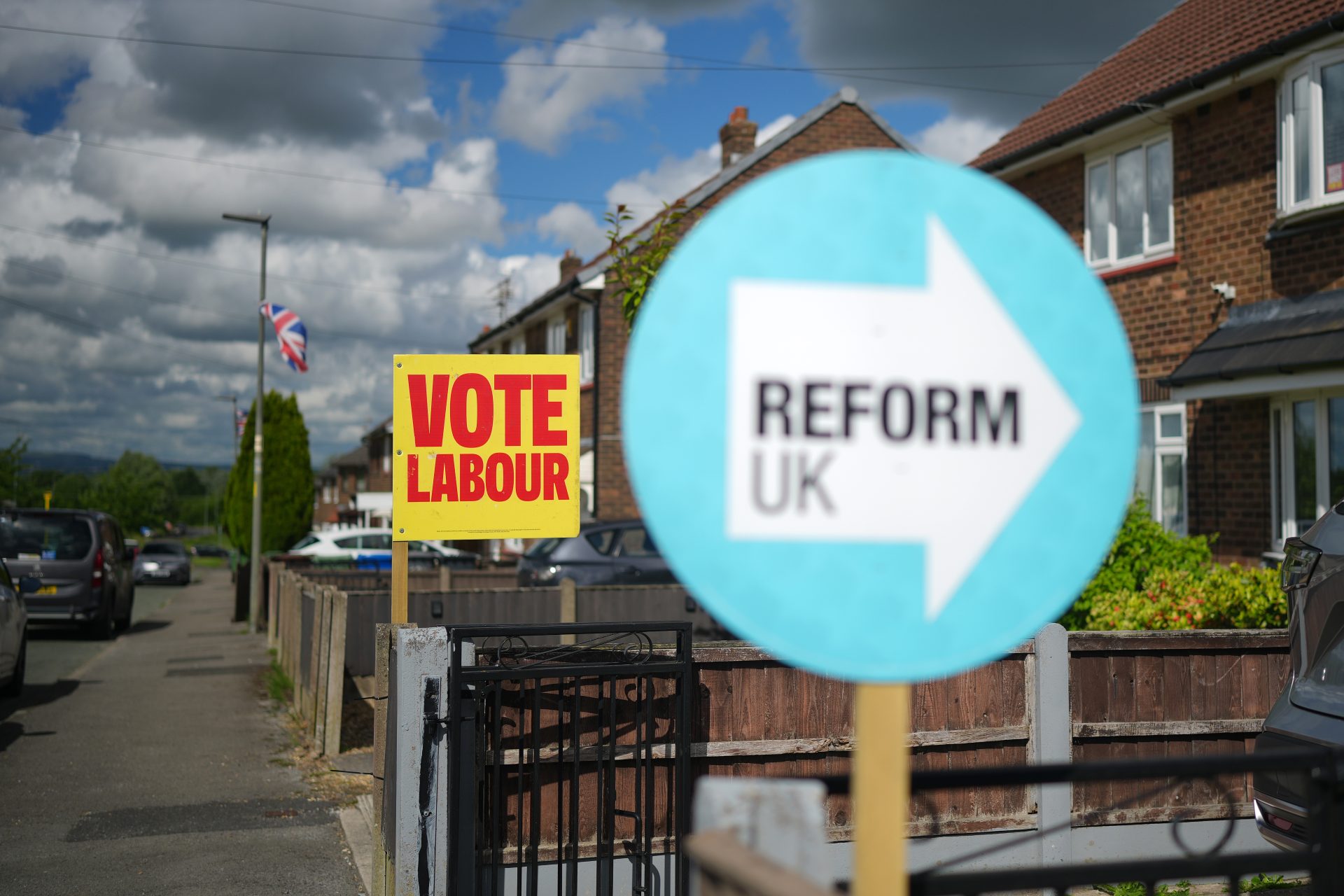
Like ghosts at the feast, Reform voters gather at what was once the Labour Club. They speak about Starmer with hatred. “I mean,” says one man, “he’s supported kiddie fiddlers and things like that. Jimmy Savile, you know. Some of the locals said they’d rather vote Jimmy Savile than him.” Can they mean it? A video circulates of a man tearing up Andy Burnham’s signs: they laugh at this. “Labour is dead in the water,” says another. “Everybody in this club at one time would have voted Labour, and now I don’t think there’s anybody in this club that will vote Labour. They’re a spent force.”
These voters no longer feel important; they feel of passing use. That’s the key, and it is societal as well as personal. “I can’t phone Andy Burnham and talk to him”; “He reckons he’s a local lad, but he’s never done anything for here”; “there are coloured faces everywhere you go”. When Josh Simons visited, they still felt cheated. “He was telling me, ‘I used to come in here and have a pint’ and in the next breath he asked me where the toilets were’”. And contempt whistles through his teeth.
For them, their candidate, Robert Kenyon, has been unfairly treated by the press. He replied to a social media post in 2021 that talked about touching Carol Vorderman’s arse. Kenyon gave the post a thumbs up, and wrote, “He’s only saying what we’re all thinking.” Here, they feel the same. “They hung Bob out to dry,” a man says. “All he did was give the thumbs up”.
There are few exceptions to the resentment. By the bus stop a teenager says gaily: “Listen to me. Is this going on a podcast? Andy Hurdham [sic] is a good man. He’s got good intentions. Reform — it’s all immigration. They want to get rid of immigration. We need immigration: NHS, we’ve got a lot of immigrated jobs in this society and we need it. Reform wants to get rid of that. They want the old Britain. I want the new Britain.” He grins at me, a loved child with faith in Andy Hurdham. “I like the new Britain. End of.” Then he calls me back to say: “You want to vote for the people with the best intentions.”
Restore are hardly that, but they gather at the Bay Horse to prepare for canvassing. The men are large and angry, the women beautiful and mournful. They are ardent but pallid – angrier than Reform, but with the self-conscious gravity and slow movements of those who know they are the only ones who would save their country. Their canvassing maps — streets surrounded by pen bubbles — look like lines around a corpse. They tell me I can canvass with them, then change their minds after the largest and angriest man makes a telephone call. This is the Restore Paradox, one of many: they claim they don’t get media coverage, then send journalists away. I eavesdrop instead.
“We need a supermajority,” says one. “You get support, then more support and the more support you have the more support you get. If you have 450 seats you can out-vote the opposition who will obfuscate”. “If he [Burnham] wins [Makerfield] the [Manchester] mayoralty is up for grabs,” says another. “It’s kind of win-win. We are soaring in the polls. We know we are [on] 20%”. “We need at least 35% to win this seat.” This is dreamland, though they might make 10%. Restore can only thwart Reform to let Burnham through here, but they don’t care, because only their anger is real to them.
“I am quite passionate about his [Lowe’s] beliefs,” says a woman with mermaid’s hair. (Restore’s women are glossy.) “I like how he’s doing it for us, the people of this country. Nigel Farage is a great disturber, but I don’t think he’s serious enough to be prime minister. Rupert Lowe seems to be genuine.” Her father was a factory worker. “He always voted Labour. He’d be devastated now if he was alive, at what Labour represents, because they say they’re for the working man, but they’re not. They are for anyone but us.” This is the Reform song in a louder pitch: the elites, which now include Nigel Farage, will destroy us.
Like Labour activists, the Reformers speak of a last stand in a coming war. One says he has had “an easy life. I shouldn’t be here. There shouldn’t be a need for this. We should have a decent country where people can just live together”. But “We live in a hostile environment. People aren’t safe.” Everyone native to Makerfield says this, except the boy at the bus stop, and he is young.
The man remembers, “the first black child coming into our school. He was a nice lad, Rastafarian, and then you could see other people coming in, and every little thing was named Mohammed, and they all stuck together”. He is here to “make things a bit better. I don’t know what else you can do. I’m not for going out and fighting on the streets.” If Starmer — or Burnham — cannot fix the problems of the state, others will fight on the street on the man’s behalf.
If Makerfield slouches towards the polls fearfully, there are some with more to lose than most. I meet an elderly Pakistani immigrant, grave and formally dressed, campaigning for Burnham. When I ask if his community is frightened, he says, “Inflammatory language concerns me and residents of my community”. In his restraint, he sounds more British than anyone.
