









June 23 2026 - 10:00am
As the country approaches a heatwave of up to 40 degrees Celsius this week, Britons are refrigerating wet towels and avoiding the Underground. France, meanwhile, has already been suffering from these temperatures over the weekend and has reacted by issuing stricter decrees.
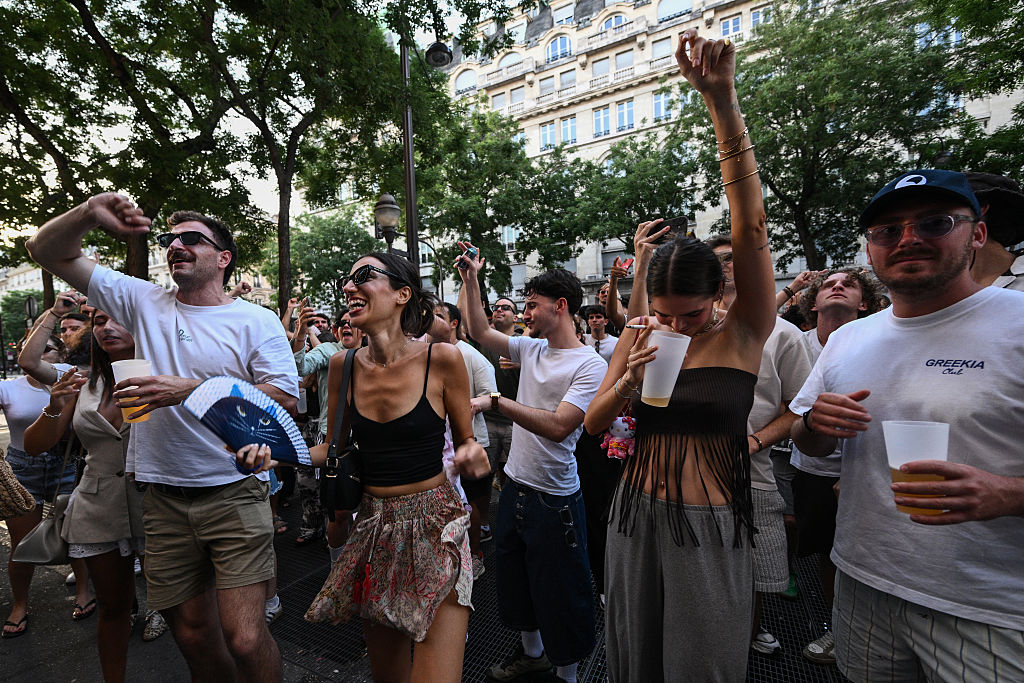
On Saturday, Prime Minister Sébastien Lecornu banned alcohol consumption in public spaces in any departments under a red heat alert — over half of the country — and the sale of alcohol at state-organized events, including the Fête de la Musique in Paris over the weekend. The city also banned “unpermitted gatherings, processions and parades” along the River Seine. The French government has certainly become more accustomed to policing its citizens’ vices, as just last year it banned smoking in almost all outdoor spaces.
In the heat, Parisians have been flocking to — and diving into — the algae-green Seine or the Canal Saint Martin to cool down. Some are being ordinarily silly, doing group backflips; others are being plain selfish by riding hired bikes straight into the river. The authorities have reasons to be concerned, as last year’s music festivals on 21 June drew two million people to the streets of the capital. Accordingly, this weekend, 5,000 police and 2,500 emergency and health service workers were deployed to Paris. The decrees were also partly justified in response to four teenagers sadly drowning in France on Saturday.
I have no problem with the state trying to prevent the tragedy of young lives being cut short, but I do have a problem with attempts to stifle ordinary human existence. We have a natural right to enjoy mother nature, more precious now amid rolling heatwaves. And isn’t people flocking to the river exactly what the government wanted? The famous plages — quayside mock sandy beaches — were started in 2002 by Socialist mayor Bertrand Delanoë as a haven for Parisians unable to escape the city’s sweltering heat. More recently, President Emmanuel Macron personally pledged to swim in the Seine to show it was safe for the 2024 Paris Olympics.
We also have a civilizational right to drink alcohol, as, historically, drinking alcohol was one of the few safe things to drink. We built cities on beer. Aside from the obvious hypocrisy in banning drinking from cans on the street for a popular festival but allowing drinking from glasses in streetside cafés, similar bans rarely work, even in France. When the country banned absinthe in the First World War, recipes were adjusted, and it was instead called pastis. This ban may have lasted 96 years on paper, but it lasted no time at all in practice.
As recently as Covid, when the first lockdowns were relaxed, crowds relishing their newfound freedoms flocked to the Seine, which was then banned. After the second lockdown, the ban remained but was often ignored, with the public holding “clandestine parties”.
Look, wouldn’t it be convenient for public services if everyone did boring things like sipping on a chilled white vermouth and eating a salade niçoise while having un pique-nique in the shade? But not everyone shares such tastes, and it would be authoritarian to try to enforce a particular manner of relaxation. Instead, what we have is the same as during Covid: using a public emergency to restrict life, because it would be too stressful on the organs of state. Maybe the climate-change-is-just-authoritarianism naysayers who raised warnings decades ago were right all along.