








June 30 2026 - 6:15pm
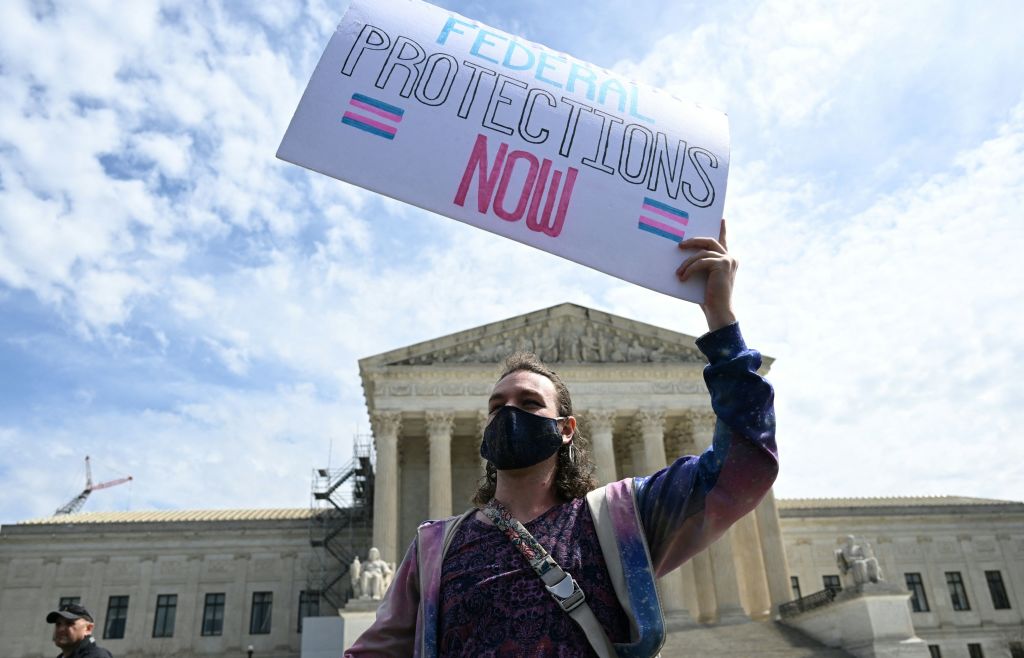
The six conservative Justices on the US Supreme Court today ruled in favor of upholding states’ rights to restrict women’s and girls’ sports teams to biological females. In January, SCOTUS heard two cases together: Little v. Hecox, from Idaho, concerning a male who transitioned after puberty, and West Virginia v. B.P.J., concerning a male who transitioned before puberty. The cases hinged on whether barring those males from the girls’ teams violated Title IX and the Equal Protection Clause of the Fourteenth Amendment, the former of which prevents discrimination “on the basis of sex”.
In their ruling today, the conservative judges were clear. Title IX allows for segregating sports teams by sex “where selection for such teams is based upon competitive skill or the activity involved is a contact sport”. As Justice Kavanaugh, writing for the majority, noted, the regulations “allowed separate sports teams precisely because of the inherent physical differences between biological men and biological women”.
According to Kavanaugh, “sex”, in this context, “cannot plausibly be interpreted to refer to anything other than biological sex”. After all, in 1972, when Title IX passed, “gender identity” was used only in rare medical contexts, and there was no common conception of a sense of being male or female separate from sex.
What was surprising, though, was that all three liberal judges continued to be out of step with even the majority of their political bedfellows, who mostly believe that sports should be segregated by sex rather than gender identity. Justice Sotomayor, joined by Justices Kagan and Jackson, held out for the possibility that a plaintiff like B.P.J — a male minor who took puberty blockers and cross-sex hormones — is an exception to sex, and that the laws only cover some males. The liberal Justices agreed that barring males from female sports doesn’t violate Title IX, but suggested it might violate the Constitution’s Equal Protection Clause because of “unresolved factual questions”.
That is, while we know that male puberty confers an unfair advantage in sport, we don’t know how much advantage is retained when that puberty is blocked and a female puberty is simulated in a male body. After all, B.P.J. may have won West Virginia’s Class state championship in girls’ shot put, but only finished fourth in girls’ discus. Even Penn State swimmer Lia Thomas, who transitioned long after puberty, didn’t win every race against female swimmers.
The conservatives reject such reasoning. Even if kids like B.P.J. retained no physical advantages from being born male, the “empirical claim would not alter the equal protection conclusion”, in the words of the ruling. They’d still be male and still subject to being separated in sports by sex. Those who support division of sports by gender identity often refer to these laws as “bans on transgender athletes”. Of course, they are not. Rather, they’re required to play on teams based on sex; all members of a sex are treated equally, regardless of medical interventions.
That means that some males with blocked puberty won’t be good enough to make the men’s team. As Kavanaugh reminds us, “Title IX regulations guarantee ‘equal athletic opportunity’. The regulations cannot and do not guarantee every student a spot on a team’s roster.”
Parents of kids who have transitioned must impart that just because you have remade yourself doesn’t mean you get to remake the world. It may feel unsafe or unfair to them personally, but it is safer and fairer for almost every other girl on the field. However, it’s unlikely that those parents will pass this on, or that they will see this ruling as anything other than hatred against trans people. It’s unlikely that most Democrats will pivot, either. Just after the ruling, Senator Edward Markey of Massachusetts insisted that the Court “cleared the way for Trump and MAGA Republicans to discriminate against the trans community”.
What’s important about the ruling is that it could clear the way for Americans in Democratic-led states to challenge the policies that allow males in girls’ and women’s sports. As Kavanaugh wrote, “Whether biological males may participate on women’s and girls’ sports teams may be a debated policy question.” But when it comes to the legal right, “West Virginia may do so.”

Join the discussion
Join like minded readers that support our journalism by becoming a paid subscriber
To join the discussion in the comments, become a paid subscriber.
Join like minded readers that support our journalism, read unlimited articles and enjoy other subscriber-only benefits.
Subscribe