




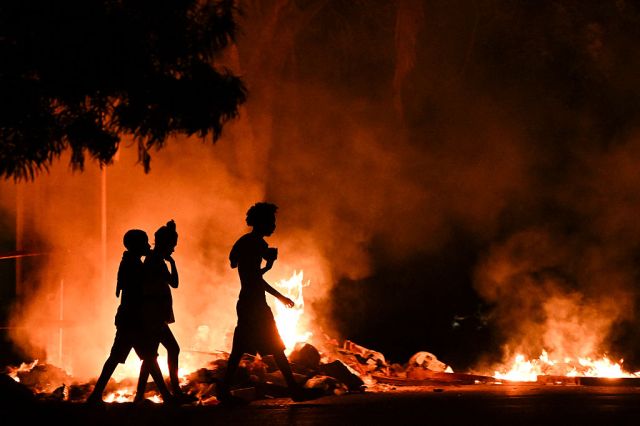
'This is the worst crisis since the Revolution.' (Yamil Lage/AFP/Getty)





“This is the worst crisis since the Revolution,” says Alvaro Miranda, 57, a history teacher standing on the sun-soaked streets of Old Havana between crumbling white buildings. His face looks gaunt and malnourished, his eyes sunken. “I am eating one meal a day with whatever we can get. I let my children have most the food. They are still young and need to grow.”
When I visited Cuba last week, the country looked like it had been hit by an immense natural disaster — a hurricane, say, or an earthquake — that had shaken it to the core. But the crisis ravaging the island is man-made: a US blockade on fuel and goods is hammering a nation with an already dysfunctional economy under a dictatorship.
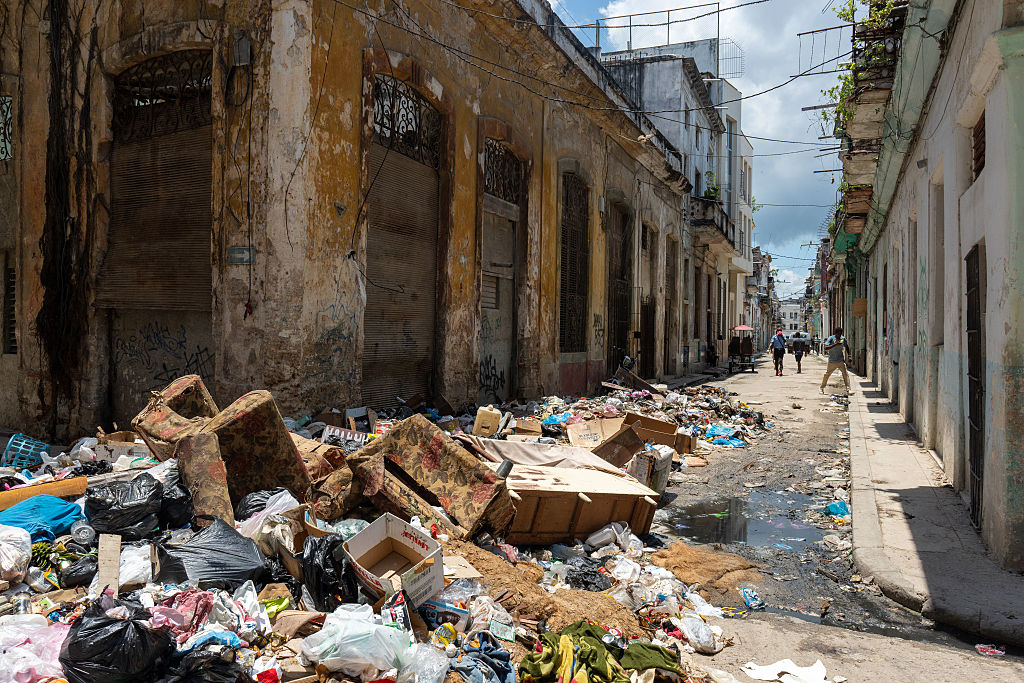
At night, power-cuts unleash a black cloud that envelops vast swaths of the tropical Caribbean island; residents huddle in candle-lit homes away from the dark, threatening streets. By day, you can see mountains of rubbish clogging up corners of Havana: mosquitoes, potentially carrying disease, buzz around the waste, while desperate men and women leaf through old boxes and tins for food. Highways are eerily quiet: sporadic buses go by along with the odd bicycle and even horse-driven carts, while scattered motorists search to buy gasoline at exorbitant prices. Many people look stressed, upset, and visibly hungry as they fight to get through another day.
While government food handouts used to keep Cubans in decent health, despite extremely low salaries, shops now only have a fraction of the rations to give them. The rice, beans and pork they provide are keeping people alive — and so far preventing a full-on famine — but the population is facing malnutrition, with the UN human rights chief Volker Türk saying that the blockade is “directly harming Cubans, especially the most vulnerable”. Even the public hospitals, long one of the Revolution’s key achievements, lack sufficient medicine and power.
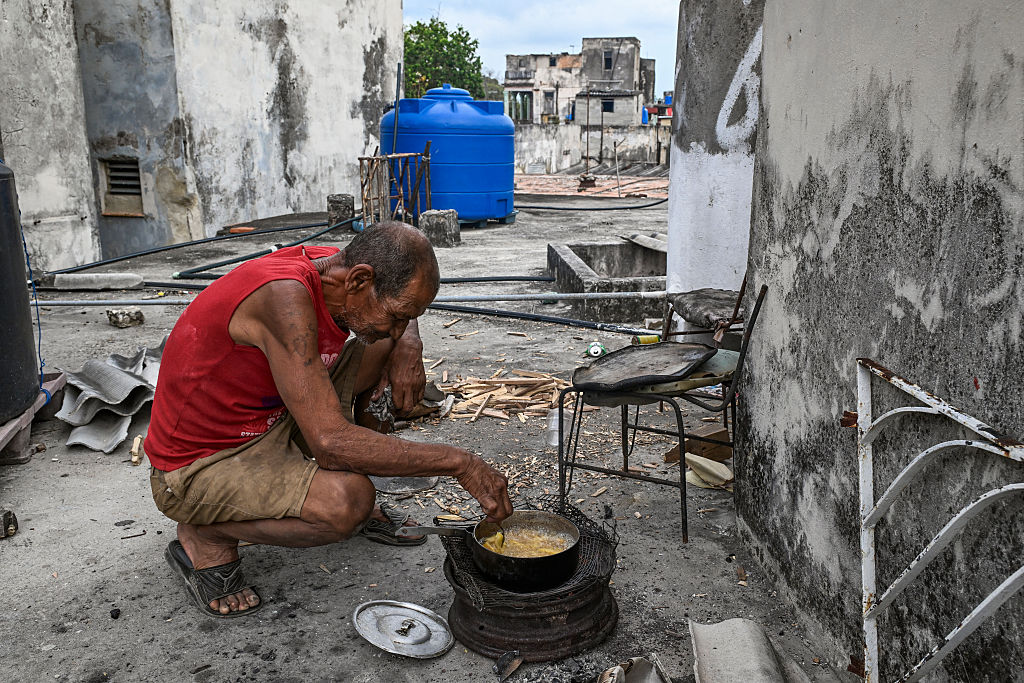
On the seafront, I find a fisherman called Joaquín, 50, holding two fish he caught in a red plastic bucket. He also has a job as a TV repairman but says that has ground to a halt in the crisis. “The government is meant to provide us with [television] parts, but they haven’t got any. And there is no electricity most the time so who wants to fix their TV anyway,” he says. “This is rock bottom. I don’t care what happens now. It can’t get any worse.”
Cubans are exceptionally open and warm people. While many at first say they don’t talk politics, it often doesn’t take them long to get into it. I meet many Cubans who have government jobs but are also out hustling on the street, trying to buy and sell goods, to borrow and to scavenge, to get food for their family for that day. But the American blockade is squeezing them ever harder, with more foreign companies leaving the island, from French freight ships to Spanish hoteliers. Cubans try to withdraw their savings, but the banks only let them take out a few dollars worth each day. People form endless queues for small sums of cash. There are many other queues too: for rice rations, for medicine, for papers to get off the island.
Washington’s blockade is cruel and inhumane, and punishes the same poor people it purports to liberate. Yet America isn’t the only problem: Cuba suffers an authoritarian government whose proclaimed socialism is now a mere echo of the past. Billboards display revolutionary slogans and glorify guerrillas in the mountains in the Fifties, but this means little to most Cubans fighting for life’s basic needs in the 21st century. Meanwhile, a small clique of politicians and military officers cling to power for the spoils. Without Cuba’s revolutionary founding father Fidel Castro, who died in 2016, there is no charismatic strongman to lead the country.
How did Cuba reach this point? For decades, the Soviet Union provided the island with canned goods, resources and technology in return for sugar. However, after its fall in 1991, Cuba was hit by a major recession. It found a lifeline in tourism, with Europeans, Latin Americans, and Americans flocking to the island for its vibrant culture, beaches, and revolutionary chic — and in many cases for sex. In 2016, President Barack Obama encouraged this opening by visiting Havana, symbolizing a thaw in relations. But President Donald Trump refroze them in his first term. Then the tourist industry was clobbered by Covid and with the blockade it is now on the verge of collapse, with gigantic hotels almost empty.
“I just pray to make something in the day, to get one customer,” says Arienne, 50, a tour guide with thick black dreadlocks who shows people around the historic sites of Havana, sometimes with the help of a partner driving a classic Fifties Ford motorcar. As we walk down the narrow streets, the sounds of percussion pour out from a deteriorating colonial building and a dozen men and women chant and sway to a tropical rhythm. Even in its pain and hunger, Cuba’s spectacular music plays on.
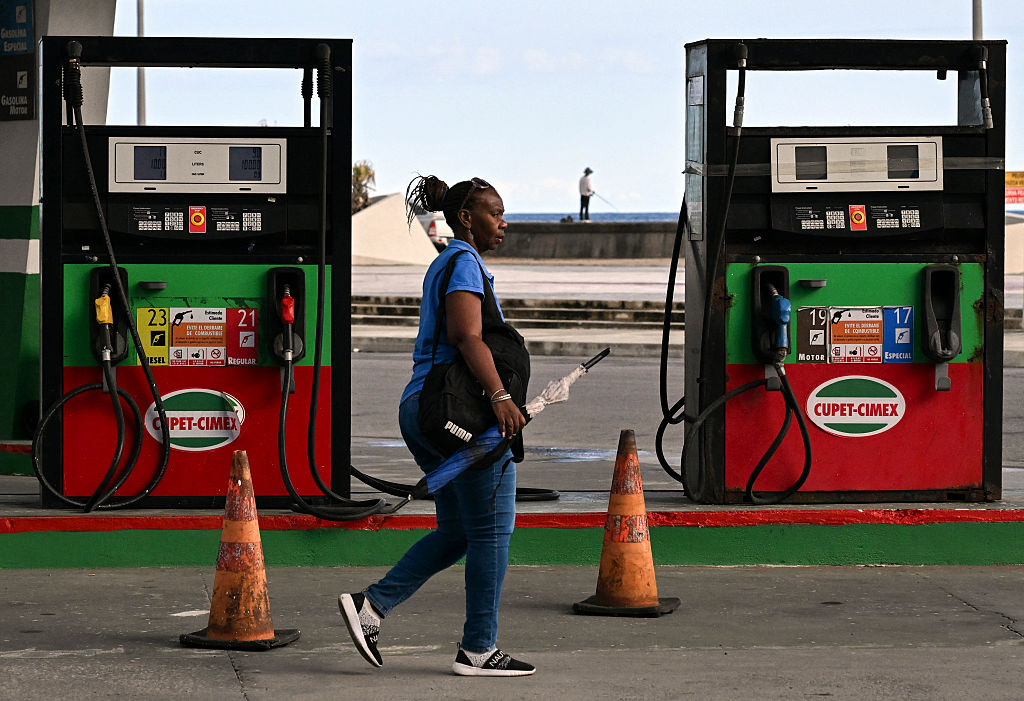
Cuba has long endured US sanctions. Soon after Castro led his revolutionaries to seize Havana in 1959, Washington began a trade embargo, and Castro turned to embrace Moscow. But the blockade that Trump has erected this year is far more punishing. After US Delta Forces seized Venezuelan President Nicolás Maduro in Caracas on 3 January (and killed most of his Cuban bodyguards), Venezuela ended its fuel supplies that had kept the lights on across Cuba. Since then, Trump has pressured other countries including Mexico not to send oil tankers to the island and seized boats at sea trying to bring fuel. The blockade is the key cause of the blackouts, since Cuba depends largely on oil for electricity, although the nation’s power grid is also in a terrible state. The fuel shortage has a knock-on effect across all parts of life: people struggle to get to work, trucks can’t collect garbage, meat and shrimp go rotten.
I travel to the satellite town of Alamar, where Russian engineers used to live. Soviet-style concrete blocks line a rocky Caribbean beach. The situation here appears even worse than in central Havana, with several people telling me they haven’t been able to travel to their jobs in the city. My driver is a friendly, light-skinned 55-year-old called Benjamín, who has a compact car that he converted to hold a diesel engine. This makes our driving around affordable as he can find diesel on the street for $4 per liter, while fully refined gasoline goes for $10 per liter. He tells me that some of the fuel he buys has been swiped from supplies allotted for government buses. Curiously, the Trump administration allows some oil to be sold from the United States into Cuba’s private sector, which then circulates on the island.
Trump has not been explicit about what Cuba can do to get the blockade lifted. In April, the Cuban government announced the release of more than 2,000 prisoners from its jails in an apparent bid to appease Washington. On Friday, Cuba’s president Miguel Díaz-Canel also announced new reforms to open up the state-run economy more to the market. But with Secretary of State Marco Rubio, the son of Cubans in Miami, shaping policy, the White House appears to want nothing short of regime change. It could switch Cuba’s president like it did in Venezuela, or even occupy the island.
The Pentagon has assembled a major force in the Caribbean, including the USS Nimitz aircraft carrier strike group, while the U.S. Justice Department indicted Fidel Castro’s brother (and former president), Raúl Castro, for ordering the shooting down of two American planes in 1996. At the age of 95, Raúl may not survive being whisked away by special forces, but the indictment could give Washington an excuse for invasion — although Trump might wait until he’s out of his Iran mess.
Critics of Trump and Rubio have a valid point that they might be more interested in looting the island’s resources than improving the lives of Cubans. Cuban exiles in Miami also have claims over property rights on the island going right back to 1959, which could be a nightmare to resolve. Some are also out for revenge. If the US were to knock out the government in Havana, it would risk pushing the island into chaos.
While the American blockade is making the lives of Cubans miserable, it’s not actually forcing the regime to collapse or the people to rise up. Protests are limited, often just consisting of people banging pots in the night. There were significant demonstrations in 2021, when Covid clobbered tourism, but police swiftly arrested demonstrators and many were given harsh prison sentences of up to 25 years for alleged crimes such as sedition, assault, and public disorder.
“Why risk going to protest?” says a bus driver, 28, who moves passengers in a rickety old truck on a route through the west of Havana. “If you already have a bunch of problems, you go to prison and then have a bunch more problems. Who is going to feed your family if you are in jail?”
The prospect of an uprising is also dampened by the fact that many of the young and strong fled Cuba in waves of emigration. The biggest surge came during the Covid crisis, with many Cubans taking advantage of permissions to travel to Nicaragua — run by the nominally socialist Sandinistas — and then heading through Mexico to the United States. One to two million people have left the island so far during the 2020s, according to estimates; the population has decreased by at least 10% and some estimate much higher. Many of those who remain are poorer, older, and more vulnerable.
Miguel Díaz-Canel has called the US blockade “genocidal, criminal and inhumane”, and said that Cubans “will give our lives defending the Revolution”. But judging from the desperation I saw on the streets, it seems unlikely many Cuban people will battle a potential gringo invasion, or that soldiers will fight as fiercely as they did against the thwarted, CIA-organized Bay of Pigs attack in 1961. If US forces want to conquer Havana, they probably could — but the question is what to do after.
I find attitudes to the prospect of a US attack mixed. A couple of people talk angrily about the gringos. “They are sons of whores,” says one guy peddling a bicycle taxi. “Trump is a son of a whore.” (He pronounces Trump more like “Crump”.) “I wouldn’t talk to you if you were from the United States,” says another guy, who is trying to buy dollars with Cuban pesos.
The bus driver speculates that while the bloodshed would be bad, the United States could make Marco Rubio the president of Cuba, which he actually doesn’t object to. The fisherman Joaquín says more blatantly that a US attack would be good. “Let them come in and get rid of this bunch of thieves in power,” he says. When I ask him if he is worried that talk like that could land him in prison, he shrugs. “Things are terrible. They can’t do anything more to me.”
While Cuba was never as violently authoritarian as Stalin’s Russia or Mao’s China, it is still a dictatorship. There is an extensive intelligence agency known as the G-2 and many government informants. The military is a sprawling organization that also controls much of the economy through a shady conglomerate known as GAESA. The government allows some private businesses, but they are limited and struggle to make money.
I talk to several people who used to support the Revolution but are now disillusioned with it; some gave up on it after the collapse of the Soviet Union, others following Fidel Castro’s death or during Covid. “Cubans were not really communists,” says my driver Benjamín. “They were Fidelistas. And without him it doesn’t work.”
Benjamín looks back to the Eighties, when Cuba was a more insular country, as the good old days when Cubans had enough food in their bellies. But he says that Cuba has to embrace a full market economy. I ask him if the nation should keep the free healthcare and other achievements of the Revolution. “In an ideal world, we would. But if it has to go then so be it.”
It could at least be argued that the Cuba of the late-20th century, which intellectuals from Jean-Paul Sartre to Gabriel García Márquez visited and celebrated, could have been a viable alternative model to capitalism — and the enchanting island still sits in the hearts of many in the international Left as the home of brave, bearded revolutionaries. But the broken Cuba of today is a world away from that, and foreigners who still promote it as an example of functioning socialism are often projecting a fantasy. As my driver Benjamín says: “If they think this is great they should change places with me. They wouldn’t last a week.”
Arienne, the tour guide, says the ruling party has to go but is less specific about what would replace it. “We need a government that provides dignity,” she says. Walking through Old Havana, we pass a graffiti saying “2+2=5”. I ask her if she knows the reference to George Orwell’s book 1984. She says she doesn’t: she just thought it meant that things are really bad.
For decades, Cuba has had low murder rates by Latin American standards — one of the achievements of Fidel Castro. The government, with the help of informants, made sure civilians didn’t have guns, and that muggers and thieves were quickly locked up. With the current shortages and blackouts, however, people tell me they are getting more worried about robbery, and that gangs are forming among youths in the barrios. “If they got guns here it would be worse than Mexico,” a motorcycle taxi driver tells me.
I go to the zoo in the south of Havana, where I am one of the only visitors. The lions, tigers and chimpanzees look haggard, hungry and aggressive; a jaguar bares its teeth to me. The zoo keeper explains that due to the shortages they are only giving the animals scraps. “I had a scare as I was feeding the tiger and it tried to break through a barrier and get me,” he says. Some hyenas have even begun killing each other. “They saw a weaker one and ate it,” the keeper says. “It’s a question of survival.”
I fear the fight for survival that could be unleashed in Cuba if the situation gets more severe. While some Cubans say it’s already at rock bottom, the cruel reality is that things can always get worse.
***
Note: Some names have been changed.
