








June 5 2026 - 8:45pm
The New World screwworm was discovered this week in Texas, creating a political headache for President Donald Trump as he tries to contain cost-of-living concerns ahead of the midterm elections.
Critics blamed the reappearance of the flesh-eating parasite on the now-dormant Department of Government Efficiency (DOGE) axing monitoring programs in Central America. Texas agriculture commissioner Sid Miller told media outlets that the USDA “moved too slowly and relied solely on a partial solution” as the New World screwworm moved through Mexico.
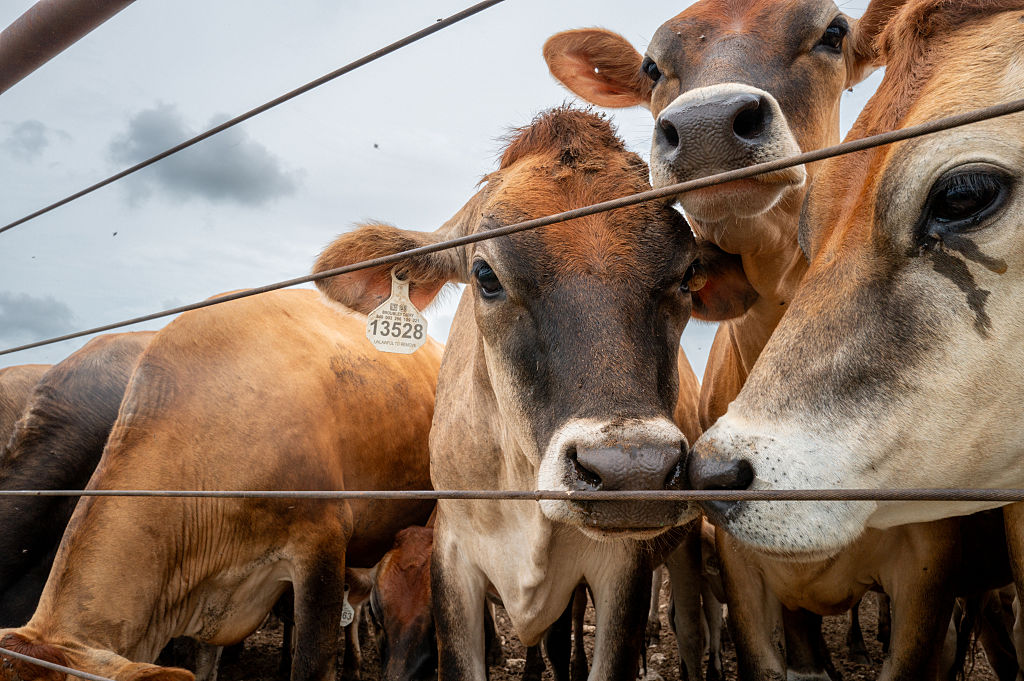
The New World screwworm was detected on a ranch in Zavala County, Texas, about 30 miles from the Mexican border, prompting the US Department of Agriculture to impose a quarantine. The discovery threatens to send beef prices soaring as cattle herds shrink further.
Missing from the finger-pointing, however, is how New World screwworm reached Mexico in the first place. The USDA was first notified in November 2024 that the parasite had been found in livestock imported from Central America into the neighboring state of Chiapas. Its return to the United States has been aided by cattle-rustling linked to drug cartels and other criminal groups.
It also overlooks how Mexico’s own version of DOGE under former president Andrés Manuel López Obrador, along with his stated security policy of “hugs, not bullets”, turned a blind eye to cattle-smuggling across the country’s porous border with Guatemala.
Mexico’s National Service for Agricultural Health and Safety (Senasica) estimates 800,000 head of cattle are illegally smuggled from Mexico into Guatemala, according to InSight Crime, which tracks organized crime in Latin America. Unlike livestock from certified ranches, these animals often evade standard tracing systems through forged health certificates, fraudulent identification records and a thriving black market in ear tags.
New World screwworm was officially eradicated from Chiapas in 2013. But smuggling by drug cartels — documented in the Mexican media as early as 2020 — brought the parasite back to Mexico. “Throughout this region, criminal organizations have taken advantage of cattle-smuggling to launder money and cover up their drug trafficking operations,” Mexican media outlet La Silla Rota reported.
Cattle-smuggling illustrates how drug cartels have diversified beyond narcotics trafficking and the production of methamphetamine and fentanyl, expanding instead into a wider criminal portfolio that includes extortion rackets, fuel theft and resale, and illegal logging.
The appearance of New World screwworm, whose larvae feed on the living tissue of warm-blooded animals, comes as the Trump administration pressures Mexico to further crack down on drug cartels. And it comes as Claudia Sheinbaum draws a red line against extraditing politicians accused of cartel links, including a governor in Sinaloa state, a ruling-party senator and six other officials indicted by the Southern District of New York for allegedly colluding with the Sinaloa Cartel.
“When it becomes accepted that another country can intervene in matters that are the responsibility of Mexicans, we’re no longer talking about cooperation; we’re talking about interference,” Sheinbaum told a massive rally May 31 at the Revolution monument.
López Obrador, meanwhile, broke his retirement silence with a 3 June, alleging US pressure to bring drug cartels to heel was an attack on Morena, the ruling party he founded and brought to power in 2018. He pined for a return of “the other Trump” whom he productively dealt with during the US president’s first term.
But López Obrador’s refusal to fully combat drug cartels’ expanding criminal empires — much less the politicians in his own party alleged to have colluded with them — led to the New World screwworm crisis on the US-Mexico border. Drug cartel activities can have consequences in the US — even those not having to do with drug-trafficking — something the Trump administration seems to recognize, and Mexico refuses to act upon.
Join the discussion
Join like minded readers that support our journalism by becoming a paid subscriber
To join the discussion in the comments, become a paid subscriber.
Join like minded readers that support our journalism, read unlimited articles and enjoy other subscriber-only benefits.
Subscribe