








May 13 2026 - 4:00pm
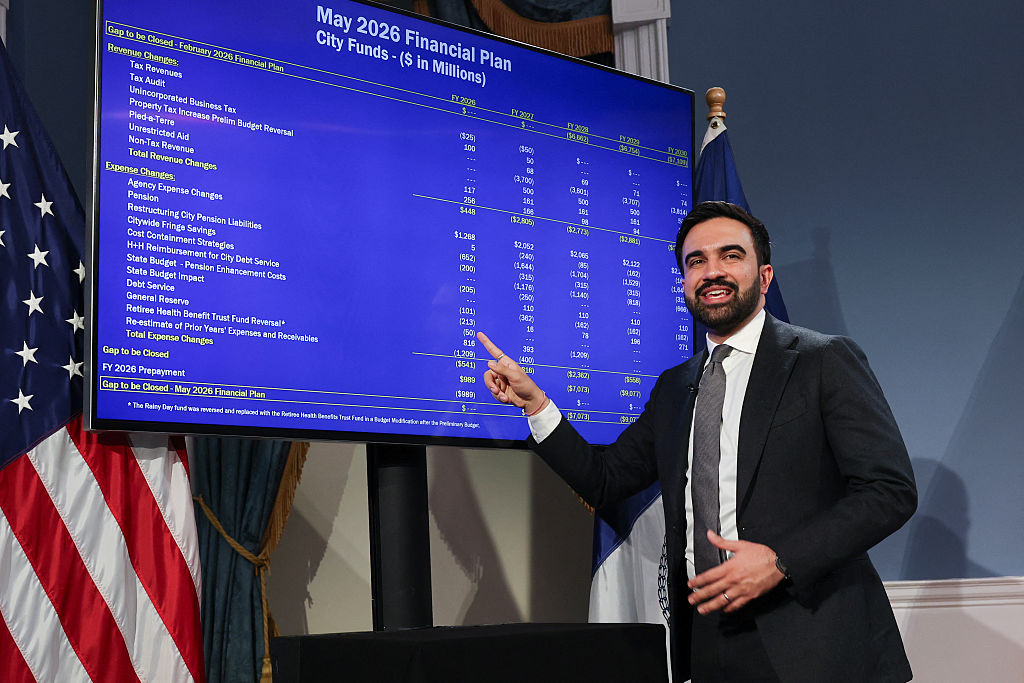
Zohran Mamdani and his claque of supporters are applauding the release of his first proposed city budget as having, in his words, refuted the “failed politics” of thinking that “austerity was the answer to adversity.” The new budget closes a two-year $12 billion gap “without slashing the services people depend on, without raising property taxes and without asking working families to pay for a crisis they did not create”.
The math behind Mamdani’s claims is a bit fuzzy. Most of the money to make his budget whole comes from the state, but he promises to save more than a billion dollars locally with such vague guarantees as “improving the efficiency of public services”, “improving our financial management”, and “accurately estimating expenses”. This kind of anodyne, non-specific corporate-speak would elicit howls of laughter at a shareholders’ meeting, but municipal budgeting, apparently, is open to a certain amount of handwaving.
Nowhere else, for instance, would spending more money be counted as savings. But to rein in “due process cases” — costing the city $1.5 billion a year to reimburse parents of special-needs children for inadequate school provision — Mamdani plans to hire more specialist teachers. “This,” his budget summary explains, “will reduce cases and generate $149 million in annual savings.” Well, maybe it will, but those new teachers won’t work for free. This sounds more like shifting the cost around than figuring out how to spend less money.
Similarly, the Mayor proposes to amortize the city’s contributions to its underfunded pension funds, which “will result in savings for years to come, including $1.64 billion in FY27”. But all this does is kick the unpleasant payment can down the road to 2033. The pensions still have to be paid out, which is why responsible budgeting demands prefunding future liabilities as best as possible now. It’s true that the city’s pension funds, while not fully funded, are better funded than the national average, but calling it “savings” when you decide to put off paying a bill is a bit of a stretch.
Mamdani’s approach to budgeting is somewhat backwards to begin with. He insists that he inherited a budget crisis of a “historic magnitude” akin to the 2009 Great Recession because his predecessor Eric Adams failed to budget for certain foreseeable expenses, such as cash assistance or helping people meet their rent. But the Great Recession saw a decline in municipal revenue, while tax collection is currently up. Is it really a “crisis” when revenue is increasing but you want to spend even more money than you have on hand?
In the lead-up to the budget process, Mamdani ginned up an army of fans to bleat, “Tax the rich!” whenever Governor Kathy Hochul started speaking. “Taxing the rich” has become the obvious answer to every problem. On Tax Day, Mamdani filmed a video standing outside billionaire Ken Griffin’s $250 million apartment, stuck his face up to the lens to create a leering, fisheye effect and gloated: “We’re taxing the rich!”
This Alinskyite tactic — personalizing an issue by caricaturing and demonizing one’s opponent — backfired when Griffin said he found the video “creepy”, and indicated that he planned to begin moving his operations to sunnier climes, where wealthy employers are welcomed instead of derided.
Mamdani was wrongfooted by so forcefully declaring class war against a representative of the billionaire class which, like it or not, funds New York’s extensive and sometimes shockingly generous social welfare state. The Mayor seems not to have grasped that the states compete with one another to attract rich people, that New York City does not have a central bank to print money, and that billionaires are an important constituency even if he believes they shouldn’t exist.
The Mayor made it through his first budget season without fulfilling his promise to tax the local rich — a new pied-à-terre tax will only apply to non-residents who own expensive apartments, though the details of how those assessments will be carried out are cloudy — and other features of his agenda have been delayed. Hochul seems to have come to his rescue for now, but there’s no telling how their relationship will develop in the years to come.

Join the discussion
Join like minded readers that support our journalism by becoming a paid subscriber
To join the discussion in the comments, become a paid subscriber.
Join like minded readers that support our journalism, read unlimited articles and enjoy other subscriber-only benefits.
Subscribe